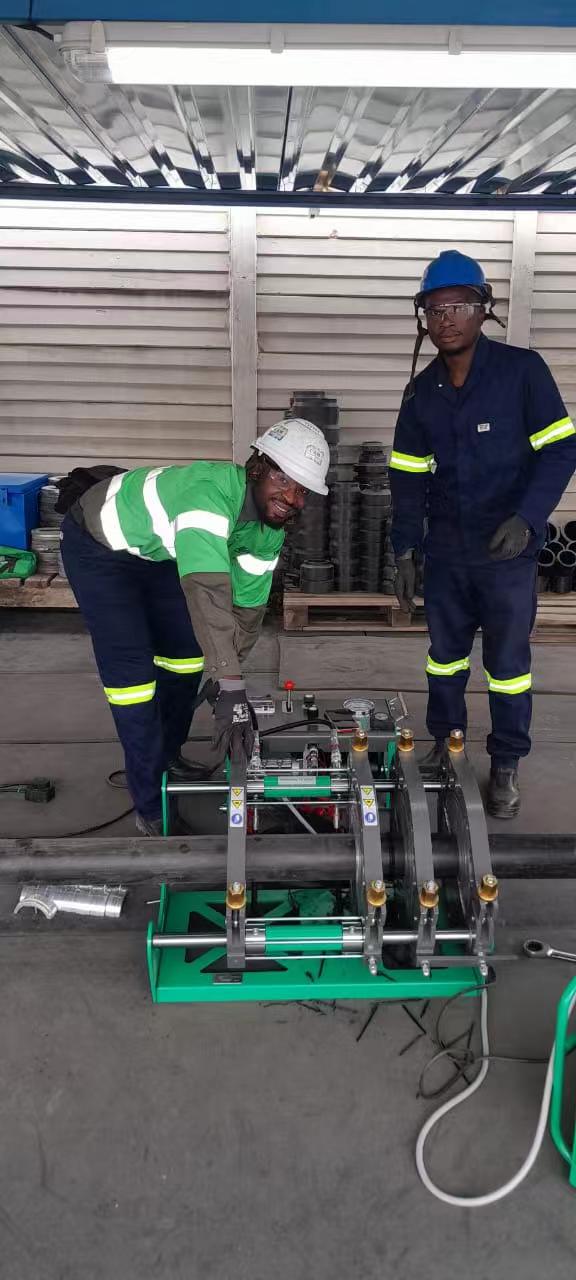
You use a poly butt welder used field pe pipe welding machine by first making sure the pipes are clean and free from dirt. You check each pipe for damage before starting. You align the pipes carefully and clamp them in place. You set the correct temperature on the machine. Careful steps help you create strong welds. Always pay attention to safety and details during every part of the process.
Key Takeaways
Always clean and inspect pipe ends before welding. This prevents dirt and grease from weakening the weld.
Align and clamp pipes securely in the welder. Proper alignment ensures strong, leak-proof joints.
Set the heating plate to the correct temperature, usually around 230°C for HDPE pipes. This is crucial for effective fusion.
Allow the joint to cool completely before removing clamps. Cooling is essential for a strong, durable weld.
Wear appropriate safety gear, including gloves and goggles, to protect yourself during the welding process.
Poly Butt Welder Used in Field PE Pipe Welding
What Is a Poly Butt Welder?
A poly butt welder used field pe pipe welding machine helps you join two pieces of polyethylene (PE) pipe. You use this tool to heat the ends of the pipes until they become soft. Then, you press the ends together so they fuse into one solid piece. This process creates a strong, leak-proof joint. You can use the machine for many sizes of PE pipe. The machine works well for water, gas, and other utility pipes. You control the temperature and pressure to make sure the weld is strong.
Tip: Always check the machine settings before you start. This helps you avoid weak joints.
Why Use in the Field?
You often need to weld PE pipes outside, away from a workshop. The poly butt welder used field pe pipe welding machine gives you the flexibility to work in many locations. The machine is built to handle rough conditions. You can use it in rain, heat, or cold. The frame is strong, so it does not break easily. You can carry the machine to remote sites because it is portable. You do not need extra tools to make a weld. The machine works with simple controls, so you learn to use it quickly.
You save time because you do not need to move pipes to a shop.
You get reliable welds even when you work in tough places.
You protect the pipe from damage by welding it where it will stay.
A poly butt welder used field pe pipe welding machine helps you finish jobs faster and safer. You can trust the welds to last for many years. When you use the machine in the field, you keep your work efficient and your pipes secure.
Preparation Steps
Cleaning and Inspection
You start by cleaning the pipe ends. Dirt, grease, and moisture can weaken the weld. Use a clean cloth to wipe each pipe. Inspect the surface for scratches, cracks, or other damage. If you find any defects, replace the pipe before welding. You want a smooth, undamaged surface for a strong joint.
Note: Always check for contaminants like oil or mud. These can cause leaks in the finished weld.
Pipe Alignment and Clamping
You place the two sections of pipe into the frame of the poly butt welder used field pe pipe welding machine. Make sure the connection sits in the middle of the four fixtures. Close the upper and lower brackets and secure the pipes with bolts. The pipes must line up perfectly. Misalignment can lead to weak joints or leaks. After clamping, check the alignment again. Adjust if needed so the ends match up evenly.
Secure clamping prevents movement during welding.
Proper alignment helps the pipes fuse evenly.
Welding Machine Setup
You prepare the welding machine for field use. Set up the hydraulic station, milling cutter, and heating plate. Place the butt frame on stable ground. Connect the power supply. Use the milling cutter to trim the pipe ends until you see a continuous ribbon of debris. This step creates a flat, clean surface. Center the pipes again to avoid misalignment. Set the correct temperature on the heating plate. For HDPE pipes, you usually set it to 230°C. Make sure the heating plate is clean before use.
Step | Action |
|---|---|
1. Preparation | Set up machine and place frame stably |
2. Placement | Position pipes in the docking frame |
3. Fix | Clamp pipes securely with bolts |
4. Milling | Trim pipe ends for a smooth surface |
5. Alignment | Adjust pipes for perfect centering |
6. Heating | Set heating plate to correct temperature |
You finish these steps before you start welding. Careful preparation helps you create a strong, reliable joint in the field.
Welding Process
Heating the Pipe Ends
You start the welding process by heating the ends of the pipes. Place the heating plate between the two pipe ends. Make sure the plate reaches the correct temperature, usually around 230°C for HDPE pipes. Wait for the indicator light or temperature gauge to confirm the plate is ready.
Push the pipes gently against the heating plate. You want both ends to touch the plate evenly. Hold them in place for the time listed in your machine’s manual. This step softens the pipe ends so they can fuse together.
Tip: Always check the heating plate for dirt or leftover plastic before you use it. A clean plate helps you get a smooth, even melt.
Fusing and Applying Pressure
After the pipe ends become soft, remove the heating plate quickly. Bring the pipe ends together using the poly butt welder used field pe pipe welding machine. Apply steady pressure so the melted ends join and form a bead around the joint. This bead shows that the pipes have fused well.
You must keep the pressure even. Uneven pressure can cause weak spots or gaps. Use the machine’s controls to hold the pipes together for the right amount of time. The manual will tell you how long to keep the pressure. Usually, you need to hold the pipes for several minutes.
Watch the bead. A smooth, even bead means a strong weld.
Do not move the pipes during this step. Movement can ruin the joint.
Cooling the Joint
Let the joint cool while the pipes stay clamped in the machine. Cooling is just as important as heating and fusing. If you remove the pipes too soon, the joint can become weak or misshapen.
Wait for the time listed in your manual. Most joints need at least 10 minutes to cool. You can touch the joint gently to check if it feels solid and cool. Only remove the clamps when you feel sure the joint has set.
Step | What You Do | Why It Matters |
|---|---|---|
Heating | Soften pipe ends with hot plate | Prepares pipes for fusion |
Fusing | Press ends together with pressure | Creates a strong, sealed joint |
Cooling | Let joint set before removing | Prevents weak or failed welds |
Note: Never try to speed up cooling with water or fans. Let the joint cool at its own pace for the best results.
By following these steps, you make sure your welds are strong and reliable. The poly butt welder used field pe pipe welding machine helps you control each part of the process, so you get the best results every time.
Safety and Best Practices
Personal Protective Equipment
You need to wear the right gear before you start welding. Safety glasses protect your eyes from sparks and debris. Heavy-duty gloves shield your hands from heat and sharp edges. You should use a long-sleeve shirt and pants made from flame-resistant material. Steel-toed boots keep your feet safe from falling objects. Ear protection helps you avoid loud noises from the machine.
Tip: Always check your gear for damage before each job. Replace any worn-out items to stay safe.
Here is a quick checklist for your safety equipment:
Safety glasses or goggles
Flame-resistant gloves
Long-sleeve shirt and pants
Steel-toed boots
Ear protection
You keep yourself safe and ready for work when you use this equipment every time.
Common Mistakes to Avoid
You can prevent many problems by watching out for common mistakes. If you skip cleaning the pipe ends, dirt and grease can weaken the weld. Misalignment causes leaks and weak joints. Rushing the heating or cooling steps leads to poor results. You should always follow the instructions for your poly butt welder used field pe pipe welding machine.
Here is a table of mistakes and how to avoid them:
Mistake | How to Avoid |
|---|---|
Dirty pipe ends | Clean pipes before welding |
Poor alignment | Check and adjust pipes in the frame |
Wrong temperature | Set heating plate correctly |
Removing clamps too soon | Wait for joint to cool fully |
Not wearing PPE | Use safety gear every time |
Note: You improve your welds and protect yourself when you avoid these mistakes.
You get better results when you pay attention to each step. You make strong, safe joints that last for years.
You can achieve strong welds in the field by following each step with care. Clean the pipe ends, align them correctly, and set the right temperature. Let the joint cool before removing the clamps. Use this checklist for every job:
Clean and inspect pipes
Align and clamp securely
Set machine temperature
Fuse and cool the joint
Wear safety gear
Regularly check your machine and safety equipment. This helps you work safely and keeps your welds reliable.
FAQ
How do you know if the weld is strong enough?
You check the weld bead. It should look smooth and even around the joint. You can also gently tap the joint. If it feels solid and does not move, you have a strong weld.
What should you do if the pipes do not align perfectly?
You loosen the clamps and adjust the pipes until the ends match up. Proper alignment helps you avoid leaks. Always double-check before you start welding.
Can you weld PE pipes in cold weather?
Yes, you can weld in cold weather. You need to keep the machine and pipes dry. Let the heating plate reach the correct temperature before you start. Cold pipes may need extra heating time.
How often should you clean the heating plate?
You clean the heating plate before every weld. Dirt or leftover plastic can cause weak joints. Use a soft cloth or scraper. Never use water on a hot plate.