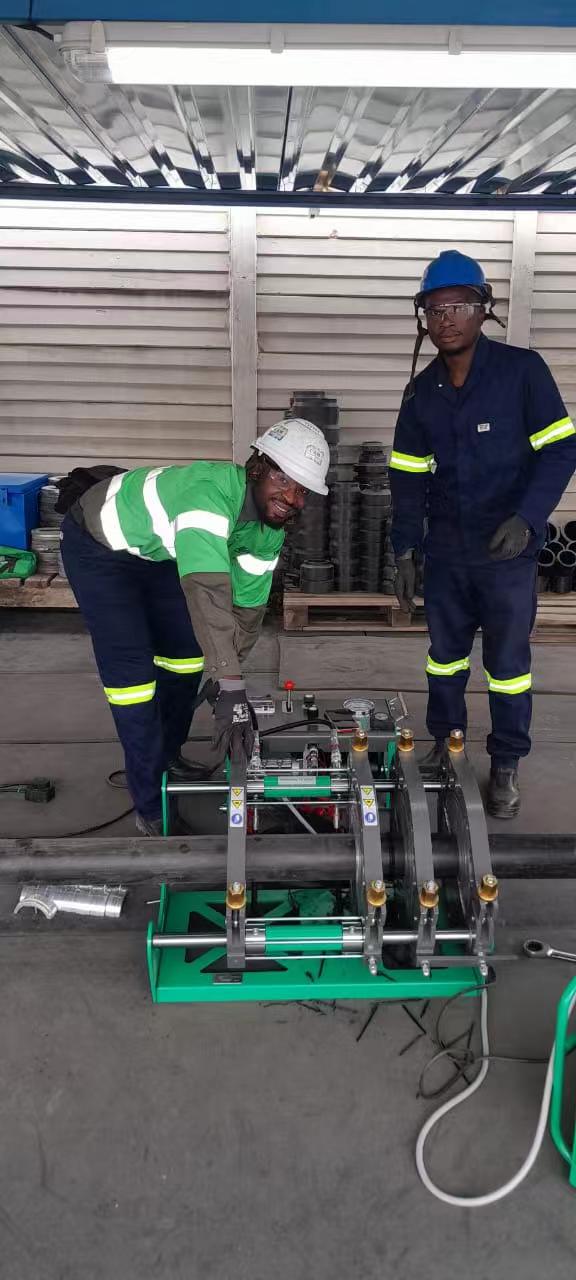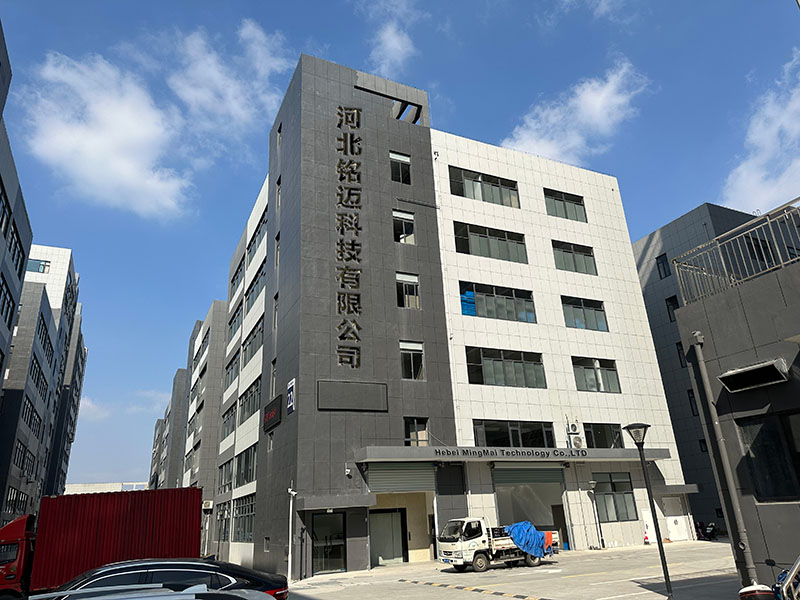
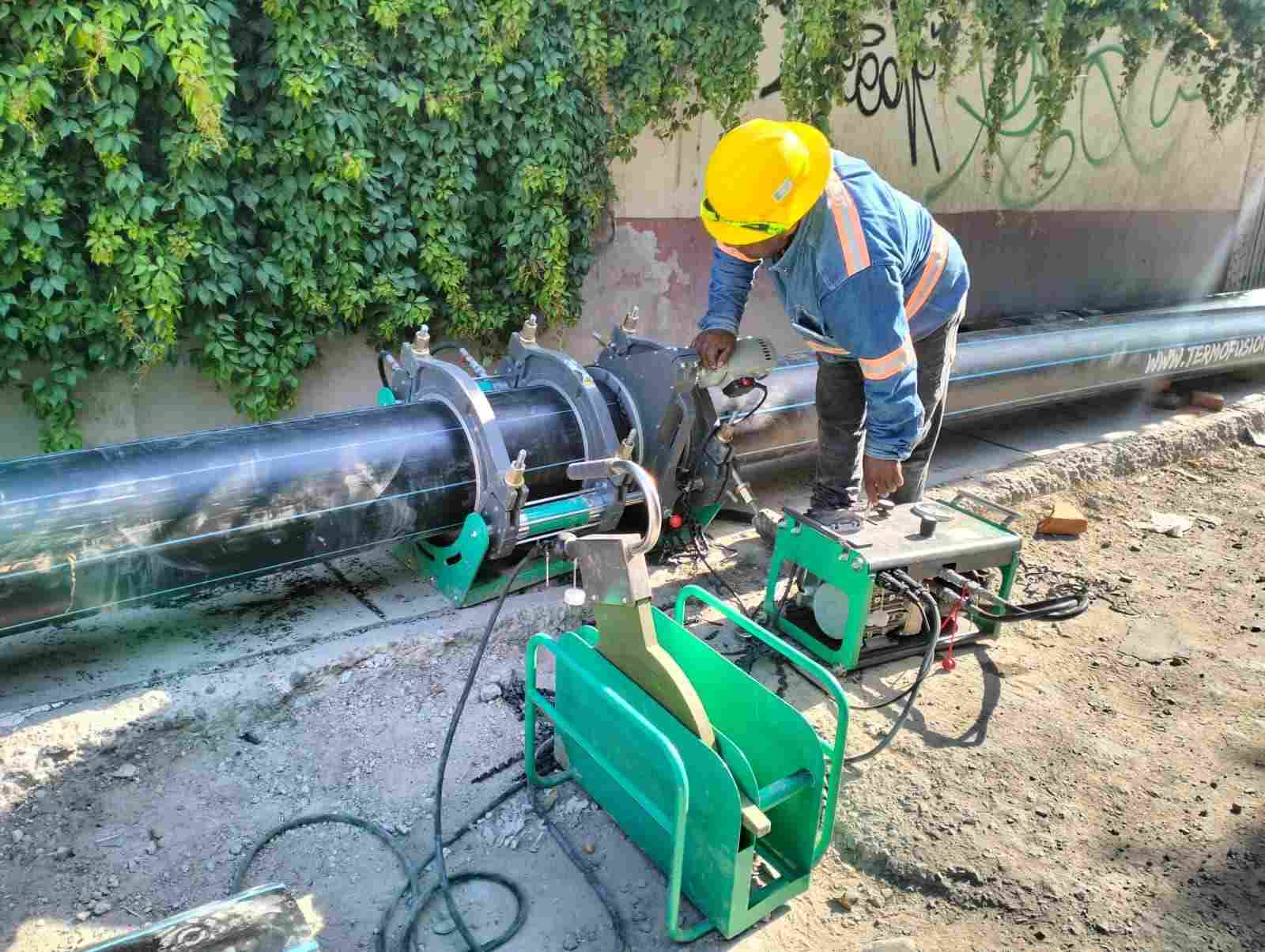
You use pipes that need top standards. MM-Tech picks SPC YGH041T material certified by PE100+ Association. This material is as strong and reliable as Borouge HE3490-LS. You see results from the Krauss Maffei extrusion line. Every weld follows strict DVS 2207-1 rules. You can trust MM-Tech to use a Manual Hydraulic butt fusion welding machine. This machine gives honest and exact HDPE pipe welding tests.
Key Takeaways
Pick PE100+ certified materials like SPC YGH041T for strong HDPE pipes. This helps keep the pipes safe and makes them last longer in tough jobs.
Use the MM-Tech manual hydraulic butt fusion welding machine for good welds every time. Its design helps use less material and finish projects faster.
Set up and adjust your welding machine the right way. Check it often to follow DVS 2207-1 standards and keep welds strong.
Getting the pipes ready and lined up right is very important for strong joints. Clean, straight cuts and careful alignment stop leaks and breaks.
Check every weld carefully. Write down the results to keep quality high and help clients trust your work.
Material Selection for HDPE Pipe Welding
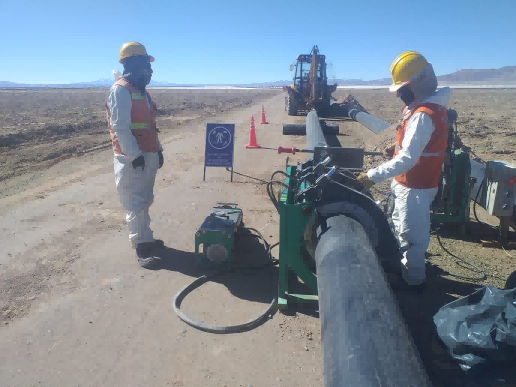
Certified PE100+ Material Comparable to Borouge HE3490-LS
You want your HDPE pipes to be strong. You need pipes that are safe and reliable. MM-Tech gives you this kind of material. You use SPC YGH041T, which is certified by PE100+ Association. This material is just as good as Borouge HE3490-LS. Both materials are tough and resist chemicals well. They last a long time and do not break easily. Your pipes can handle hard jobs like moving water, gas, or chemicals.
When you pick PE100+ certified material, you follow top rules. These rules come from groups around the world. They make sure your pipes work well and stay safe for many years.
Tip: Certified material helps you feel safe and stops problems later.
You see the results in every pipe you use. The material does not crack and stays strong under pressure. You get pipes that last longer and work better. When you use MM-Tech’s PE100+ certified pipes, you know you are using the best.
MM-Tech Manual Hydraulic Butt Fusion Welding Machine
Key Features and Advantages
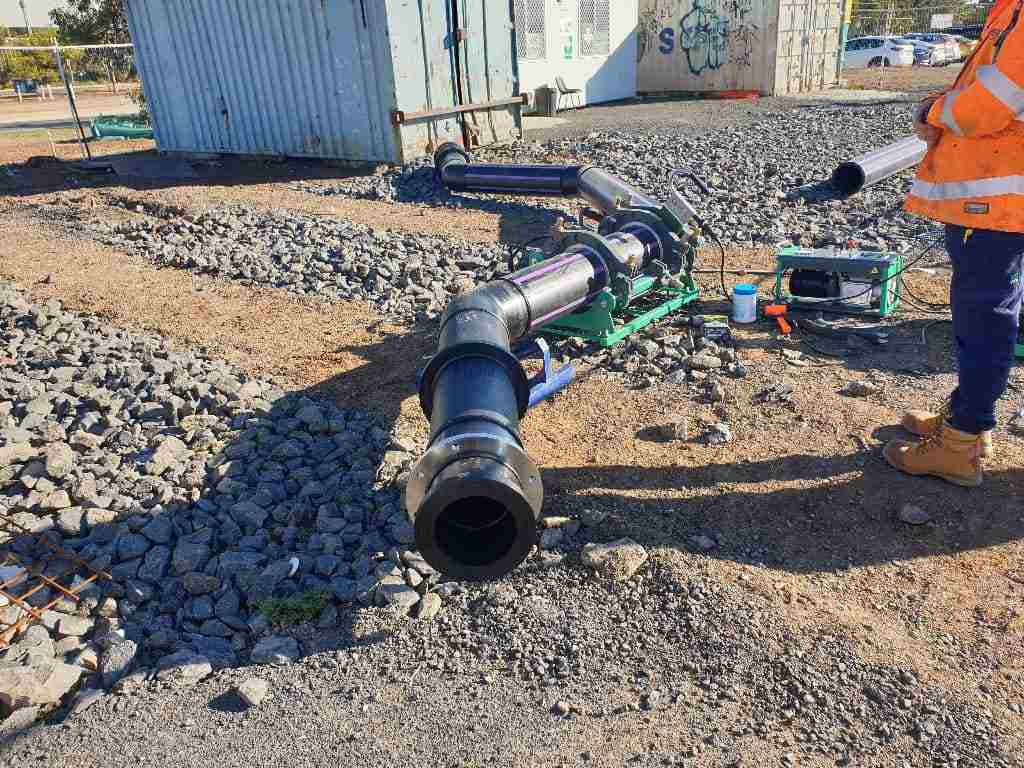
You want a machine that gives you strong, reliable welds every time. The MM-Tech manual hydraulic butt fusion welding machine stands out for its smart design and solid build. You get a frame made from thick, high-strength steel. This means your machine stays steady and does not bend, even with heavy pipes. The clamps use high-precision aluminum, so your pipes line up perfectly. You also get a Teflon-coated heating plate. This plate keeps melted plastic from sticking and makes cleaning easy.
Here are some reasons why you will trust this manual hydraulic butt fusion welding machine:
You waste less pipe because the machine works the same way every time.
You finish jobs faster and can take on bigger projects.
You do not need to be an expert to use it well.
You can add a data logger to record every weld for quality checks.
The manual hydraulic butt fusion welding machine helps you meet tight deadlines and keeps your work safe.
Equipment Setup and Calibration
Setting up your manual hydraulic butt fusion welding machine is simple. You connect the hydraulic hoses to the frame and the power cables to the control unit. You plug in the heating plate and the trimmer tool. You turn on the power and set the heating plate to the right temperature for your pipe.
To make sure your welds meet DVS 2207-1 standards, you need to calibrate your machine. You follow these steps:
Set the machine to the target welding temperature for your pipe type.
Wait at least 15 minutes for the temperature to stabilize.
Use a thermometer to check the temperature at three spots on the heating plate.
Write down the readings and check that all are within 5°C of your target.
If any spot is off, adjust the controller or fix the heater.
Record your results and put a calibration label on the machine.
By following these steps, you make sure your manual hydraulic butt fusion welding machine always gives you safe and strong welds.
Pipe Preparation and Alignment
Cutting, Facing, and Cleaning Steps
You need to prepare your HDPE pipes before welding. Good preparation helps you get strong, leak-free joints. Start by cutting the pipe ends square. Use a pipe cutter or a saw designed for plastic pipes. Make sure the cut is straight and even.
Next, you must clean the pipe ends. Use a scraper to remove dirt, grease, or dust. Do not use abrasive tools. These can scratch the HDPE surface and weaken the weld. Always aim for a clean, smooth, and fresh surface. This helps the pipes fuse together better.
Now, use the facing tool on your butt fusion welding machine. This tool trims the pipe ends so they match perfectly. Securely mount the facing tool and watch for the process indicators to show when facing is complete. After facing, clear away any pipe shavings. Do not touch the clean pipe ends with your hands. Skin oils or debris can cause problems during welding.
Tip: Proper training on your equipment makes these steps easier and safer. Always follow the instructions for your MM-Tech machine.
Ensuring Accurate Alignment
Accurate alignment is key to a strong weld. If the pipes do not line up, you may get weak joints or leaks. The MM-Tech butt fusion welding machine helps you keep the pipes steady and in the right position.
The machine uses high-precision clamps to hold the pipes tight.
The clamps keep the pipes from moving or twisting during welding.
The design of the frame supports the pipes and keeps them level.
You can adjust the clamps to match the pipe size and ensure both ends line up.
When you use the MM-Tech machine, you get reliable alignment every time. This means your welds are strong and your pipes stay leak-free.
Butt Fusion Welding Process Steps
Heating Plate Operation and Fusion Parameters
You start the welding process by setting the heating plate to the correct temperature. The heating plate must reach the right heat to melt the pipe ends evenly. If the temperature is too low, the pipes will not fuse well. If it is too high, the material can burn or weaken.
The DVS 2207-1 standard gives you clear temperature guidelines for SDR11 DN90 pipes. You can check the table below for the key parameters:
Parameter | Value Range |
|---|---|
Ideal Heating Plate Temperature | 220°C |
Maximum Heating Plate Temperature | Up to 230°C (conditional) |
Set your heating plate to 220°C for most jobs. Use a thermometer to check the temperature at different spots on the plate. Make sure the difference between the hottest and coolest spots is no more than 3°C. This helps you get a uniform melt on both pipe ends.
You also need to set the right pressure and timing. For SDR11 DN90 pipes, you usually use a bead-up pressure of 6 bar. The heating time depends on the pipe wall thickness. For an 8.2 mm wall, you heat the pipe ends for about 1 minute and 21 seconds. Always follow the timing in your machine’s manual or the DVS 2207-1 chart.
Tip: Always double-check your temperature and pressure before starting. Small mistakes can lead to weak joints.
Joining, Pressure Control, and Cooling
You follow a series of steps to join the pipes and control the pressure. Each step is important for a strong weld. Here is how you do it:
Bead-up Phase: Press the pipe ends against the hot heating plate. Use the set pressure until you see a uniform bead form on both ends. This bead shows that the material is melting evenly.
Heat Soak Phase: Lower the pressure to almost zero. Keep the pipe ends touching the plate. This step lets the heat soak into the pipe walls. It ensures the whole end is ready for joining.
Changeover Phase: Quickly remove the heating plate. Bring the pipe ends together fast. This keeps the melted surfaces hot and clean. You must do this step in less than 6.5 seconds for SDR11 DN90 pipes.
Cooling Phase: Hold the pipes together at the joining pressure. Do not move or disturb them. The plastic cools and hardens, forming a strong joint.
You must pay close attention during cooling. Cooling time is critical for the weld’s strength. For SDR11 DN90 pipes, you need to keep the pressure steady for about 11 minutes. Let the joint cool naturally. Do not use water or fans to speed up the process. Fast cooling can make the joint brittle or weak.
Adequate cooling time keeps the joint tough and flexible.
Natural cooling helps the joint stay strong for many years.
If you rush the cooling, the weld can crack or fail under pressure.
Note: Always record the pressure, heating time, and cooling time for each weld. Good records help you track quality and solve problems if they come up.
You can see that each step in the butt fusion welding process matters. When you follow the right parameters and timing, you get joints that last and perform well in any job.
Quality Control and DVS Compliance
Inspection and Test Documentation
You need to check every weld to make sure it is strong and safe. You use both visual and mechanical inspection methods. These checks help you find any problems before the pipes go into service.
Inspection Method | What It Checks For | When to Use |
|---|---|---|
Surface flaws, bead shape | Every weld | |
Ultrasonic Testing | Internal flaws, voids | Critical or large pipes |
Hydrostatic Testing | Leak-proof joints | Water and pressure pipes |
You start with a visual inspection. You look for a smooth, even bead. You check for cracks, undercuts, or misalignment. The color should be consistent. If you see any defects, you mark the weld for repair.
For important jobs, you use non-destructive testing like ultrasonic testing. This method helps you find hidden flaws inside the weld. For pipes that carry water or gas, you use hydrostatic testing. You fill the pipe with water and check for leaks.
Mechanical tests are also important. You may use a tensile test to check the weld’s strength. The weld should be at least 90% as strong as the pipe itself. You can also use a bend test. You bend the weld 180 degrees and look for cracks.
You must keep good records for every weld. The table below shows what you need for DVS 2207-1 compliance.
Requirement | Description |
|---|---|
Welder must have DVS 2212-1 certification | |
Equipment Requirements | Machine must meet DVS 2208-1 standards |
Testing of Welds | Test 100% of welds; repair any defects |
Tip: Always write down the operator’s name, pipe details, welding pressure, heating and cooling times, and test results. Good records help you prove your work meets the rules.
Full Transparency in Results
You build trust by sharing clear and honest results. You track every weld and repair. You use a repair percentage to measure quality. This number shows how many welds needed fixing. You calculate it using real test data.
You keep a record of every repair and the reason for it.
Auditors can check your records at any time.
You make sure every weld and repair is easy to trace.
You follow all project rules for testing and repairs.
A clear system for reporting results helps you pass audits. It also shows your clients that you care about quality and safety.
Why Choose MM-Tech for Butt Fusion Welding
Brand Commitment to Quality and Innovation
You want welding machines that work well every time. MM-Tech makes each butt fusion machine with strict rules for quality. You get equipment that meets CE and ISO certifications. This means your machine follows safety rules from Europe and the world.
Certification | Description |
|---|---|
CE | Meets European safety standards |
ISO | Meets international quality standards |
You also get a 24-month warranty. MM-Tech covers all parts of the machine. If something breaks or stops working, you get a free replacement.
24-month warranty
All machine parts are covered
Free replacement for broken parts
Customer Value and Global Recognition
MM-Tech machines are used in many countries. Many people trust MM-Tech for their projects.
“MM-Tech’s HDPE butt welders changed our construction jobs. The machines are reliable and easy to use. The equipment is high quality, and customer service is helpful.” — John S., Construction Manager
“We have used MM-Tech’s thermoplastic welding machines for over a year. The results are great. The machines are precise and efficient. Our work is faster now.” — Maria L., Manufacturing Supervisor
“MM-Tech’s customer support is excellent. When we had a problem, their team fixed it quickly. We lost little time. We recommend their products and services.” — Emily T., Project Engineer
The Philosophy Driving MM-Tech
Our Mission
MM-Tech wants to give you reliable and new welding solutions. The company helps you do well in every project.
Our Vision
MM-Tech hopes to lead the industry with advanced technology and green practices. You get machines that follow strict DVS standards.
Core Values
Quality comes from smart work.
Working together creates better answers.
Technological Innovation — Innovation Leads the Future
MM-Tech thinks innovation moves things forward. You use machines made to improve welding and push the industry.
Win-Win — Collaborative Success
You benefit from MM-Tech’s work with suppliers and leaders. These partnerships help MM-Tech make solutions that fit your needs.
Value-Driven — Maximizing Client ROI
You get more value from MM-Tech. The company works to give you strong machines, good support, and reliable results to help you get more for your money.
You get clear results with MM-Tech. Each weld follows strict rules. The pipes are strong and the test records are honest. MM-Tech is different because it gives certified training, special coatings, and portable machines.
You can trust MM-Tech for safe and high-quality HDPE pipe welding.
FAQ
What types of pipes can you weld with MM-Tech’s butt fusion machine?
You can weld PE, PP, PPR, and PVDF pipes. The machine works well for molded fittings, too. It fits many pipe sizes and helps you finish jobs quickly.
How do you know the weld is strong and safe?
You check the weld with visual inspection and mechanical tests. You look for smooth beads and test for leaks. You record every result for quality control.
Does MM-Tech’s machine meet international standards?
Yes. The machine follows CE and ISO certifications. You also meet DVS 2207-1 and ISO 21307 welding standards. These rules help you get reliable welds every time.
What warranty do you get with MM-Tech’s butt fusion machine?
You receive a 24-month warranty. MM-Tech covers all parts. If something breaks, you get a free replacement. You can trust your machine to last.