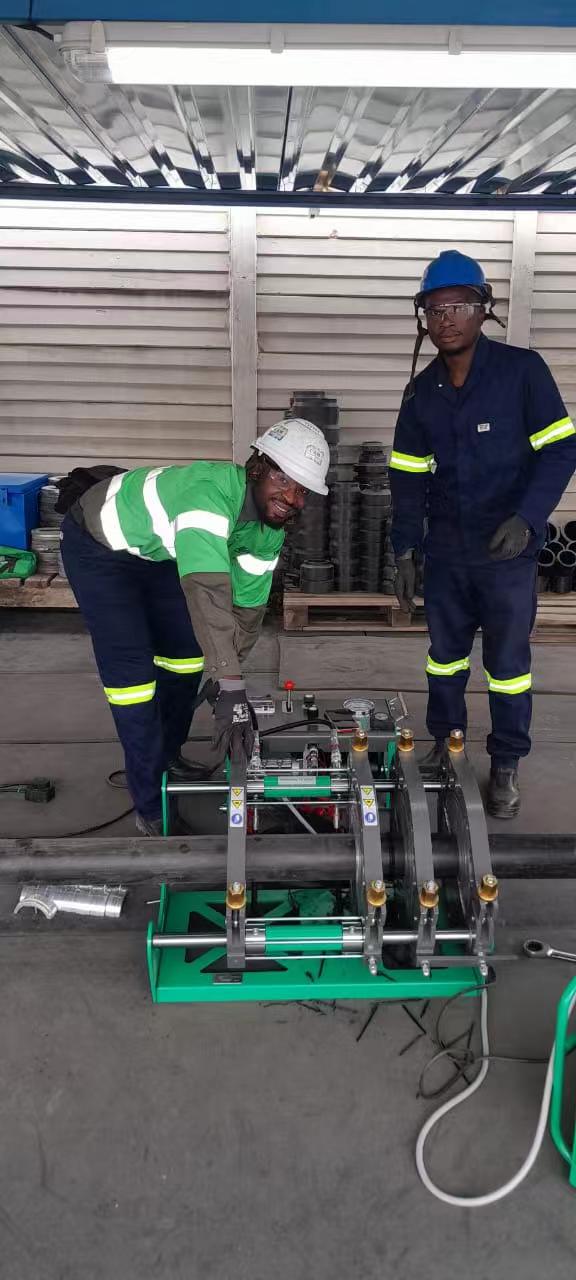

Imagine your factory floor. A 1200mm HDPE elbow is clamped in your welding machine. Your team must make many parts today—tees, wyes, crosses—each needing precise welds that meet DVS 2207 standards. One badly aligned joint destroys a costly piece.
You need an HDPE fitting machine that handles many types without losing accuracy. But how do you pick the right equipment when every seller claims theirs is best? This is a big decision. This purchase will affect your production, quality, and project needs for years.
This guide gives you a clear way to check HDPE pipe welding machines. You will learn to assess your needs, compare machine types, and verify supplier support. Doing so helps ensure your HDPE pipe welder works reliably. As you look at welding equipment, think about options like the 450-1600mm fabrication welding machine.
Key Takeaways
First, figure out what your factory needs to make. Write down the types of fittings and pipe sizes you use. Then, guess how many welds you will do each week.
Choose between manual and automated systems. Automated machines cut down on mistakes. They keep weld quality steady and even.
Match machine rigidity to your pipe sizes. A sturdy frame stops misalignment. Misalignment causes weak welds.
Look for exact control and data tracking. The machine should figure out welding settings on its own. It should save the data for checks later.
Check if the supplier offers good support and has spare parts ready. Ask how fast they respond to service calls. See if they keep important parts in stock.
Defining Your HDPE Fitting Fabrication Requirements
Before you look at any welding machines, you need to check your production needs. This step decides everything else. You cannot choose a machine if you don’t know what it must build. Start with your current orders. Then think about the projects you expect in the next three to five years. Your HDPE fitting machine must handle both.
Mapping Your Fitting Types and Diameter Range
List every fitting type your factory makes or plans to make. You may need 45-degree elbows for city water lines. You may need reducing tees for industrial sewage projects. You may need crosses and wyes for desalination plants. Each fitting shape puts different demands on your HDPE pipe welder. A machine that works with straight pipe joints may have trouble with complex fitting shapes.
Your pipe size range matters just as much. The 450mm to 1600mm span means “large-diameter” ability in this industry. A factory that serves big infrastructure projects needs the full range. A smaller workshop might only need up to 800mm. Measure your actual pipe sizes from recent contracts. Do not guess. Your HDPE pipe welding machine must fit your largest pipe size with room left over. This flexibility in making different shapes lets you take on many projects without buying more equipment later.
Calculating Production Volume and Automation Needs
Estimate your weekly weld count. Count every joint your team must finish. A factory making 50 fittings per week has different needs than one making 200. More volume pays for automated systems. Less volume might favor semi-automatic machines with lower starting costs.
Think about changeover time between fitting sizes. Switching from a 450mm elbow to a 1200mm tee needs clamp adjustments and realignment. Manual systems need skilled operators for each changeover. Automated systems cut this work by using programmable settings. Consider your labor availability. If experienced welders are hard to find, automation reduces your need for individual skill levels.
Your HDPE fitting machine must deliver steady quality across every weld. International standards like DVS 2207 and ISO 21307 set the bar. Meeting these project needs requires precision that manual methods cannot guarantee at this scale. The right machine combines stiffness with control. It stays aligned under huge hydraulic pressure. It tracks welding settings automatically. This precision protects your costly workpieces and your reputation. For reference, explore options like the 450-1600mm fabrication welding machine to see how industrial-grade equipment meets these needs.
Comparing HDPE Fitting Fabrication Machine Types

Not every HDPE fitting fabrication machine gives the same results. In a factory that makes large-diameter fittings, you really choose between semi-automatic and fully automatic systems. Each type fits a different way of working. Knowing the difference protects your money and the quality of what you make.
Weighing Manual vs. Automated Welding Systems
Manual machines cost less at first. That lower price pulls in many factory owners. But manual work puts a heavy load on your welder’s hands and judgment. The operator must set pressure, watch temperature, and time each step. For small pipes, this works fine. For 1600mm pipes, human mistakes become a big danger. One wrong pressure reading or a late changeover ruins a piece worth thousands of dollars. The wasted material alone wipes out any savings from the lower price.
Fully automatic HDPE pipe welding machines take away that danger. You type in the pipe diameter, SDR value, and material type. The control system figures out heating time, welding pressure, and cooling time. It does each step without the operator guessing. This automation gives steady weld quality on every shift. Your team does not need years of experience to make joints that pass DVS 2207 or ISO 21307 standards. The machine handles the exact work.
Think about your production volume when you pick between these systems. A factory making dozens of fittings each week gains a lot from automation. The speed and steady results make the higher price worth it. A smaller shop with only occasional large-diameter jobs might do fine with semi-automatic gear. But you must compare the cost of a ruined piece against the price gap. One failed 1600mm weld often pays for a good chunk of an automated system.
Matching Machine Rigidity to Your Pipe Size Demands
The machine frame decides if your welding gear can handle the physical forces involved. Large-diameter butt fusion needs huge hydraulic pressure. A 1600mm pipe section is heavy and fights against movement. Your machine frame must take that force without bending. Any flex in the frame causes parts to line up wrong. Bad alignment makes weak welds that fail checks or break in service.
Strong, one-piece steel frames are a must for this work. Portable field units simply do not have the stiffness needed for factory-scale fabrication. They work for repair jobs in trenches. They cannot hold exact alignment under the steady pressure of large-diameter welding. Your hdpe pipe welder must sit on a solid base that keeps pipe ends perfectly parallel through the whole cycle.
Look for specific features that separate industrial-grade machines from lighter gear. Teflon-coated heating plates stop plastic from sticking during the melting phase. This coating gives clean separation and even heat transfer across the whole joint face. Double-sided milling cutters prepare both pipe ends at the same time. They make smooth, flat surfaces that help strong fusion. These features directly affect your weld quality and your ability to make fittings that pass strict project checks.
The build quality of your hdpe fitting fabrication machine sets its lifespan and reliability. A sturdy frame, precision-machined clamps, and quality hydraulic parts cut maintenance downtime. They also keep accuracy over years of heavy use. When you compare quotes from different suppliers, look closely at the structural specs. Ask about steel thickness, frame design, and where the hydraulic parts come from. These details show whether a machine will serve you for decades or fail within a few years.
Your choice between manual and automated systems also affects how flexible you are in fabrication techniques. Automated controls let you program different welding settings for various fitting types quickly. You can switch from an elbow to a tee without long manual adjustments. This flexibility in fabrication techniques lets your factory take on diverse projects and meet tight deadlines. For reference, industrial-grade options like the 450-1600mm fabrication welding machine combine automated controls with the rigid frame structure your production line needs. The right welding equipment balances precision and durability with your specific production requirements.
Evaluating Key Features and Supplier Support for Your HDPE Fabrication Machine

Once you narrow your options to industrial-grade machines, you must examine the details that separate good welding equipment from exceptional ones. The key features of an hdpe fitting fabrication machine determine whether your team produces consistent, code-compliant joints shift after shift. You also need a supplier who stands behind the equipment long after installation. Both factors protect your investment and your production schedule.
Prioritizing Control Precision and Data Traceability
The control system acts as the brain of your hdpe pipe welder. A basic system relies on the operator to read charts and set parameters manually. A sophisticated system calculates everything automatically. You enter the pipe diameter, SDR value, and material type. The machine then determines the correct heating time, fusion pressure, and cooling duration. This automation removes guesswork and reduces the risk of human error on large-diameter workpieces.
International standards like DVS 2207 provide the reference framework for these calculations. The table below shows the critical parameters your controls should handle automatically:
Specification / Calculation Method | |
|---|---|
Heater (mirror plate) temperature | 200–220 °C for PE; use upper end for thin walls, lower end for thick walls. Verify with pyrometer on plate surface. |
Fusion pressure (interfacial) | 0.15 N/mm² (DVS low-pressure practice). |
Drag pressure | Measured per setup; gauge pressure needed to move carriage/pipe with no resistance. Added on top of calculated fusion pressure. |
Total gauge pressure calculation | Total gauge pressure = (interfacial pressure × pipe annular area ÷ total piston area) + drag pressure. |
Heat-soak time | Determined by wall thickness (e.g., 45 s for 2.0–4.5 mm; 500–700 s for 50.0–70.0 mm). Rule of thumb: ~10 s per mm of wall. |
Changeover time (dwell) | Must be minimized; ranges from 5 s (thin wall) to 25 s (thick wall) per DVS table. |
Build-up time | Time to ramp to fusion pressure; ranges from 5 s (thin wall) to 35 s (thick wall). |
Cooling time (under pressure) | Ranges from 6 min (thin wall) to 80 min (thick wall). Rule of thumb: ~1.2 min per mm of wall. |
Your hdpe fitting fabrication machine must handle these calculations without operator intervention. This precision directly affects weld strength. During the cooling phase, the joint must stay under sustained pressure to force molecular diffusion and counteract the material’s natural shrinkage. If pressure drops too soon, a “cold skin” forms at the interface. This barrier disrupts the structural bond and leaves internal voids. These defects compromise the weld’s tensile strength because the material cannot form a unified molecular matrix. When pressure stays correct throughout cooling, the resulting weld’s tensile strength rivals or matches that of the original pipe. Precise pressure control is a critical determinant of final weld quality.
Data traceability matters just as much as real-time control. Look for USB data export and print functions on your hdpe pipe welder. These features let you save welding records for every joint. Project audits often require proof that each weld met the specified parameters. A machine that logs and exports this data saves your team hours of paperwork. It also provides a clear record if a weld ever fails inspection.
Verifying After-Sales Service and Spare Parts Availability
Your hdpe pipe welder represents a major capital investment. A machine that sits idle for weeks waiting for a replacement part negates any initial cost savings. Before you sign a purchase agreement, investigate the manufacturer’s service network. Ask about response times for technical support calls. Find out where their service technicians are located and whether they offer on-site repair.
Critical spare parts deserve special attention. Heating plates and hydraulic seals wear out through normal use. Ask the supplier about their inventory of these components. A reputable manufacturer keeps these parts in stock and can ship them quickly. Some suppliers offer comprehensive training programs for your operators. This training ensures your team knows how to use the fully automatic hdpe pipe welding machines correctly from day one. It also reduces the risk of operator error that damages equipment.
Consider the supplier’s track record with other factories. Ask for references from companies that run similar fabrication operations. Contact those references and ask about their experience with the equipment and the supplier’s support. This research takes time but pays off when you need help during a critical production run.
The build quality of your machine also affects your long-term maintenance costs. A sturdy frame and quality hydraulic components last longer and need fewer repairs. When you compare quotes, ask about the origin of key parts. Quality welding equipment uses reliable components that you can source easily. Your hdpe pipe welding setup must meet your project requirements today and support future growth. For reference, industrial suppliers like those offering the 450-1600mm fabrication welding machine typically provide comprehensive training and local support. This versatility in supplier capability helps you maintain production continuity.
Choosing the right hdpe fitting fabrication machine follows a clear path. Start with your production needs. Map your part types and diameter range. Calculate your weekly weld volume. Compare machine types. Decide between semi-automatic and fully automatic systems. Match machine rigidity to your pipe sizes. Evaluate control precision and supplier support. Verify spare parts availability.
Create a detailed specification sheet. Include diameter range, part complexity, automation level, and data traceability needs. Use this document when requesting quotes from multiple vendors.
The right hdpe pipe welding equipment positions your factory for future large-diameter projects. You gain precision and quality that meet strict project requirements. Contact industry experts for personalized guidance on configuring your hdpe pipe welder. Explore options like the 450-1600mm fabrication welding machine to start your evaluation.
FAQ
How Much Operator Training Does an Automated HDPE Pipe Welder Require?
Automated machines make it much easier to learn. The operator just types in pipe diameter, SDR, and material type. The machine then sets heat time, pressure, and cooling length by itself. Basic training covers how to change clamps and export data. Most operators feel comfortable after one week of guided practice.
What Maintenance Does a Fabrication Welding Machine Need?
Clean the heating plate every day to stop plastic from building up. Check hydraulic fluid levels once a week. Look at the Teflon coating for scratches before each shift. Change the milling cutter blades when they become dull. Set up a check of seals and hoses every three months. Good care helps your HDPE pipe welding equipment last much longer.
Can One Machine Handle Both Straight Pipe Joints and Complex Fittings?
Yes. Modular clamp designs let you switch quickly between pipe sizes and fitting types. You can change from a straight joint to an elbow or tee by adjusting the special clamps. This flexibility in how you fabricate parts means one machine can handle many different jobs without buying extra gear.
How Does Machine Rigidity Affect Weld Quality on Large Diameters?
A stiff frame stops flexing under hydraulic pressure. Flexing makes pipe ends go out of line. Bad alignment creates weak welds that fail checks. Heavy-duty steel frames keep ends lined up through the whole weld cycle. This stiffness directly decides how good your final weld is on 1600mm pipes.
What Data Records Should the Control System Provide for Project Audits?
Your HDPE pipe welder should record every weld setting by itself. Look for USB export and built-in printing features. Records must show heat temperature, fusion pressure, and cooling time for each joint. These documents prove you followed DVS 2207 or ISO 21307 rules during client checks.