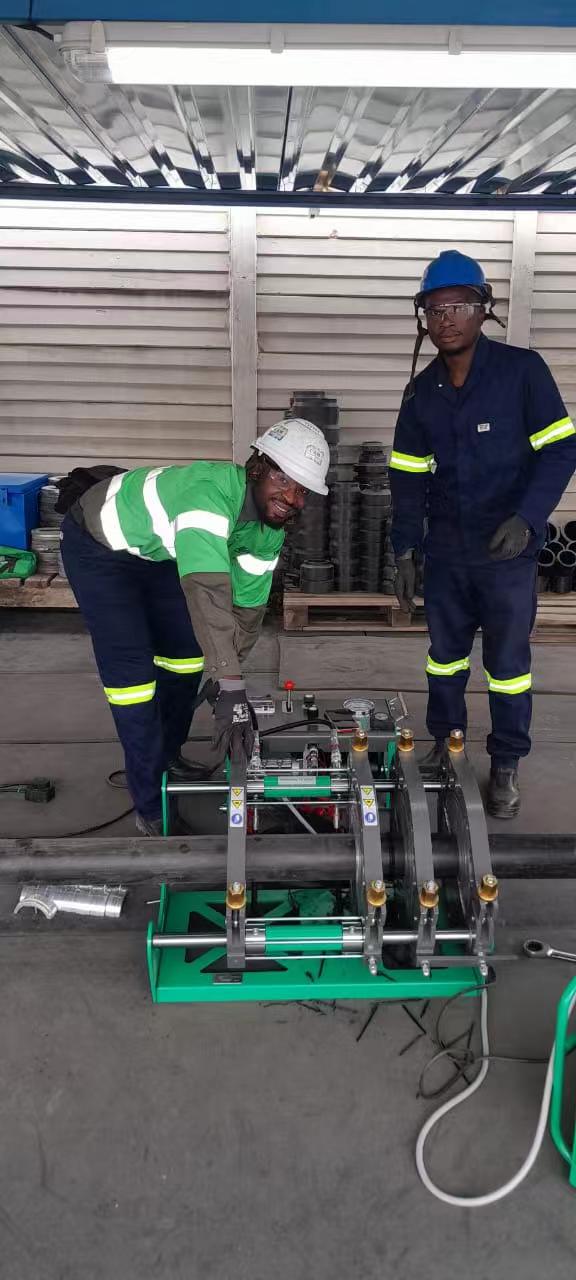
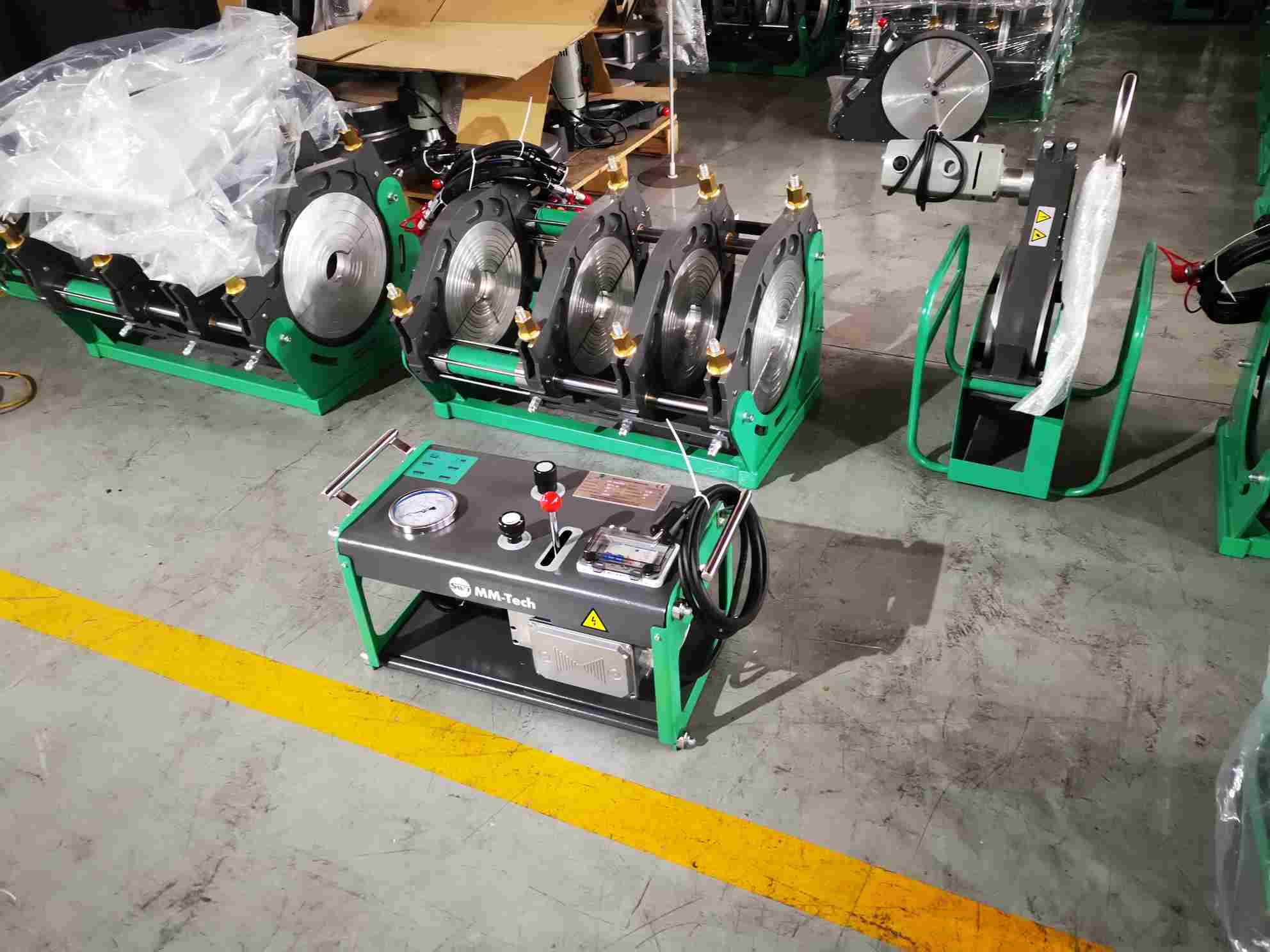
You face steep hillsides and strong pulling forces when joining heavy high-density polyethylene lines on rough ground. Bumpy land drags against long pipes during field projects. Poor alignment can easily ruin an important pipe joint without correct pressure control. You need trustworthy equipment to keep steady hydraulic force. The MM-Tech SWT-V315/90H hydraulic butt fusion welder solves these tough job site problems for 90-315mm pipeline networks. This powerful machine provides smooth part movement and accurate alignment. You get even heat spread and exact joining pressure on every hdpe fusion task. Workers secure strong connection points on another pipe section with ease. You protect overall strength with stable fusion pressure during vital cooling steps.
Key Takeaways
Hydraulic butt fusion machines connect thick plastic pipes on uneven ground with ease.
Because steep ground adds extra pulling force, workers must figure out the true gauge pressure accurately.
The hydraulic system helps maintain stable and controllable fusion pressure throughout the joining and cooling stages.
Strong four-clamp steel frames line up pipe ends properly to stop crooked welds from happening.
Special heating plates hold heat steady within five degrees so the plastic melts evenly.
An optional data logger can record key welding parameters for traceability and quality documentation.
Correct heat melting creates tough, tight pipe networks that can support long-term pipeline reliability when correct fusion procedures are followed.
Understanding HDPE Pipe Butt Fusion Welding Challenges
Limitations of Manual Welding on Large Pipe Strings
Axial Drag Forces on Sloped Field Terrain
Rough job sites force workers to place heavy lines across steep hills. Joining long pipes on slopes means you must overcome strong friction. Shifting a medium-sized pipe causes intense drag force while moving your equipment. You need to figure out drag pressure before connecting two ends. Adding drag pressure to theoretical pressure gives you the real gauge pressure. Here is the basic formula: Actual Gauge Pressure = Theoretical Welding Pressure + Drag Pressure.
Pressure Losses During Extended Cooling Phases
Thick plastic walls require long cooling times inside the clamping chassis. Manual welding gear slowly loses fluid pressure as hot plastic cools down. Uncontrolled pressure drops during this step allow the material to shrink. This shrinkage weakens your finished weld seam along the joint line.
Letting go of hydraulic force early causes major structural damage inside the pipe wall. You must keep exact force applied through the whole cooling time. Manual tools cannot adjust fluid flow to stop ongoing pressure losses. You finish with broken hdpe pipe butt fusion welding joints throughout your network.
Critical Role of Controlled Hydraulic Pressure
Automatic Compensation for Thermal Contraction
A stable hydraulic system allows the operator to apply and maintain the required fusion pressure more consistently. The machine holds a steady hydraulic push on its own while the plastic hardens. This managed force keeps a permanent bond as molten plastic turns back into solid material.
These smart tools fix natural heat shrinkage without any help from the operator. You get reliable hdpe pipe butt fusion welding settings for every single joint.
Eliminating Hi-Lo Offset and Internal Void Defects
Correct hydraulic pressure prevents misaligned edges and shifted pipe walls. Achieving strong butt fusion welding needs tight clamping to align heavy wall ends perfectly. The frame keeps both pipe ends centered during the full fusion process to build a lasting joint.
Correct alignment and controlled fusion pressure help reduce the risk of joint defects. Regular butt fusion welding avoids flaws through automated tracking tools. The chart below matches manual problems against automated hydraulic fixes:
Concept | Problem (Manual Process) | Automated Solution Role |
|---|---|---|
Cooling Phase | Releasing pressure before cooling is complete causes internal voids. | Maintains required pressure automatically for the full calculated cooling duration. |
Drag Pressure | Heavy pipe weight creates drag pressure that operators must add manually. | The operator measures drag pressure and incorporates it into the required hydraulic pressure setting. |
Technical Profile of the SWT-V315/90H Butt Fusion Welder
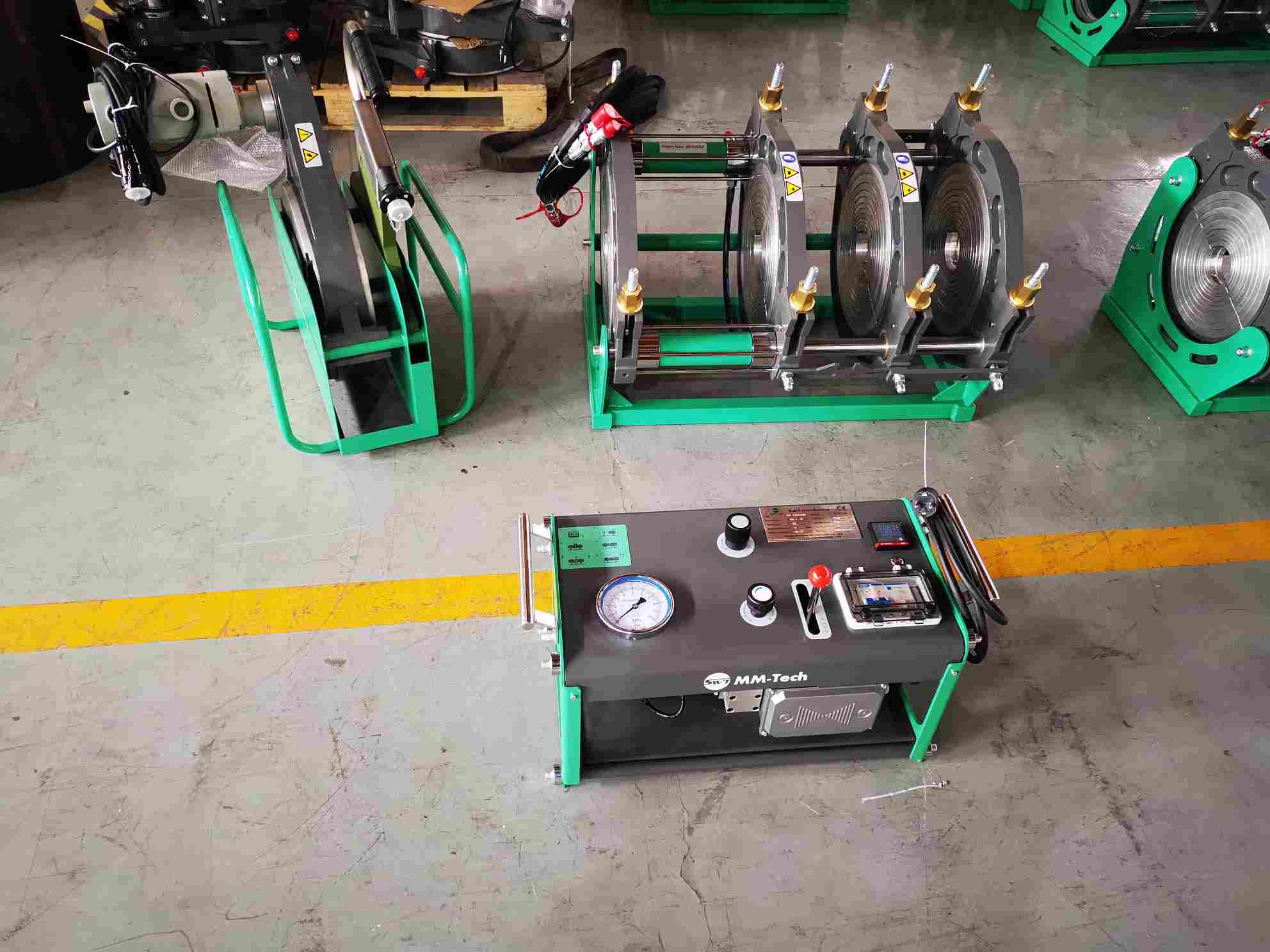
The MM-Tech SWT-V315/90H lets you connect plastics like PE100, PE80, PP, and PVDF. This gear handles standard pipe sizes from 90mm to 315mm, including 110mm, 160mm, 200mm, and 250mm.
High-Stability Hydraulic System and Accumulator
Continuous Pressure Retention During Solidification
A built-in accumulator inside the hydraulic unit provides smooth fluid force. You lock in a tight bond while hot plastic chills inside the clamps. This system shifts pressure on its own as the material hardens.
You prevent internal holes inside thick walls during this hdpe fusion task. Steady force keeps polymer strands locked tight until the plastic freezes. This dependable gear protects total seam strength through every cooling step.
Smooth Carriage Movement Against Heavy Drag Resistance
You drive the hydraulic carriage over rough land without sudden jerks. Long pipe lines pull hard against steep, dirt hillsides. The hydraulic power pack pushes the carriage steadily past ground drag.
You check local drag force before applying final joining pressure. Adding drag resistance to calculated pressure gives your exact gauge reading. You finish the fusion step easily on hard job sites.
Reinforced Anti-Deflection Frame and Safety Features
Four-Clamp Composite Chassis for Precision Alignment
You clamp pipe ends inside the tough four-clamp frame. Built from steel and aluminum, this chassis stops heavy bending forces. You keep pipe centers lined up when joining large 315mm sections.
This stiff base stops uneven edge shifts across the fusion seam. Proper alignment spreads pressure evenly across the whole joint surface. You form a solid seal between matched pipe ends every time.
Integrated Safety Switches and PTFE-Coated Heater
You run the electric facer safely using a built-in safety switch lock. The facer turns on only when locked into the frame track. You keep crew members safe from sudden cutter blade spins.
The heater plate uses a non-stick coating for even heat sharing during hdpe fusion. The plate keeps heat steady within a close ±3°C range. You get an even melt depth without burning your pipe ends.
ISO 12176 Compliant Data Logging Capabilities
Real-Time TTP Curve Capture and Storage
You plug in the MM-Tech Smart Data Logger to record key work steps. The logger saves heat, time, and pressure automatically during butt fusion work. You store full TTP logs for every connected pipe joint.
The recorded data can support welding traceability, project documentation and quality review. Live data tracking removes paper logging errors while running the butt fusion welder. You create clear hdpe pipe logs without extra effort.
PDF and CSV Audit-Ready Quality Reporting
You transfer saved fusion logs using regular USB memory sticks. The system creates secure PDF and CSV test reports right away. You hand clean work records straight to project inspectors.
You show true hdpe pipe strength across city water pipe systems. Quality logs confirm exact heating times and proper cooling pressure. This smart feature turns your butt fusion welder into a complete quality checking tool.
Key Applications of Hydraulic Butt Fusion Technology
Hydraulic joining tools help you build big public utility networks. These machines easily connect many different middle-sized pipes.
Municipal Potable Water Mains and Utilities
High-Pressure Primary Transmission Mainlines
Town water networks need solid pipe joints to stop dangerous line bursts. You construct long main pipelines with tough high-density plastic materials. Modern hydraulic pressure gear welds thick pipe pieces into one continuous line.
This process gives vital mainlines permanent structural strength. You create single-piece pipe loops that easily survive sudden water hammer shocks.
Recent studies conclude it will last at least 100 years. Fused HDPE pipe systems offer a 100+ year design life in water, gas, and sewer applications.
Urban Water Distribution System Expansion
Growing city networks demand quick job site setup and exact pipe alignment. You connect flexible lines to deliver fresh water to expanding towns. Hydraulic clamps hold both pipe ends straight through the entire heating step.
You make strong connections without using bulky metal fittings. Careful pressure regulation stops joint failure inside busy city streets.
Agricultural Irrigation and Water Transport
Long-Distance Overland Supply Pipelines
Farm projects stretch heavy pipes across massive fields. Soil drag pulls hard against long pipe sections during field pulls. You rely on strong hydraulic systems to overcome heavy drag force on rough land.
These units keep flat contact surfaces during heat soaking steps. You lay smooth pipe lines across wide farm fields using durable hdpe pipes.
Industrial, Gas, and Mining Networks
Chemical Slurry and Dewatering Systems
Mines pump rough slurry liquids under very high pressure. You join tough plastic pipes to handle strong chemicals and dirty water. Managed hydraulic force forms smooth inside surfaces along every weld joint.
Smooth inner walls reduce flow drag and stop quick pipe wear. You build leak-proof joints that keep surrounding worksites safe.
Natural Gas Polyethylene Mains
Natural gas lines require strict welding rules to protect public safety. You depend on exact heat settings to make permanent molecular bonds through careful fusion steps.
Municipal utility departments and pipeline contractors depend on butt fusion to secure high-pressure water mains, industrial chemical piping, and natural gas distribution networks.
Standard / Framework | Purpose / Application | Key Parameter or Requirement |
|---|---|---|
ASTM F2620, ISO 21307, DVS 2207-1 | Standardizing welding procedures | Mandate parameter controls |
ISO/DVS (Interfacial Pressure) | Polymer chain entanglement | Fusion parameters shall be selected according to the applicable welding standard and pipe specification. |
ASTM/North America | Pipeline pressure targets | ASTM F2620 — Butt fusion procedure for PE pipe; machine gauge pressure must be calculated based on interfacial pressure, pipe size, piston area and drag. |
ISO 12176-1 — Equipment for butt fusion jointing of PE systems. | Fusion equipment performance | Strict hardware compliance |
You must follow these rules to gain official project approval. Certified workers ensure correct machine use while installing field pipes. Good fusion work guarantees total safety across all natural gas networks.
Case Study: Ecuador Municipal Water Pipeline Project
A construction team recently built a large city water line across the mountains in Ecuador. Workers laid 12.5 kilometers of strong hdpe pipe over steep land. This job shows how modern gear handles tough outdoor conditions.
Mountainous Site Challenges and Pipe Specifications
High-Altitude Terrain and Ambient Temperature Swings
The work crew met big environmental challenges high in the Andes mountains. Extreme height causes unpredictable weather every single day. Daily height shifts bring big day-to-night temperature changes of 10–15°C. Cold night air chills the metal tools fast. Warm daily sun heats the plastic pipe surface quickly.
Elevation Range: High-Altitude Ecuador
Daytime Temperature: 5–10°C
Nighttime Temperature: -5 to 0°C
Temperature Swing Estimate: 10–15°C shift
These fast temperature shifts make plastic parts swell and shrink. Quick cold drops change heater plate heat while working outside. Crew members must tweak heat soaking times to keep welds smooth. Steep hillsides also create big drag force as long pipe lines slide over dirt.
Joining Thick-Wall 315mm SDR11 PN16 Pipes
This project called for thick PE100 plastic on the main water line. You can check the main pipe dimensions in the official job plan table below:
Specification Parameter | Project Target Value |
|---|---|
Pipe Outside Diameter | 315 mm |
Pipe Material Grade | PE100 |
Standard Dimension Ratio | SDR11 |
Pressure Rating | PN16 |
Nominal Wall Thickness | 28.6 mm |
Thick 28.6mm pipe walls bring tough technical issues during field welds. Heating thick plastic takes deep heat flow inside without burning the outer edge. Heavy slope drag pulls hard on open joints while moving the carriage. You need firm hydraulic force to keep heavy pipe ends lined up.
Field Performance of the SWT-V315/90H System
Maintaining Thermal Uniformity Across Thick Walls
The user placed the SWT-V315/90H system on rough soil to start trimming. Sharp power trimmers shaved both pipe ends smooth and flat. Clean ends help make full contact across the whole 28.6mm surface.
Controlled thermal distribution stops localized cold welds across thick pipe cross sections.
The PTFE-coated heater plate gave even heat to both pipe ends. Built-in chips held the heat plate within a close ±5°C range. Deep heat soaking made a smooth, raised melt bead around the outer rim. Even heat helped long polymer chains unlock for full molecular bonding.
Hydraulic Accumulator Stability During Field Cooling
The worker removed the heater plate fast once the heating step ended. The hydraulic carriage pushed the soft ends together to begin joining. The machine applied set fusion force plus measured drag pressure right away.
The built-in hydraulic accumulator kept exact force steady while hot plastic cooled. Thick pipe walls shrink as soft plastic hardens into a strong joint. The accumulator pushed fluid into the cylinder on its own to fill lost space. This continuous force stopped inner voids and locked in a tough bond. The strong frame stopped Hi-Lo offset between heavy pipes on sloped soil.
Hydrostatic Pressure Testing and Final Acceptance
Zero-Leakage Performance Verification
Crews ran strict field checks after finishing the full pipeline layout. Site engineers sealed pipe segments and pumped water inside to build test pressure.
Fill the pipe section fully with clean water to clear trapped air.
Raise inner water pressure slowly to the planned test target.
Hold top test pressure while inspectors check each welded joint.
Record pressure gauge readings over the full required test time.
The joined pipes showed zero leaks through the entire test run. Inspectors saw no water drops or pressure loss at any joint line. The fusion machine delivered tight joints along the whole mountain path.
Evaluation of Viscoelastic Behavior in Testing
Inspectors checked pressure gauges closely during final acceptance tests. Heavy plastic shows natural viscoelastic movement under inner water load. The plastic material stretches slightly under continuous fluid force.
This stretch creates a tiny pressure drop early in test cycles. Smart testers separate normal plastic stretch from actual mechanical leaks. Pressure leveled off once the plastic line held the water weight. The client accepted the line and praised frame stiffness and clean hdpe pipe butt fusion welding results. Using strong hdpe fusion tools speeds up field tasks while building safe leak-proof lines. Learn correct hdpe pipe butt fusion welding settings to guarantee lasting joint strength on all public utility jobs.
Step-by-Step HDPE Pipe Butt Fusion Welding Workflow
Pipe Mounting, Alignment, and Drag Measurement
Clamping Pipe Ends in the Rigid Chassis
Put the hdpe pipe ends into the strong frame. Secure the top clamps with inserts to fit the pipe size. Good clamping lines up both ends to stop uneven edges while connecting hdpe pipe. Tightening these clamps holds the heavy sections firmly in place. This step prepares the gear for accurate joining work.
Measuring On-Site Drag Pressure Settings
Drag pressure is the gauge reading needed to shift the carriage and pipe smoothly. Measure this movement force while the pipe slides across the site. You must add drag pressure directly to your basic target pressure. Total gauge pressure for fusion equals basic target pressure plus measured drag force.
Pull the pipe slowly on rollers to check for movement resistance.
Note the drag pressure readings you get from this quick test.
Keep a log of these numbers to catch common job problems.
Adjust the rollers or supports if the drag reads too high.
Electric Facing and Heating Soaking Cycles
Achieving Parallel Facing with Safety Interlocks
Set the electric trimming tool onto the frame tracks. Start the trimmer to shave thin plastic layers off both pipe ends. This tool makes flat matching surfaces for total contact across the joint. For 315mm pipes and larger, the end gap after trimming must stay under 0.5mm. Any gap over 0.5mm means bad alignment that ruins heat pressure later.
Uniform Thermal Soak and Melt Bead Formation
Put the coated heater plate between shaved ends to start heating. Low contact pressure helps the plastic soak up heat across the joint.
Following ISO 21307 fusion rules for PE100, soak heat for 10 seconds per millimeter of wall thickness.
Pipe Specification | Parameter | Value | Calculation |
|---|---|---|---|
OD315, SDR11 PE100 | Wall Thickness ( | 28.6 mm |
|
ISO 21307 Guidelines | Recommended Heat Soak Time ( | 386.1 seconds |
|
Even heat soak forms a full melt bead around each pipe end. This heat step prepares soft plastic layers to join the pipes together.
Final Fusion Joining and Pressure-Held Cooling
Rapid Transition and Fusion Pressure Application
Pull the heater plate out fast right after the heat cycle finishes. Quick carriage shifts stop hot plastic surfaces from cooling in open air. Press the melted ends together using your total target gauge pressure. Using correct pressure pushes air bubbles out of the soft seam. This controlled push begins the molecular hdpe pipe butt fusion welding process.
Controlled Cooling Cycle to Lock Joint Integrity
Hold full joining pressure through the whole cooling step inside the frame clamps. The hydraulic accumulator balances force shifts as hot plastic shrinks while hardening. Controlled cooling builds a permanent joint that offers strong structural support. Plastic chains tangle across the seam to create a tough connection. You build a lasting bond that holds up against heavy inner pressure. You complete clean butt fusion welding on every joint in the field. Steady hydraulic force helps you finish a neat weld every time. Proper pressure control prevents major flaws during butt fusion welding work. Standard job rules ensure solid joint strength throughout the whole pipeline system. Take the pipe out of the clamps only when the joint cools down completely. Next, check the joined pipe by eye to confirm proper bead shape on all ends. High accuracy during fusion work stops hidden structural weakness from forming. This dependable hdpe fusion process works great on steep ground. Precise work during hdpe pipe butt fusion welding creates clean seams. Careful watching during hdpe pipe butt fusion welding protects total joint quality. Following these clear steps ensures every hdpe fusion task builds a safe weld lasting decades. Master each step of hdpe pipe butt fusion welding to create strong networks.
The SWT-V315/90H hydraulic fusion welder beats steep hill drag, pipe alignment shifts, and pressure drops on thick pipes. A built-in unit maintains steady pressure during the cooling step. This system provides exact alignment using a strong four-clamp frame. You make even welds and build leak-free joints on rough land. Proper fusion methods protect your pipeline investments for many decades.
You can upgrade your field work today. Contact MM-Tech right now to ask for technical spec sheets and custom price quotes. Our team offers clamp inserts, smart data loggers, and expert tool advice for your next project.
FAQ
What pipe sizes does the SWT-V315/90H support?
The machine works with plastic lines that measure 90mm to 315mm wide on the outside. It handles regular sizes like 90, 110, 160, 200, 250, and 315mm. You can easily connect pipes made from PE100, PE80, PP, or PVDF materials.
Why do you need a hydraulic butt fusion welder on field sites?
Large pipes create heavy drag when you pull them over bumpy or hilly ground. Fluid power lets this welder slide the carriage easily past rough dirt friction. The steady hydraulic drive gives strong, smooth pushing force that simple hand tools cannot match.
How do you compensate for terrain drag during butt fusion welding?
First, you test the movement on the ground to find the real drag pressure. Then, you sum this extra drag force together with your main calculated joining pressure. Finding this full gauge pressure helps you squeeze the parts correctly while doing butt fusion welding on hills.
How does the chassis prevent misalignment on thick-wall lines?
You lock the pipe ends tightly into a sturdy frame that uses four separate clamps. Constructed from steel and aluminum, the tough body stops heavy parts from bending sideways. Precise centering fixes crooked edges so you form a smooth, even plastic bead around the joint.
How does data logging support quality compliance during hdpe pipe butt fusion welding?
You plug in the optional MM-Tech Smart Data Logger to track heat, time, and push automatically. This device saves live TTP graphs to prove your work follows ISO 12176 rules. You can print neat PDF or CSV files to verify every single hdpe pipe butt fusion welding job.
Why is controlled cooling necessary for long-lasting connections?
You keep steady fluid push on the parts while hot plastic cools down in the clamps. A built-in pressure tank fixes heat shrinkage on its own as the material hardens. Managed cooling stops hidden bubbles from forming inside, which gives you leak-proof joints on high-pressure lines.
How does the machine maintain proper heat across thick plastic walls?
A non-stick heater plate spreads warm energy across both pipe faces at the same time. Internal heating parts keep the plate temperature steady within a small 5-degree range. This level heat stops cold spots from ruining your material during hdpe pipe butt fusion welding.