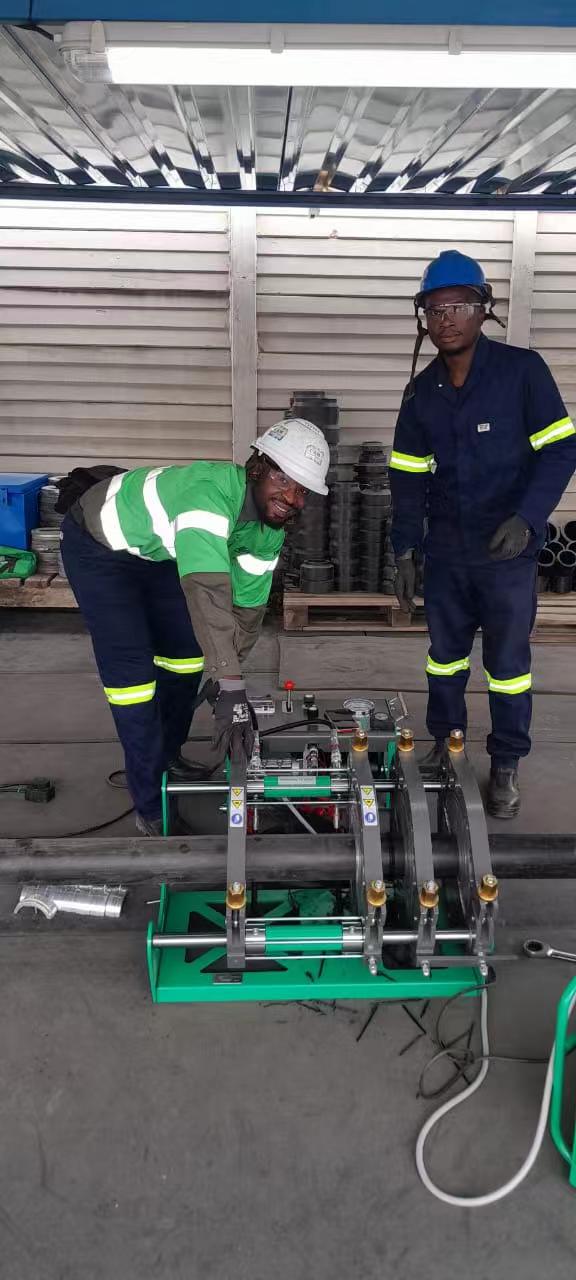
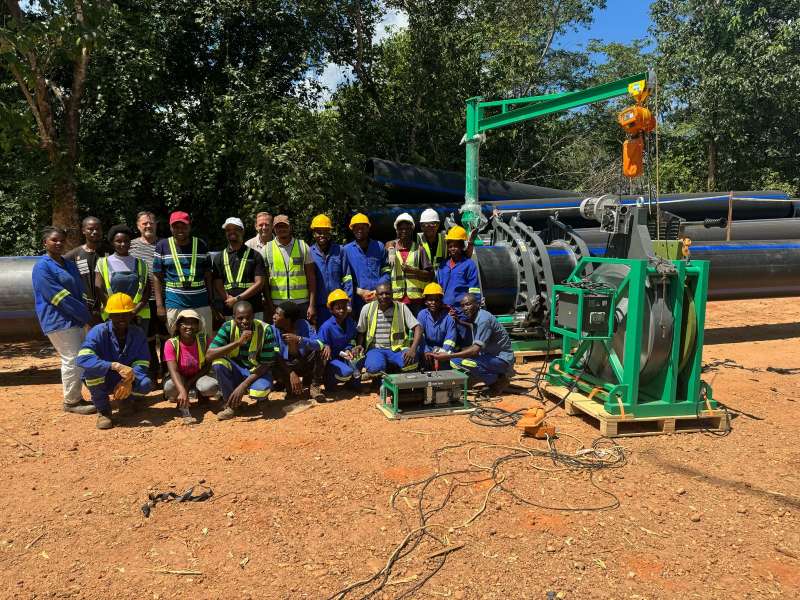
In South Africa’s hot, dry areas, workers move very heavy HDPE pipe pieces across dirt roads, fighting dust storms and extreme heat. Every pipe joint must last for many years under high pressure, but one bad weld can ruin a whole water or gas system. How can workers make sure the welds are strong in such tough conditions? The SWT-V1000/630H Hydraulic Butt Fusion Welder gives the perfect answer. This strong machine turns risky jobs into reliable results with exact pressure and even heat, even in the worst weather. It makes leak-free joints that meet world standards, turning hard projects into everyday tasks.
Key Takeaways
The SWT-V1000/630H uses a tough steel frame to keep heavy pipes lined up on uneven ground. This prevents weak welds caused by bent frames.
The heating plate spreads heat evenly over the whole pipe end. This ensures thick walls melt completely without burning the edges.
The machine has a data logger that saves every weld detail. These records show quality and meet global standards.
This welder helps save money by stopping bad welds. Projects stay on schedule, and pipes last for many years without leaks.
Pipeline Challenges in South Africa
Extreme Terrain and Harsh Field Conditions
South Africa’s pipeline routes cross some of the toughest land on the continent. Workers move huge HDPE pipe pieces over dirt roads, rocky hills, and dry riverbeds where dust fills the air. Each 900 mm pipe piece weighs several tons, and pulling these big sections into place creates strong ground friction. This pulling force can twist lighter machine frames, pushing pipe ends out of line before welding starts. Workers must deal with gravity, rough ground, and moving soil at every joint.
Hot weather makes things harder. Workers in +35°C to +40°C heat face a big problem: controlling the cooling time of each fusion joint. The table below shows how temperature changes affect weld strength:
Ambient Temperature Effect on Cooling Rate | Details |
|---|---|
Quantitative adjustment | For air temperatures between -5°C and +40°C, fusion/cooling time correction factor is 0.5% to 1% per degree Celsius from a 20°C starting point. |
Qualitative impact | High air temperature (near +40°C) slows heat release, making a bigger gap between core temperature and outer bead; very cold or windy weather cools the outer bead fast while the core stays hot, causing stress. |
Operational consequence | Wind shields are needed, and cooling time may need to be longer so the inner wall core stabilizes before clamp release. |
Wind shields are required on open job sites. Without them, dust gets on the heated surfaces, and uneven airflow causes temperature differences across the joint face. These conditions need a machine with strong clamping force and steady hydraulic pressure to handle ground drag and keep perfect alignment.
Demanding Standards for High-Pressure Integrity
Thick-walled pipes rated SDR11 bring their own engineering problems. A 900 mm OD pipe with an 81.7 mm wall thickness needs deep, even heat penetration across the whole joint face. The heating plate must give steady temperature across its full surface, or the outer edges burn while the core stays unmelted. This uneven heat pattern creates weak fusion zones that fail under pressure.
International standards set the bar for good welds. ISO 21307 and ASTM F2620 define exact rules for heating time, bead size, and cooling duration. These standards require perfect fusion—no gaps, no dirt, no misalignment. Every joint must handle many years of high-pressure use, often carrying drinking water or natural gas to communities that need steady supply.
Meeting these standards in remote African field conditions takes more than skilled workers. The equipment must keep steady hydraulic pressure during the whole cooling cycle. Any pressure drop while the plastic hardens creates internal shrinkage voids that weaken the joint from inside. A Hydraulic Butt Fusion Welder built for these extremes must give steady force, exact heat control, and reliable performance despite dust, heat, and rough use. Contractors who handle these challenges build infrastructure that serves communities for generations.
SWT-V1000/630H: A Hydraulic Butt Fusion Welder Built for Extreme Conditions
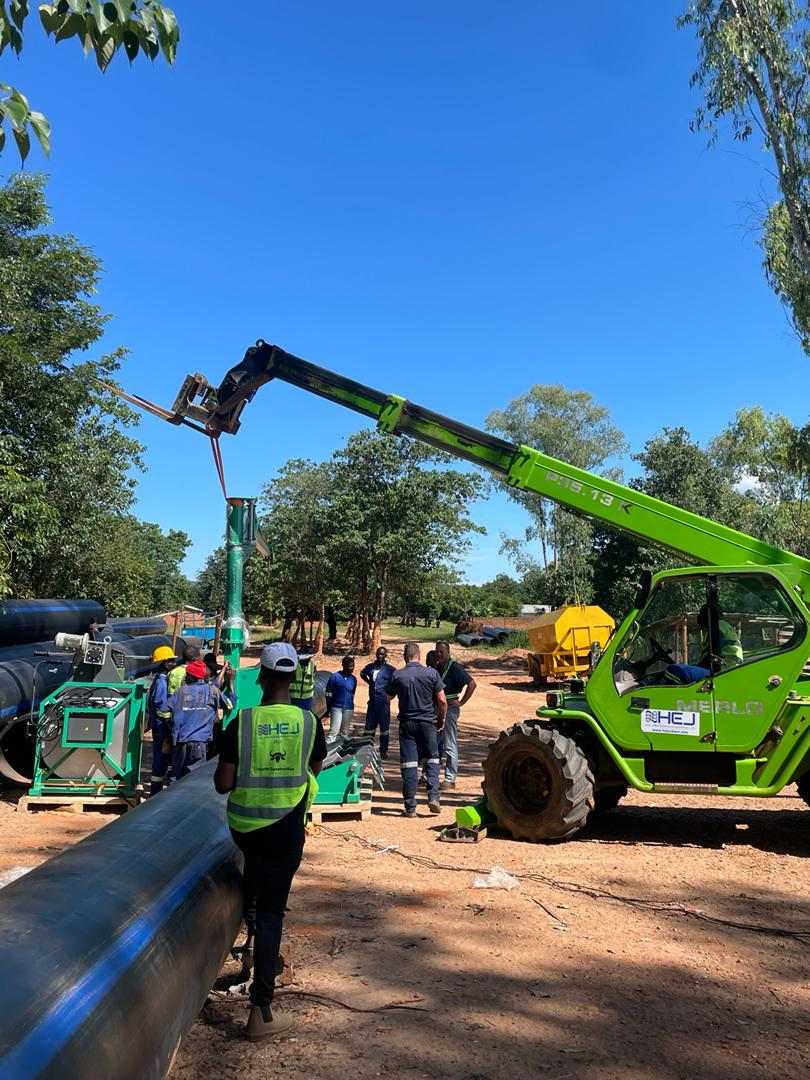
The SWT-V1000/630H covers a welding range of 630 mm to 1000 mm, accommodating the largest thermoplastic pipes used in modern infrastructure. This machine handles HDPE, PP, and PVDF materials with equal precision. Contractors rely on this equipment for potable water mains, gas distribution networks, mining slurry lines, and industrial fluid transfer systems. The welder complies with DVS 2207, ISO 21307, and ASTM F2620 standards, giving engineers confidence that every joint meets international quality benchmarks.
Heavy-Duty Frame and Precision Hydraulics
The machine’s anti-deflection steel frame forms its backbone. High-tensile structural steel resists twisting when crews drag multi-ton pipe segments across unpaved terrain. This rigidity guarantees accurate pipe alignment with zero offset, even under severe ground friction. The frame prevents the subtle chassis flex that ruins weld quality on lighter machines.
A precision hydraulic power unit drives the fusion process. The system includes a high-capacity accumulator that maintains constant pressure throughout the entire welding cycle. Leak-proof hydraulic control valves from leading German, Italian, and Japanese suppliers ensure reliable operation in dusty conditions. The accumulator holds pressure steady during long cooling phases, preventing internal shrinkage voids in thick-walled pipes. This unwavering force proves critical when welding SDR11 pipes with 81.7 mm walls, where any pressure drop creates structural weaknesses invisible to the naked eye.
The powerful motor and hydraulic cylinders generate massive pull force. This capability overcomes ground drag effortlessly, bringing heavy pipe ends into perfect face-to-face contact. Operators appreciate the STUCCHI quick couplings that enable fast, secure hydraulic connections in the field.
Advanced Thermal Control and Data Integration
The heating plate features a DuPont Teflon coating that minimizes plastic adhesion and extends plate lifespan. Premium heating elements maintain temperature variance within ±7°C across the massive 1000 mm heating surface. This uniform heat distribution eliminates localized charring and ensures adequate melt depth across the entire joint face. The PTFE coating also simplifies cleaning between welds, reducing downtime.
An integrated overhead hoist handles the heavy heating plate and planning tools. This crane reduces operator physical strain and drastically cuts changeover times between facing and heating stages. The machine operates on a 380V 50Hz 3P power supply with a rated power of 24 kW.
The optional MM-Tech Smart Data Logger transforms quality control. This system records every critical parameter during each welding cycle:
Welding current raw sampling values
Welding voltage raw sampling values
Welding barometric pressure raw sampling values
RMS values of welding current, voltage, and barometric pressure calculated using point-by-point integration or simple average
Timestamp of the welding cycle
Welding time duration
The data logger supports instant thermal printing and USB data export. This feature creates tamper-proof electronic welding logs that satisfy municipal quality audits and ISO 21307 documentation requirements. Project managers can review real-time data on heating duration, temperature curves, drag pressure, and fusion pressure profiles. This transparency builds trust with clients who demand verifiable quality.
The SWT-V1000/630H Hydraulic Butt Fusion Welder combines rugged construction with intelligent monitoring. Its 2400 kg frame provides stability, while the accumulator delivers consistent force. The ±7°C heating accuracy ensures deep, uniform thermal penetration. Together, these features transform challenging field conditions into routine operations. Contractors deploying this machine gain a decisive advantage in remote African environments where reliability determines project success.
Case Study: 7,000 Meters of Zero-Leak Pipeline in Malawi
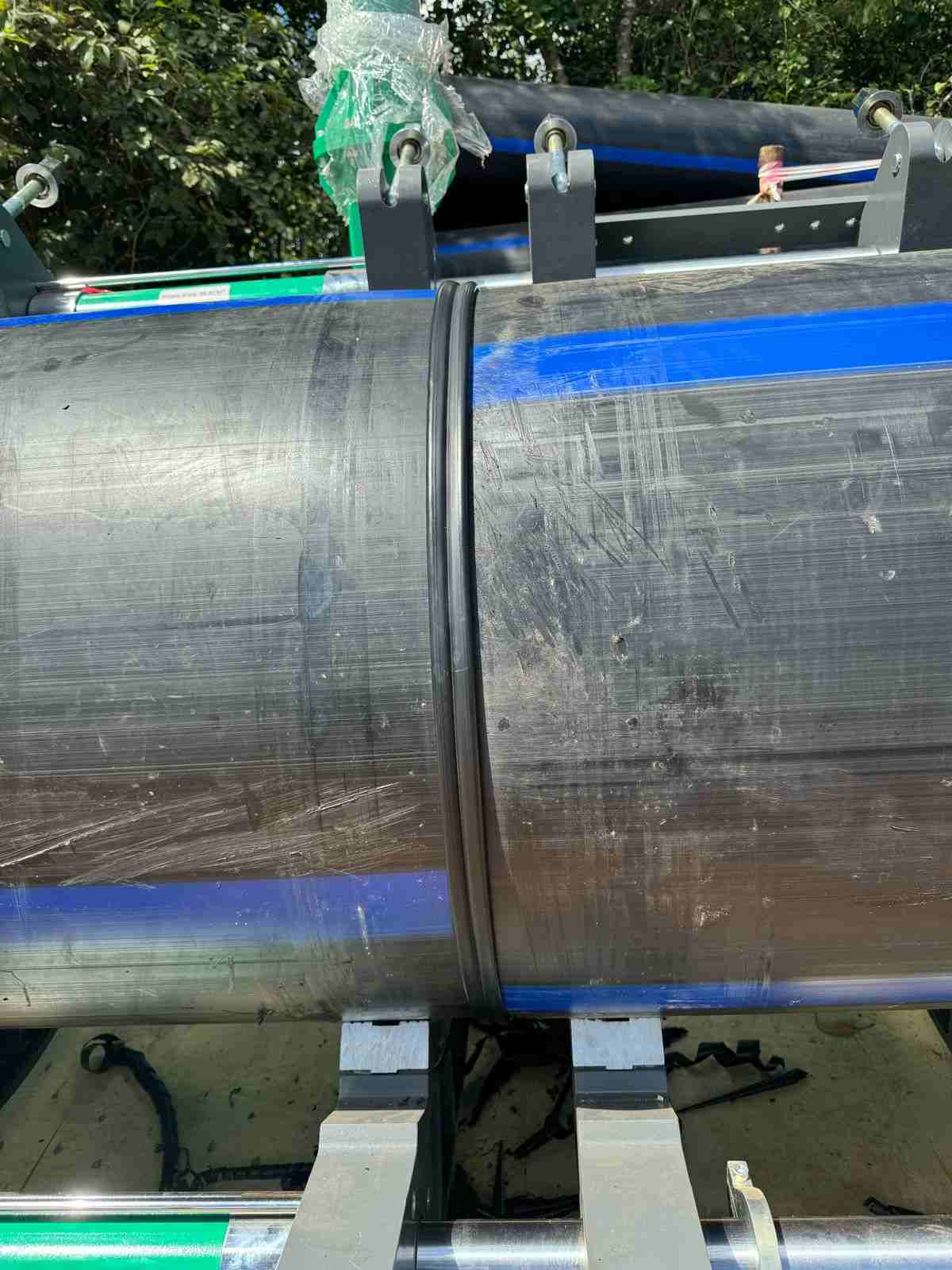
Overcoming 81.7mm Wall Thickness Challenges
The Malawi Irrigation Initiative needed 7,000 meters of 900 mm HDPE pipe with an SDR11 pressure rating. This rating meant the pipe walls were 81.7 mm thick. Welding such thick walls in dusty, hot African field conditions created three big problems.
First, keeping pipes aligned. Each pipe piece weighed several tons. Crews dragged these sections over unpaved ground. The friction could bend lightweight machine frames. If pipe ends were not lined up, weak spots would form in the weld. Contractors could not risk such failures on a project this size. The remote sites also made it hard to get spare parts or technical help. Dust storms often swept through the area, risking contamination of the heating plate and joint faces before each weld.
Second, getting heat deep enough. An 81.7 mm wall needed steady, even heat across the whole joint face. If heat was uneven, the outside would burn before the inside melted. This created hidden weak welds that could not be seen by eye. Finding these flaws required costly ultrasonic testing tools. High air temperatures, often above +35°C, made the heating process even harder.
Third, preventing air pockets inside. Long cooling times brought another issue. The melted plastic shrank as it cooled. If hydraulic pressure dropped at all, the shrinking was uneven. Tiny air pockets formed deep inside the joint. These pockets weakened the weld from within, with no visible signs. The pipe could fail under high pressure years later. Fixing such failures in remote areas would waste huge amounts of time and money.
The project team chose equipment with strong frames, exact heat control, and steady hydraulic pressure. The SWT-V1000/630H fit these needs perfectly. Its features matched the project’s tough technical demands.
How the Hydraulic Butt Fusion Welder Delivered Results
The machine’s heavy steel frame held the 900 mm pipe pieces with firm precision. The anti-deflection body resisted twisting even under heavy ground friction. Strong hydraulic cylinders pulled the heavy pipes into perfect face-to-face contact. Zero offset meant each weld started with proper surface contact. This removed the risk of weak fusion zones.
The PTFE-coated heating plate kept temperature variance within ±7°C across the full 1000 mm surface. Deep, controlled heat soaking let warmth reach fully into the 81.7 mm walls. Smooth, even melt beads formed on every joint face. No burning appeared on the outer edges. No cold spots stayed in the core. The DuPont coating also stopped plastic from sticking, keeping the plate clean between cycles. The built-in overhead hoist cut changeover time between facing and heating steps.
The hydraulic power unit and accumulator kept fusion pressure perfectly steady during the long cooling phase. This constant force stopped internal stress from building up. Tiny air pockets could not form while the material shrank. The thick walls cooled evenly under steady pressure. The machine kept this stability across all 7,000 meters of pipeline.
Project results were outstanding. Crews finished all welds on time despite the tough field conditions. The data logger gave real-time quality tracking for the quality assurance team. Final hydrostatic pressure testing showed every weld joint passed on the first try. The test found zero leaks across the whole pipeline length. This 100% success rate proved the machine’s reliability under extreme conditions. Operators got on-site training to use the machine’s full power from day one.
The chief project engineer for the Malawi Irrigation Initiative praised the equipment’s performance highly.
“An 81.7 mm wall thickness is usually an engineer’s nightmare, but the MM-Tech machine turned it into routine work. The hydraulic system was exceptionally powerful and stable, running without a single failure throughout the entire project. It proved to be a reliable asset for our water infrastructure.”
This case study shows how the right equipment turns high-risk pipeline jobs into predictable wins. The machine’s firm clamping, exact heat control, and steady hydraulic pressure delivered results that met the project’s strict requirements.
Business Impact and Long-Term ROI
Reducing Costs and Accelerating Timelines
The SWT-V1000/630H starts saving money from the very first day. The Malawi project showed this clearly. Workers finished 7,000 meters of 900 mm SDR11 pipeline with no failed welds. Every joint passed pressure testing on the first try. This perfect record meant no costly fixes. No one had to cut out bad joints. No repair equipment had to travel to faraway sites. No delays happened because of weld problems.
Regular field welding on thick HDPE pipes often needs 10 to 15 percent rework. Each bad joint requires cutting, re-facing, and welding again. This takes many hours of work and machine time. The Hydraulic Butt Fusion Welder removes this risk completely. Exact pressure control and even heat distribution create steady quality on every joint. Contractors finish projects faster and stay within budget.
Long-term savings are just as strong. A zero-leak pipeline needs little upkeep over its 50-plus year life. No costly emergency repairs stop operations. No water loss from leaky joints wastes resources. No service breaks affect communities that rely on steady supply. The machine’s strong build also means fewer breakdowns and lower repair costs during the whole project.
Global Support and Training for Project Assurance
MM-Tech offers a full support package that protects every investment. On-site operator training ensures crews use the machine’s full power from day one. Trained operators make steady welds without guessing. This training cuts the learning curve a lot. It stops costly mistakes from poor technique.
Fast spare parts delivery keeps projects moving without stops. The company stocks key parts for quick shipping. A broken heating plate or hydraulic hose does not halt work for weeks. Quick replacement keeps building schedules on track and avoids expensive downtime.
One-on-one technical help gives project managers direct access to welding experts. Engineers can call for advice on hard field conditions. The two-year warranty covers factory defects and provides peace of mind. This full support network ensures worry-free operation across the machine’s long life. Contractors use the SWT-V1000/630H with total confidence.
The SWT-V1000/630H changed how South Africa builds pipelines. Contractors used to deal with bent frames, uneven heat, and hidden gaps in thick pipes. The machine’s strong frame, exact heat control, and steady hydraulic force got rid of these problems. Projects that were once very risky became reliable jobs with tested quality.
This welder is a smart choice for making sure projects succeed. Pipelines with no leaks lower repair costs over many years of use. Each good weld keeps communities safe and saves resources.
Africa’s need for infrastructure keeps growing. The Hydraulic Butt Fusion Welder is now the standard tool for handling these challenges. Contractors who use this machine build strong systems with trust, knowing each weld meets world standards.
FAQ
What pipe sizes does the SWT-V1000/630H weld?
The machine can weld pipes from 630 mm to 1000 mm wide. It uses reducer inserts for sizes 630, 710, 800, and 900 mm. This range covers the biggest pipes used in water, gas, and industry.
Which international standards does this welder meet?
This welder follows rules from DVS 2207, ISO 21307, and ASTM F2620. These rules set precise limits for heating time, bead size, and cooling time. So every weld joint meets high global quality standards.
How does the machine prevent weld defects in thick-walled pipes?
The machine’s big accumulator keeps steady hydraulic pressure during cooling. This steady force stops tiny air pockets in thick walls. The PTFE heating plate spreads heat evenly, so no cold spots or burnt edges.
Does MM-Tech provide operator training and support?
Yes. On-site training helps crews use the machine well from day one. MM-Tech also sends spare parts fast and gives one-on-one help. A two-year warranty covers factory defects.
How does the data logger improve quality control?
The optional Smart Data Logger records current, voltage, pressure, and time for each weld. It prints reports and exports data to USB. These tamper-proof logs satisfy city quality audits and ISO rules.