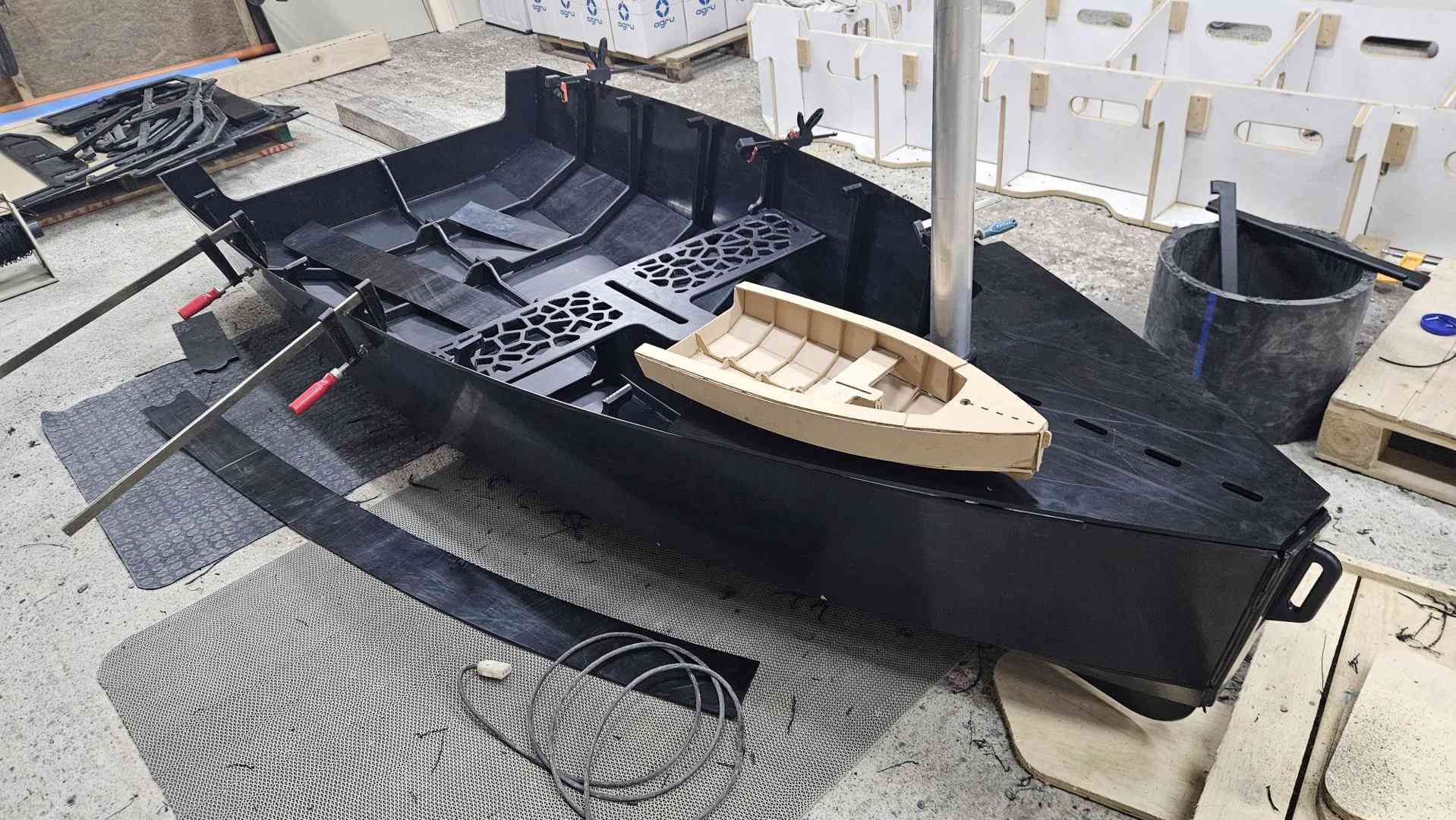
Building an HDPE boat demands more than good design. Weld quality decides hull strength and watertightness, and every stage carries its own welding requirements. This guide walks through the build step by step and names the welding solution used at each stage.
Welding is the backbone of the entire build. Careful seam preparation and correct technique at each stage determine how the finished hull performs on the water. The right HDPE boat manufacturing welding solution connects raw material, cutting, joining, and final assembly into one reliable process.
Key Takeaways
-
HDPE offers high impact resistance and corrosion resistance for durable boat hulls.
-
Clean and prepare every seam before welding to ensure strong, watertight joints.
-
Use the right welding machine for each stage, from cutting to final seam welding.
-
Match equipment to your build scale to control costs and maintain efficiency.
Raw Material Selection: Why HDPE Is Preferred
The build begins before any weld is struck. HDPE pipe is reclaimed and prepped, then extruded into the sheets that form the hull. This opening stage sets the material quality that every later joint depends on. Sheet thickness, surface condition, and internal stress all trace back to how the raw stock was produced and handled.
HDPE earns its place in work boat construction through a combination of low weight and high durability. Its mass density falls in the range of 0.94–0.97 g/cm³, which keeps hull weight down and improves payload capacity for commercial operations. The table below summarizes the marine-grade properties that matter most during a build.
|
Property |
Value |
|---|---|
|
Tensile strength at yield |
20–37 MPa |
|
Continuous service temperature |
up to ~120°F (49°C) |
|
Shore D hardness |
low-to-mid 60s |
|
Chemical resistance |
resists most acids, bases, and aqueous solutions at room temperature |
|
Water absorption |
minimal (holds dimensional stability in wet/humid environments) |
Toughness and impact resistance complete the picture. Notched IZOD impact values for HDPE span a wide range, and the material absorbs impact force effectively. That behavior protects the hull structure in high-frequency collision scenarios such as shoals, rocky shores, and commercial operations. HDPE is also chemically stable against seawater, moisture, salt, marine fuel oil, and lubricating oil. Its smooth dense surface resists marine algae and shellfish adhesion, which reduces maintenance workload substantially.
Rotational molding suits high-volume production of complex, seamless shapes. Aluminum hulls remain a reasonable choice where low initial cost and established repair networks matter most. Welded HDPE fits best where impact tolerance, corrosion resistance, and long service life drive the specification. Each method has a natural home, and the material choice should follow the duty profile of the vessel.
Opening Steps of HDPE Boat Manufacturing
The build moves from material to finished hull through a fixed sequence. Each step prepares the work for the next, and the HDPE boat manufacturing welding solution ties them together. The two opening steps below set the geometry and the joint quality that every later weld depends on.
Step 1: Drawing Review and Material Preparation
Manufacturing starts with the drawing package. The design team reviews the hull lines, panel layout, and joint schedule before any sheet is touched. This review confirms that every panel can be cut from available stock and that each seam has a workable joint type. HDPE boat welding resembles aluminum welding in this respect. Common joint types include butt, fillet, and corner joints, and the drawing must specify which type applies at each seam.
Material preparation follows the review. Extruded HDPE sheets are checked for thickness, flatness, and surface condition. Sheets are staged by panel so that cutting follows the drawing sequence without interruption. Surfaces must be cleaned of oil, dirt, and scale before any welding begins. This cleaning step applies to tack welds as much as to final seams.
Step 2: Sheet Cutting and Bevel Preparation
Cutting transfers the CAD design to solid material. A sheet saw such as the SWT-XL3000 breaks down full sheets into the desired sizes for each hull panel. A CNC router such as the SWT-YF1530 then carves the desired shapes on the sheets, cutting each panel and component to exact dimensions.
Edge preparation comes next, and it decides final weld strength. Every seam is abraded with a rotary burr or wire wheel to remove the oxidized HDPE layer. Fresh, clean plastic gives the welding wire a sound surface to fuse with. Skipping this step leaves a weak joint that may fail under load.
Fitting follows preparation. Panels are positioned and tack-welded to hold alignment before final seams. A hot air gun such as the SWT-NS2000, used for hot air welding of plastic materials, makes these temporary tacks quick to place and easy to control. Tack welding for alignment matters because it locks panel position and gap width before the permanent pass. A hull that shifts during final welding produces mismatched seams and rework. Frames and stringers are interlocked to create strong connections, which also simplifies assembly and saves build time.
Once the panels are tacked and aligned, the hull is ready for permanent joining. The next stage fuses every seam into one continuous, watertight structure.
MM-Tech Welding Solutions for HDPE Boat Manufacturing
Extrusion welding is the workhorse process for permanent hull seams. The welder heats HDPE wire and feeds it into the joint, where it fuses with the base sheet. Wire thickness typically runs from 3 to 5 mm, and the plasticized rod fills the seam in one continuous pass. The result is a homogeneous weld with no adhesive layer and no mechanical fastener. A complete HDPE boat manufacturing welding solution builds on this principle and adapts it to every joint on the boat.
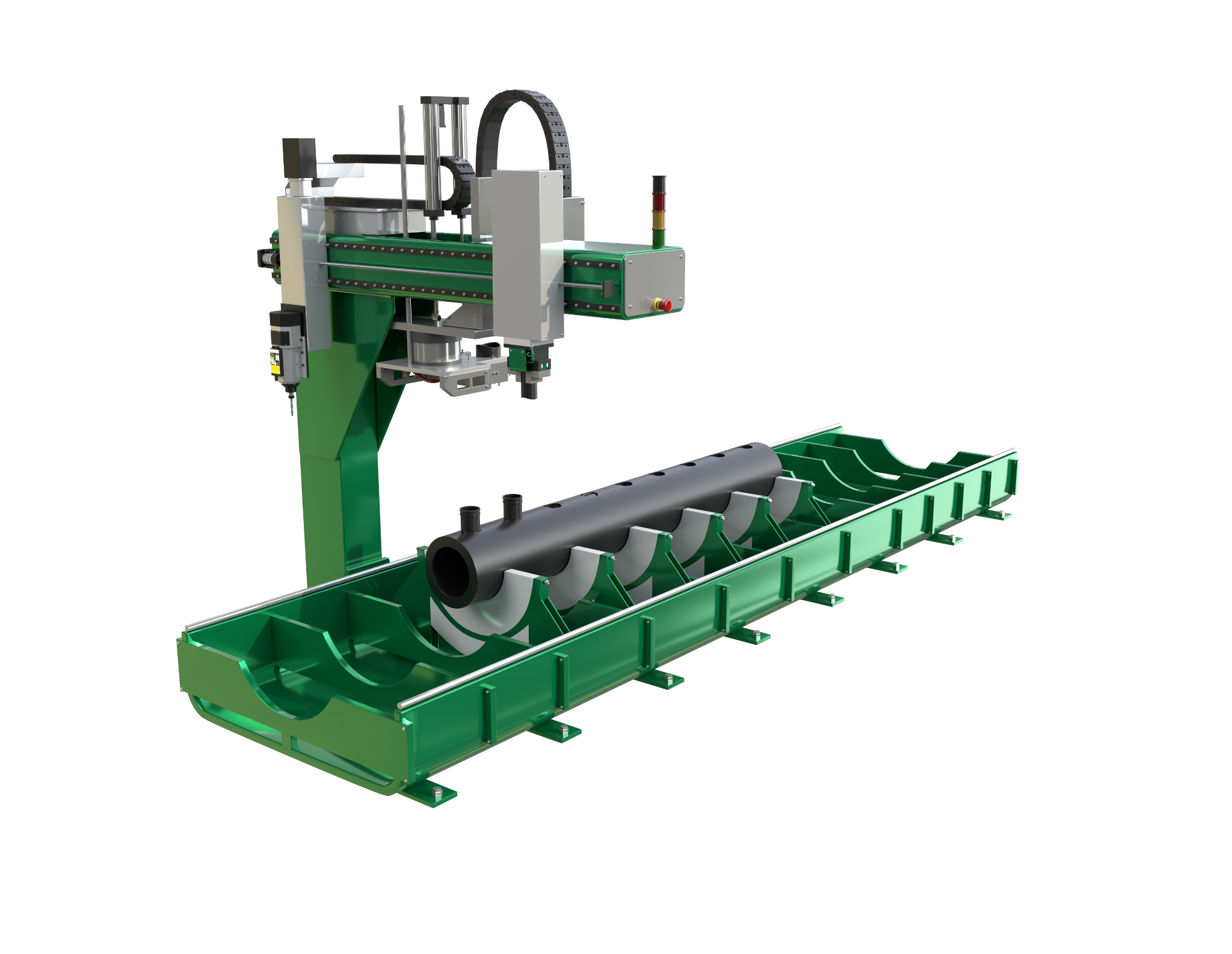
Custom welding shoes make that adaptation practical. Each shoe matches a specific joint type and surface finish, so the operator can move from a flat deck seam to a tight corner without changing machines. This flexibility delivers tailored precision from bow to stern. The SWT-NS610A extrusion welder melts and extrudes plastic filler for strong weld seams, and it anchors the permanent joining stage. The SWT-NS2000 hot air gun supports tacking and smaller detail work. For pipe runs and fittings, the SWT-V315 butt fusion welding machine produces durable fusion joints. The SWT-C400 band saw, with its -45° to 67.5° cutting angle range, suits pipe fittings. The SWT-MA315 fitting fabrication welding machine and the SWT-C400 band saw build elbow, tee, cross, and wye fittings. The SWT-XL3000 sheet saw cuts sheets to size and the SWT-YF1530 CNC router carves shapes on sheets. The SWT-PH4000 sheet butt fusion welding machine welds HDPE sheets and supports horizontal, circular, and 90° vertical jointing.
Finished Boat Performance and Application Value
The hull leaves the jig only after the final seams cool. Post-weld finishing removes excess weld bead, smooths the keel line, and dresses any joint that will contact water or cargo. Final assembly then installs frames, stringers, and deck hardware. Leak testing closes the process. The hull is filled or sprayed, and every seam is inspected for weeping. A watertight result confirms that the HDPE boat manufacturing welding solution held across the full build.
Welded HDPE and aluminum hulls each serve demanding marine environments well, and the right choice follows the duty profile. The comparison below summarizes the practical differences.
|
Dimension |
Welded HDPE Hulls |
Aluminum Hulls |
|---|---|---|
|
Abrasion resistance |
Superior in shallow-water and rocky environments; viscoelastic behavior absorbs impacts without permanent deformation |
Higher surface hardness but lower impact resilience; prone to denting and stress cracks at weld joints |
|
Corrosion and coatings |
Inherently corrosion-resistant; no painting or anti-fouling treatment required |
Susceptible to galvanic corrosion in saltwater; requires protective coatings and sacrificial anodes |
|
Routine maintenance |
Minimal upkeep; no corrosion monitoring needed |
Regular corrosion inspections, periodic painting, and weld monitoring |
|
Repair method |
Heat fusion welding with specialized equipment and trained personnel |
Conventional welding, grinding, and repainting |
HDPE suits rocky shores, shoals, and low-maintenance fleets. Aluminum fits operators with established coating and inspection programs.
Plastic welding also serves as a long-term repair method. A damaged HDPE panel is cut back, cleaned, and refilled with fresh wire, and the repair matches the original seam. Rotational molding remains a valid alternative for high-volume production of seamless shapes. For welded construction, matching the welding solution to each stage keeps the hull durable and watertight for its full service life.
Build Your HDPE Boat Production Line with MM-Tech
A complete production line turns the stage-by-stage method into a repeatable workflow. MM-Tech supplies the cutting, joining, and fitting equipment that covers each step of an HDPE boat build.
-
Cut full sheets to the desired sizes with the SWT-XL3000 sheet saw.
-
Carve the desired shapes on those sheets with the SWT-YF1530 CNC router.
-
Tack panels and run detail welds with the SWT-NS2000 hot air gun, which handles hot air welding of plastic materials.
-
Fuse permanent hull seams with the SWT-NS610A extrusion welder, which melts and extrudes plastic filler to form strong weld seams.
-
Join pipe runs with the SWT-V315 butt fusion welding machine, which provides durable fusion joints for pipelines and reliable, long-lasting connections.
-
Cut pipe fittings with the SWT-C400 band saw, whose -45° to 67.5° cutting angle range makes angled fitting work easy.
-
Build elbow, tee, cross, and wye fittings with the SWT-MA315 fitting fabrication welding machine and the SWT-C400 band saw.
-
Weld thermoplastic HDPE sheets with the SWT-PH4000 sheet butt fusion welding machine, which supports horizontal and circular welding plus 90° vertical jointing on request.
This lineup gives a builder one source for every joining task on the hull. The HDPE boat manufacturing welding solution then becomes a planned sequence rather than a set of disconnected purchases. A small shop can start with the saw, router, and hot air gun, then add the extrusion welder as hull volume grows. A larger operation can run the full line in parallel and keep cutting, welding, and fitting in steady flow. Match the equipment to the build scale, and the line will carry every hull from raw material to launch.
The build follows a clear path. Raw material becomes cut panels, tacked panels become aligned hulls, and permanent seams turn those hulls into watertight vessels. The HDPE boat manufacturing welding solution connects every one of these stages.
Consistent seam preparation and correct technique carry equal weight. Stage-appropriate equipment completes the formula. Together they make an HDPE boat durable and watertight.
Treat welding as a sequence of matched steps, not a single operation. Match the MM-Tech machine to each stage, from the sheet saw to the extrusion welder, and the finished hull will reward that discipline.
FAQ
Which machine cuts the HDPE sheets to size before welding?
The SWT-XL3000 sheet saw breaks down full HDPE sheets into the panel sizes called out on the drawing. For shaped panels and components, the SWT-YF1530 CNC router carves the desired shapes directly on the sheet. Cutting accuracy at this stage sets the gap width that every later weld must close.
How are hull panels held in alignment before the permanent seams?
Panels are positioned and tacked with the SWT-NS2000 hot air gun, which performs hot air welding of plastic materials. These temporary tacks lock panel position and gap width. A hull that shifts during final welding produces mismatched seams and rework, so this step protects the whole build.
What produces the permanent, watertight hull seams?
The SWT-NS610A extrusion welder melts and extrudes plastic filler to form strong weld seams. HDPE wire of 3–5 mm thickness feeds into the prepared joint and fuses with the base sheet. The result is a homogeneous weld with no adhesive layer and no mechanical fastener.
How are pipe runs and fittings joined on an HDPE boat?
The SWT-V315 butt fusion welding machine provides durable fusion joints for pipelines, ensuring reliable and long-lasting connections. The SWT-C400 band saw, with a cutting angle range of -45° to 67.5°, makes angled pipe fitting work easy. The SWT-MA315 fitting fabrication welding machine and the SWT-C400 band saw build elbow, tee, cross, and wye fittings.
Can large HDPE sheets be joined without an extrusion welder?
Yes. The SWT-PH4000 sheet butt fusion welding machine suits thermoplastic sheets made of HDPE. It supports horizontal and circular welding, plus 90° vertical jointing of the sheets on customer request. This gives builders a reliable path for large panel joins alongside extrusion welding.