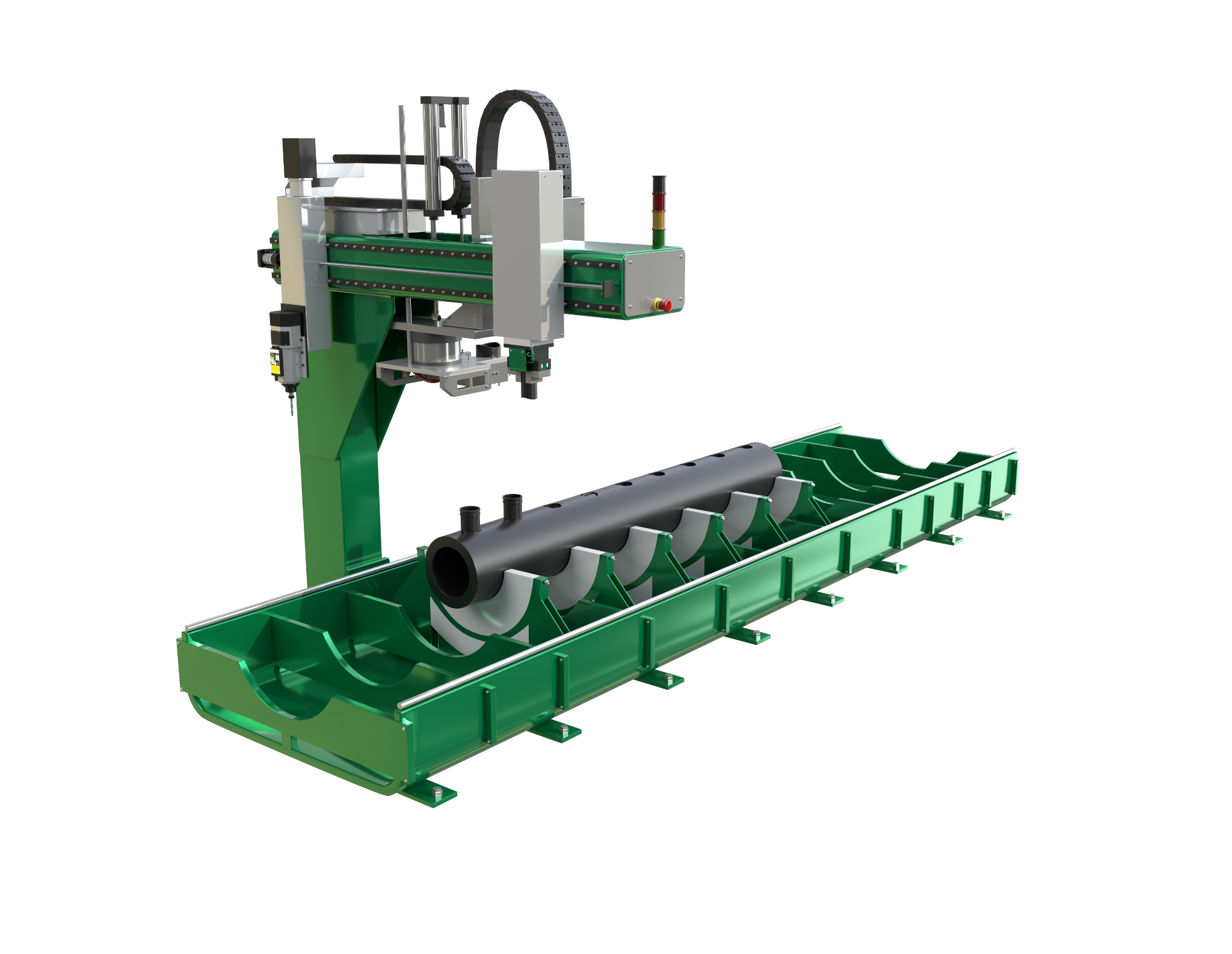
A fully automatic manifold pipe welding machine joins pipe sections or attaches pipes to fittings such as flanges and elbows in manifold pipeline systems, and it does this work with very little help from people. Readers get a clear picture of the equipment’s main parts and the step-by-step welding process. They also learn what “fully automatic” means compared with manual and semi-automatic methods, so they can judge which approach fits their own manifold fabrication.
Key Takeaways
A fully automatic manifold pipe welding machine connects pipes with almost no help from people.
The machine follows a simple step-by-step process: set up, clamp, weld, and check.
Fully automatic welding gives you the same quality on every joint, unlike manual welding.
These machines work best for large jobs where every weld must be the same.
Before you buy, think about how much you weld each year, how steady your work needs to be, and how your shop is set up.
Fully Automatic Manifold Pipe Welding Machine Defined
What It Is and What It Does
A fully automatic manifold pipe welding machine is equipment built for one main job: joining pipe sections or attaching pipes to fittings such as flanges and elbows in manifold pipeline systems. It does this work with very little help from people, using advanced systems to hold exact welding settings. Shops use these machines to make manifold pipes and CDU (cooling distribution unit) pipes for industrial uses, including liquid cooling systems. The work is repetitive by nature, and the machine’s value comes from repeating the same joint the same way, every time.
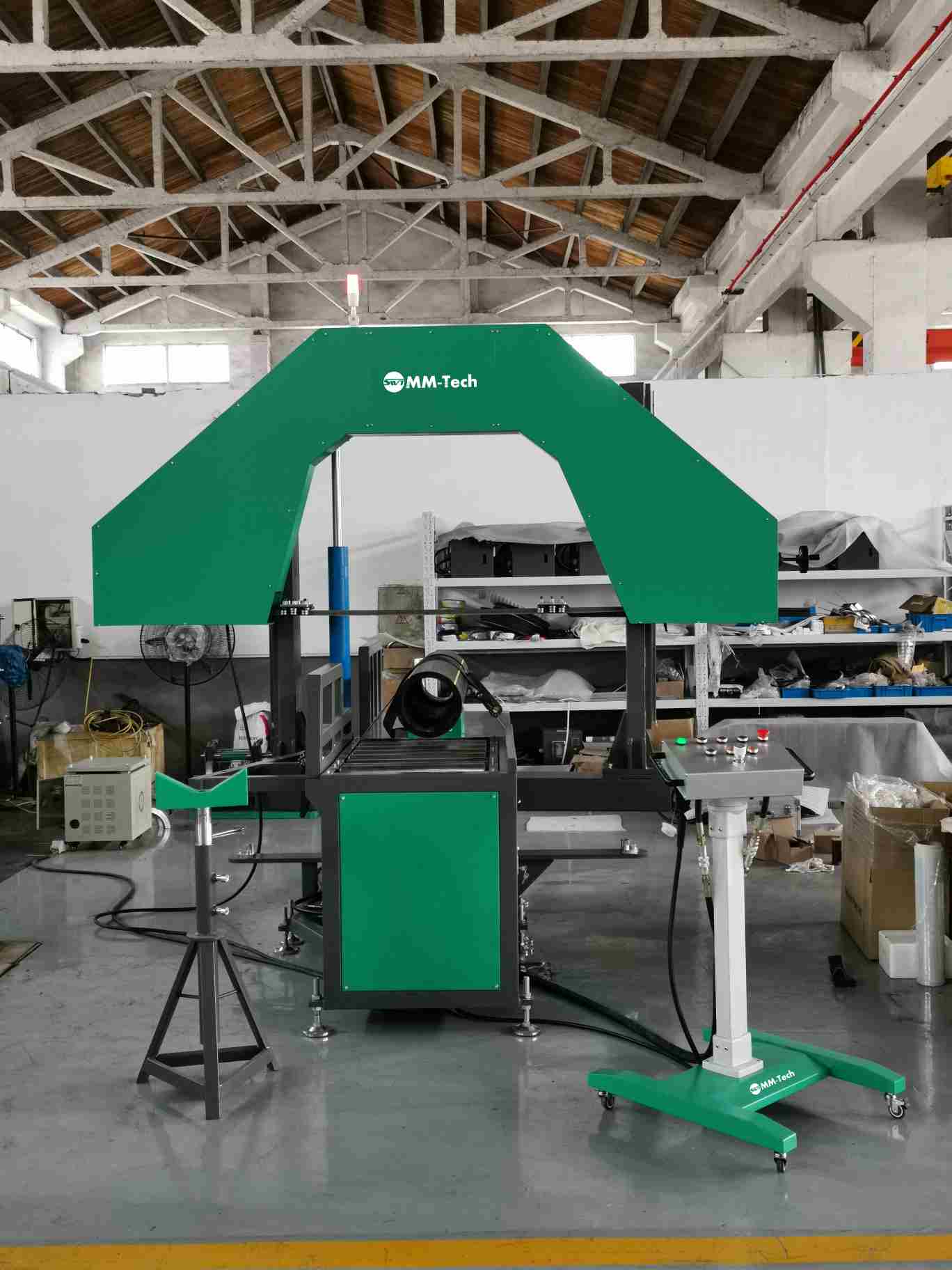
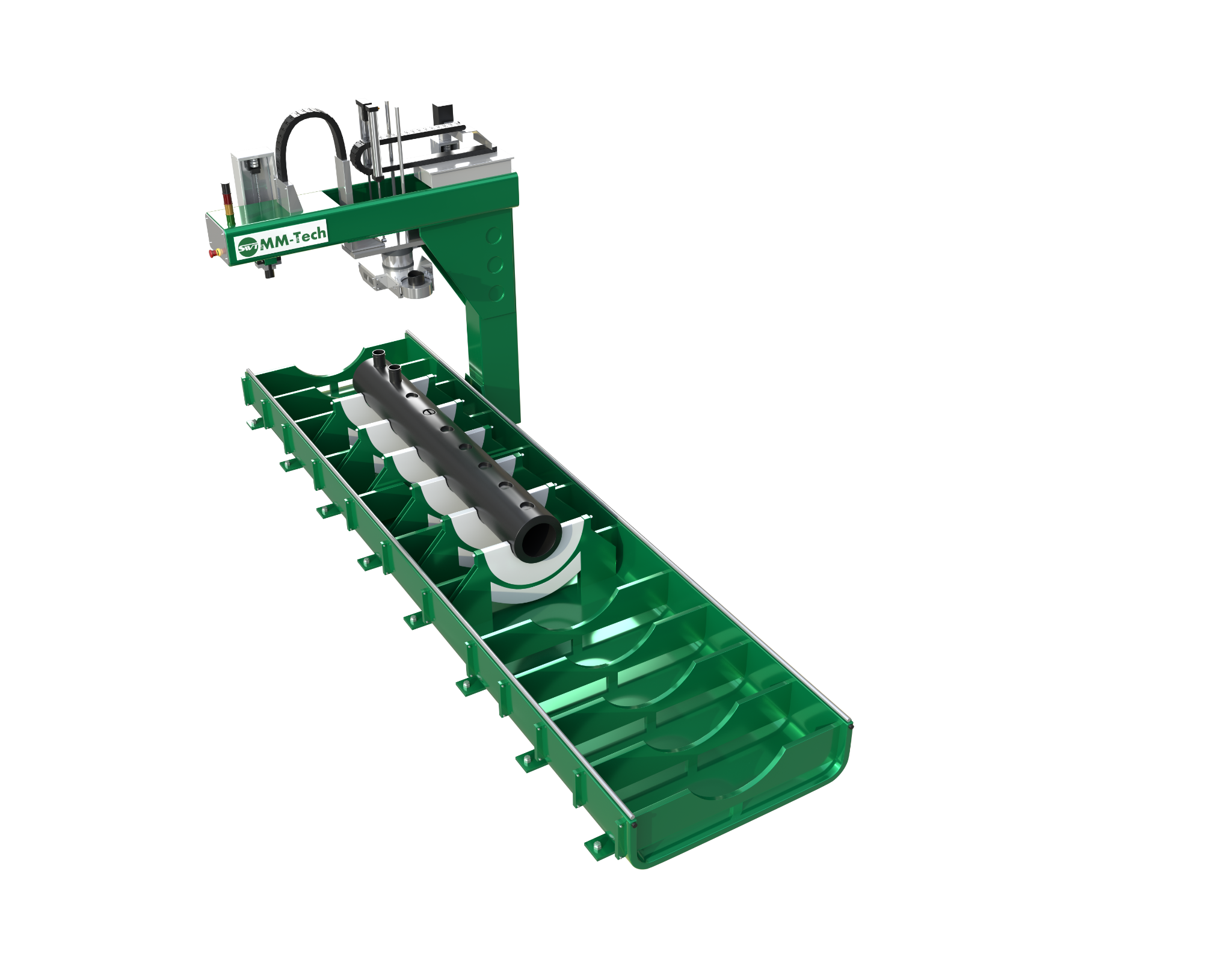
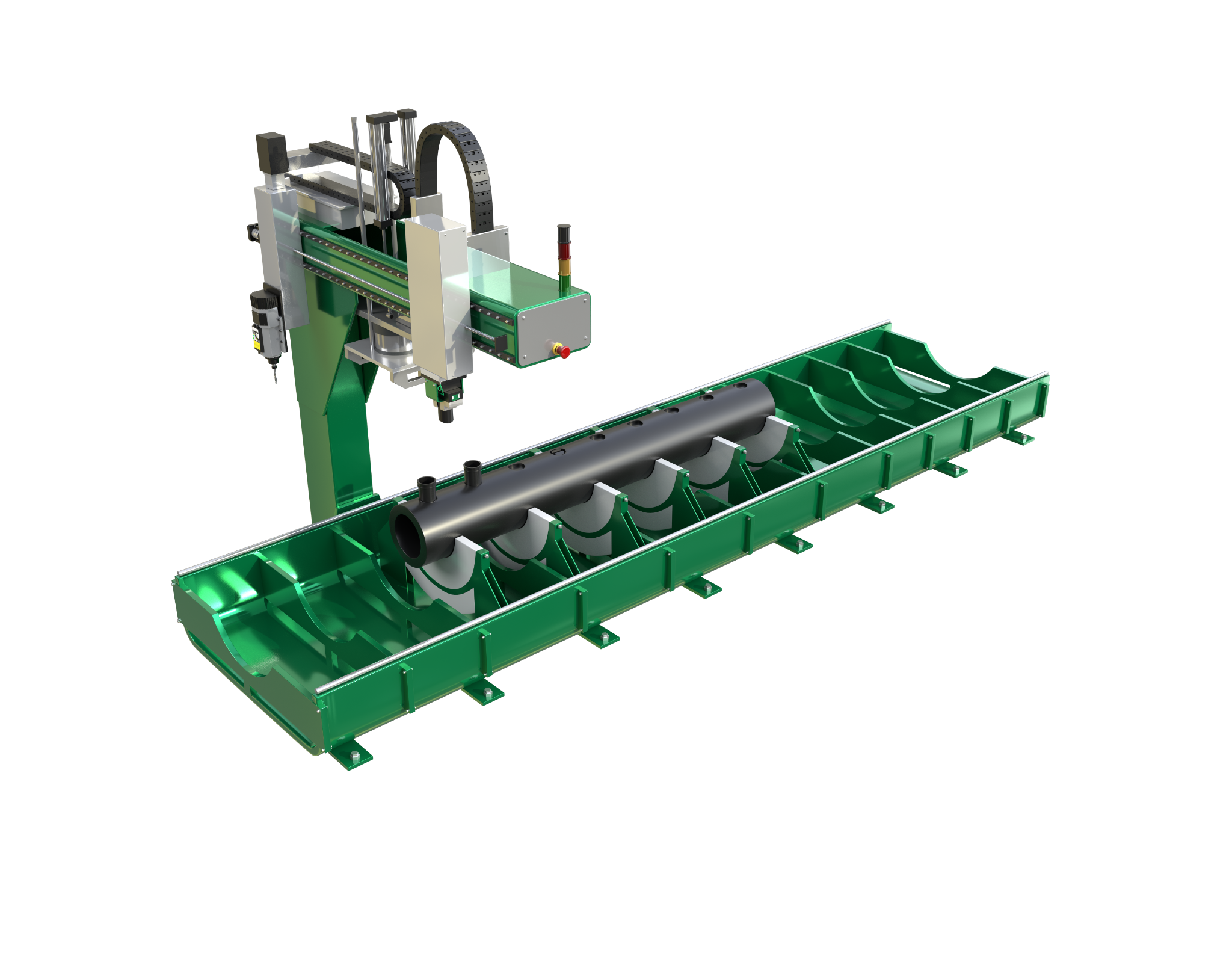
One example is the MM-Tech SWT-SSC630, a fully automatic machining center for PE and PP manifold pipes. It runs an integrated workflow from core-hole milling to outlet welding and supports two joining methods: saddle welding and socket welding. Operators work through a touchscreen interface, and the machine records welding data to an MES (manufacturing execution system) for traceability.
Main Components and Controls
Every machine in this class shares a few key parts. The weld head is the assembly that carries the torch and travels around the joint. The power source supplies and regulates welding current. The control system stores parameters and runs the sequence. The welding carriage moves the weld head around the pipe. The argon purge system floods the joint area with shielding gas.
The SWT-SSC630 shows how these parts come together in practice. Its automatic oxide-layer removal prepares the pipe surface before welding, and its saddle welding force reaches 5 kN. It handles a 10 m main-pipe capacity, with main pipe diameters from Ø 32-630 mm and outlet pipe diameters from Ø 20-315 mm. Maximum welding force is 5.0 kN.
Parameter | SWT-SSC630 |
|---|---|
Main pipe diameter | Ø 32-630 mm |
Outlet pipe diameter | Ø 20-315 mm |
Maximum welding force | 5.0 kN |
Main-pipe capacity | 10 meters |
How the Welding Process Works
Setup and Joint Preparation
Setup starts at the control panel. The operator types the pipe diameter and wall thickness into the control system. These two numbers tell the machine how much current to use and how fast to move around the joint. The SWT-SSC630 takes main pipe diameters from Ø 32-630 mm and outlet pipe diameters from Ø 20-315 mm, so the operator picks the program that matches the workpiece. On machines with an integrated workflow, the same setup also covers core-hole milling and oxide-layer removal before the weld starts.
Next, the pipe and fitting are lined up and clamped. Good alignment keeps the two surfaces square to each other and holds an even gap around the joint. The clamping system grips both parts tightly so they cannot move during the weld. On the SWT-SSC630, tension straps and fitted half-shells hold the main pipe along its length, with material support up to 10 m. Clean surfaces matter as much as alignment. Dust, oil, and oxide layers get in the way of fusion, so the joint area is wiped or machined before clamping. The SWT-SSC630 does automatic oxide-layer removal as part of its saddle-welding workflow, which removes a manual step and keeps surface condition the same from part to part.
The weld head is then placed for a 360-degree circular weld around the pipe. The carriage sits on the pipe and carries the head to the starting point. The head must sit square to the pipe axis, or the arc length will change around the circumference. A short dry run checks the travel path before the arc starts.
Welding and Completion
The operator starts the cycle. The inside of the weld head is purged with argon, meaning the shielding gas fills the joint area and pushes out the surrounding air. A second argon line runs through the pipe itself, so shielding reaches the root of the weld from both sides. This two-sided gas coverage protects the molten metal from oxidation and helps produce a clean root. Without a proper purge, the weld can pick up porosity or discoloration.
A pulsed welding process is usually used. Pulsed welding switches between a high-current peak and a low-current background, which gives the operator control over heat input and helps produce a steady bead. The automatic carriage then turns 360 degrees around the pipe to complete the weld. On the SWT-SSC630, saddle welding applies a force of up to 5 kN, and the force-controlled process helps achieve steady joint pressure. Saddle welding joins an outlet to the side of a main pipe, while socket welding puts the outlet into a fitting. Both methods rely on the same control system to hold parameters steady.
At the end of the rotation, the control system ends the arc and stops the purge. The operator checks the joint for bead shape, penetration, and surface defects. A joint that passes inspection moves to the next station; a joint that fails is marked and reworked. Automated systems extend arc time and keep weld arcs consistent across joints, so each manifold outlet gets the same treatment as the last. The SWT-SSC630 also records welding data to an MES for traceability. This repeatability is a main reason shops choose a fully automatic manifold pipe welding machine for high-volume manifold work.
What Makes It “Fully Automatic”?
Automation Levels Compared
Welding automation means any system that takes over or fully controls part of the welding process. The goal is simple: cut down or remove the need for a person to run the torch by hand. Automation comes in three levels, and each one suits a different kind of shop.
Manual welding depends on the welder’s torch control. The welder sets the travel speed, the arc length, and the torch angle by hand and by eye. This method works well for one-off joints, tight spaces, and repair work where a person has to adjust to the part.
Semi-automatic welding takes over part of the process. The carriage moves the torch around the pipe, and the operator still controls the torch and watches the arc. This setup suits shops that want steadier travel without committing to full programming.
Fully automatic welding takes over or fully controls the welding process with very little input from the operator. The machine handles the arc, the travel, and the sequence. A fully automatic manifold pipe welding machine suits repetitive, high-volume manifold work where every joint should match the last one.
The Control System’s Role
The control system is the brain of the machine. It stores the welding settings for each pipe size and wall thickness. The operator picks a program, and the system sets the current, the travel speed, and how the arc behaves.
Travel speed and arc control both run from the same system. The carriage speed stays steady around the full 360 degrees, and the arc stays steady from start to finish. The SWT-SSC630 runs through a touchscreen interface, and operators need no CNC or CAD/CAM knowledge for the stated workflow.
Stored settings lead to results that stay the same. A program that worked on one project works the same way on the next. Setup becomes a matter of loading the right program, not rebuilding settings from scratch. The SWT-SSC630 also records welding data to an MES, so each joint carries a record you can trace.
Benefits, Limitations, and Best Applications
Key Benefits and Limitations
The best reason to automate is repeatability. A fully automatic manifold pipe welding machine keeps the same current, travel speed, and arc behavior on every joint. That means weld quality stays the same from the first outlet to the last. The SWT-SSC630 handles main pipe diameters from Ø 32-630 mm and outlet pipes from Ø 20-315 mm. This lets one machine cover a wide diameter range with precision. Automated systems also add arc time and keep arcs steady across joints. Saved programs make results the same every time, and setting up a new project means loading the right program instead of rebuilding settings. Built-in oxide-layer removal and MES data records add more consistency and traceability.
Limitations deserve a fair look. These machines cost more upfront than manual equipment, and that investment only pays off when weld volume is high enough. Good programming and operator training are needed to get the stated results. The equipment also works best for repetitive or high-volume manifold work. A shop with only occasional one-off joints may find manual or semi-automatic methods more practical.
Where It Fits Best
The machine works best in repetitive manifold fabrication where consistency matters. Manifold pipes and CDU pipes for industrial liquid cooling systems are the main use case, and data-center cooling assemblies follow the same pattern. The same logic applies to geothermal branch pipework, desalination and water treatment installations, chemical process networks, and pitch-heating networks for sports facilities. Each of these applications has many similar joints, and each joint must match the last.
Shops should weigh three factors before deciding. First, estimate yearly weld volume; high volume favors automation. Second, judge how much joint-to-joint consistency the project demands. Third, review the shop setup, including floor space, power supply, and the willingness to train operators. A shop that clears all three hurdles will get strong value from a fully automatic machine.
A fully automatic manifold pipe welding machine joins pipe sections or attaches pipes to fittings such as flanges and elbows in manifold systems with very little help from people. The workflow follows a clear path: the operator enters diameter and wall thickness, lines up and clamps the parts, runs an argon-purged pulsed weld with 360-degree carriage rotation, then ends the arc and checks the joint.
Readers thinking about a purchase should judge three things together. Yearly weld volume decides whether the investment pays back. The consistency each project demands decides how much automation helps. Shop setup, including floor space, power, and operator training, decides whether the machine fits at all. A shop that scores well on all three will find strong value in a fully automatic manifold pipe welding machine.
FAQ
Which pipe materials does a fully automatic manifold pipe welding machine handle?
The SWT-SSC630 works with PE and PP pipes. Before you buy any model, check which materials it can handle. The welding program depends on the pipe material, so this matters.
Can one machine weld both saddle and socket joints?
Yes. The SWT-SSC630 does automatic saddle welding and position-controlled socket welding. Saddle welding joins an outlet to the side of a main pipe. Socket welding seats the outlet inside a fitting.
What pipe sizes can the machine cover?
The SWT-SSC630 takes main pipes from Ø 32 to 630 mm and outlet pipes from Ø 20 to 315 mm. Its material support length reaches 10,000 mm.
Does the operator need CNC or CAD/CAM skills?
No. Operators work through a touchscreen interface, and the stated workflow requires no CNC or CAD/CAM knowledge. Basic training on program selection and clamping covers most daily operation.
How does the machine support quality records?
The SWT-SSC630 records welding data to an MES and includes an integrated component-label printer. Each joint therefore carries a traceable record that shops can review later.