Semiconductor UPW systems place stringent requirements on contamination control, welding consistency and process documentation. Normal ultrapure water pipes often fail when using old-style heating plates. These hot plates shed tiny bits, leak Total Organic Carbon, and create rough weld beads inside high-purity pipes. To stop these dangerous pollution risks, you need cleaner joining methods. Non-contact infrared welding melts special plastics like PVDF and PFA without touching them. This smooth infrared fusion welding creates flat inner joints, protects liquid purity, and ensures the best computer chip production.
Key Takeaways
Non-contact infrared heat warms plastic pipes without touching them to prevent dirty chemical leaks.
Automated CNC controls push pipe ends together smoothly to create flat, even inner weld beads.
Built-in printers and air pressure tests verify strong, leak-free pipe joints right away.
Contamination Risks in Ultrapure Piping Systems
Contact Heating Hazards and TOC Leaching
Old contact heating methods create serious dirt hazards inside super-clean pipe systems. Hot metal plates touch the plastic pipe ends directly, pushing unwanted trash straight into your clean liquid lines. These metal tools drag along dust, dirt, and tiny metal bits right onto the melted pipe tips. Touching the plastic directly ruins your clean system plan right at the main pipe joint. You can easily lose whole sets of valuable computer chips when metal bits enter your pure liquid lines.
Burnt plastic bits make these dirt problems even worse during repeated pipe heating cycles. Too much heat bakes the plastic straight onto the hot metal tool face. Over time, this baked material breaks down and turns into dark crusty flakes. These burnt pieces break off into your clean liquid as tiny specks during the next pipe joining steps. Also, heat damage makes Total Organic Carbon chemicals leak into your ultra-pure liquid. These loose chemicals cause huge production losses in modern chip-making factories.
Crevice Formation and Biofilm Growth
Old contact melting and joining ways often create shape flaws inside the pipe walls. Heavy pushing force squeezes the hot plastic out, making rough inner weld bumps. Standard contact tools cannot spread heat with even thermal control through thick plastic pipe walls. Because of this uneven heating, sharp crack lines form right along the welded seam. These shape flaws weaken the main pipe joint while disrupting smooth liquid movement.
These tiny cracks and rough inner bumps serve as permanent hiding spots for small dirt bits. Trapped liquid sits still inside these unwashed wall cracks. Tiny bacteria fast settle in these still pools, growing tough biological slime across your pure pipe network. This slime constantly sheds tiny germs and organic trash into your clean water stream. You cannot easily wash these hidden germ groups out with normal chemical cleaning, causing costly factory shutdowns.
Mechanics of Infrared Fusion Welding
Radiant Heat Physics and Thermal Control
You can stop dirt from getting into pipe joints by using better heat transfer methods. Old joining tools touch the plastic pipe face directly. Instead, non-contact infrared heat uses radiation to send energy across a small air space. High-power radiant heaters warm the pipe ends evenly without touching them at all. The system works within a tight heat range of 180°C to 600°C. You can adjust this heat precisely for different wall thicknesses and material needs.
Radiant energy goes deep inside the plastic structure of the pipe ends. The plastic absorbs the infrared heat evenly across its whole surface. This direct heat transfer stops outer wall burning while softening the inner plastic matrix. Old hot plates stick to the plastic and drag burnt bits into the joint. Non-contact heat transfer completely removes this sticking risk. You get up to 30% faster melting compared to old contact methods. This fast heat absorption shortens heating times while keeping water inside ultra-pure lines completely clean.
Smart temperature control systems watch the heating process all the time. Sensors measure heat output and adjust energy right away to keep temperatures perfectly balanced. You avoid uneven melting, heat damage, and weak spots in the joint. This smooth melt pool lets the plastic flow together seamlessly under controlled mechanical force.
High-Performance Polymer Compatibility
Super-clean pipe networks need special plastics to handle strong chemicals and ultra-pure fluids. Modern computer chip factories rely on advanced plastics for long-term safe operation. Non-contact infrared welding works with many high-performance materials without changing your cleanroom safety rules.
You can join these common fluoropolymers and industrial plastics using radiant heat technology:
PE 100-RC
PP
PVDF
PFA
ECTFE
Poly-Flo
Every plastic material reacts differently when it absorbs radiant heat. PVDF and PFA need exact temperature control because fluoropolymers melt within very narrow heat limits. Infrared fusion welding applies targeted heat to these sensitive plastics without touching their delicate surfaces. You protect the clean surface chemistry of these special fluoropolymer pipes completely.
The automated system lines up the pipe ends perfectly after heating finishes. The machine joins the melted plastic surfaces smoothly under precise pushing force. You remove physical scraping, surface drag, and dirt risks during the whole joining process. This method creates clean inner pipe walls that stop chemical leaks and shed no tiny particles. Cleanroom workers get total control over joint shapes to ensure steady liquid delivery for chip making.
Cleanroom Equipment Specifications and Setup
System Specifications and Electrical Ratings
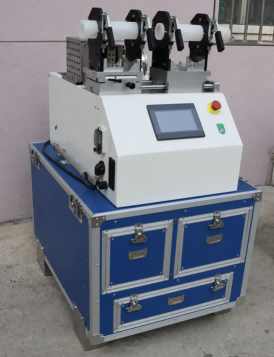
You need special machine hardware to complete successful cleanroom pipe installation jobs. Modern automated fusion machines like the IR-110 CNC give precise heat control and straight pipe alignment across high-purity piping systems. These sturdy welding systems join stiff plastic materials dependably while keeping an ultra-clean workspace inside chip factories. This high reliability guarantees ongoing purity standards.
Machine Parameter | Hardware Specification |
|---|---|
Working Range | 20–110 mm (1/2″ to 4″ IPS) |
Electrical Supply | 220VAC Power |
Total System Power | 2050W (1200W IR heater, 850W milling cutter) |
Base Dimensions | 525 × 670 × 410 mm |
Machine Weight | 120 kg |
Environmental Rating | IP65 Ingress Protection |
You run this welding tool using a common 220VAC power plug. The 1200W non-contact infrared heater warms pipe ends equally across the whole melt area. At the same time, the built-in 850W electric trimmer shaves pipe ends smooth to make flat edges before heating. The unit has a small 525 × 670 × 410 mm frame size and weighs 120 kg. An IP65 safety rating protects internal motors from water and dust during cleanroom welding tasks.
Tool-Free Magnetic Clamping and Compact Ergonomics
Tight cleanroom spaces need clever tool design to make daily building tasks easier. Installation workers frequently labor inside narrow service tunnels under raised cleanroom floors. You can speed up your pipe setup work by using tool-free magnetic inner clamps. These magnetic clamp inserts fit pipe sizes from 20 to 90mm. Workers change clamp parts instantly by hand without using extra metal tools or handling loose screws. This simple system stops setup delays.
Small machine design also improves joining accuracy for tricky pipe connections. Special thin-part adapters hold short fittings, valves, and elbows straight against pipe ends. These narrow adapters stop bad joint lining inside crowded utility racks. You keep total physical control over pushing forces during every welding step. As a result, your installation team hits steady work speeds while lowering worker tiredness over long work days.
Automated Bead Profiling and Joint Consistency
Closed-Loop CNC Servo Controls
Modern high-purity piping systems require exact join movement during every fusion cycle. You cannot rely on manual operator pushing force inside advanced semiconductor cleanrooms. Automated machines use closed-loop CNC servo controls to drive the entire pipe joining process. Electric servo motors control the carriage distance, linear movement speed, and axial joining force with high precision. You load the aligned pipe ends into the machine frame, and the computer system manages the physical joining process automatically.
Smart position sensors monitor the heating phase and force application constantly. The CNC system measures the melt depth in real time and matches exact joint parameters. If the dynamic join resistance changes during cooling, the system adjusts motor pressure instantly. This active feedback loop guarantees identical thermal density across the whole joint boundary. You eliminate manual errors, physical variations, and uneven pressure spikes across every installation shift.
Low-Profile Internal Bead Formation
Precise thermal control directly changes the shape of the finished weld bead. Traditional heat tools push heavy molten rings inside the pipe bore. Using non-contact infrared welding controls the exact melt volume on fluoropolymer pipe ends. Radiant heat softens the plastic surface evenly without over-melting the inner core material. Controlled mechanical pressure then brings the softened pipe ends together gently.
This precise joining action creates a very smooth, low-profile internal weld bead. The small, balanced bead profile fits tight against the inner pipe wall. You maintain maximum inner diameter clearances without restricting liquid velocity inside pure water loops.
Smooth internal profiles eliminate fluid turbulence along ultra-pure distribution lines.
Low-profile seams remove deep pockets, preventing static water stagnation.
Clean bead edges prevent particle trap areas, ensuring smooth continuous rinsing.
Standard fluoropolymer installations benefit from consistent infrared fusion welding techniques. You protect your high-purity fluid network against wall crevices, micro-particle shedding, and flow restrictions. Smooth internal beads ensure reliable cleanroom performance while protecting strict water quality standards continuously.
Quality Assurance and Data Logging Protocols
Parameter Tracking and Physical Audit Receipts
You secure total process quality control by logging critical fusion metrics during every pipe joining cycle. Modern automated CNC fusion welding systems monitor radiant heater outputs, melt zone absorption times, and carriage joining forces in real time. The internal closed-loop controller continuously verifies these dynamic parameters against pre-programmed factory safety limits. Any thermal drift or force variation during the heating phase instantly triggers an immediate system alert to stop defective welds.
The built-in thermal printer outputs an immediate physical audit receipt after each completed weld cycle. You stick this self-adhesive printed label directly onto the pipe joint for fast cleanroom quality verification. The detailed sticker records the precise joint number, operator identification code, peak heating temperature, axial force profile, and overall pass or fail validation status. This automatic paper receipt creates an instant, immutable physical audit trail for cleanroom facility inspectors and system auditors.
High-Pressure Air and Particle Testing
You verify the mechanical strength of your fluoropolymer network through standardized pneumatic testing protocols inside the cleanroom. The field installation team pressurizes the completed piping assembly with clean dry air to detect microscopic joint leaks across all lines. This high-pressure hold test confirms total structural integrity across all radiant weld seams before introducing chemical reagents or ultrapure water. You catch rare joint assembly defects early, protecting your semiconductor facility against costly fluid leaks and operational downtime.
You perform online micro-particle testing to confirm fluid purity inside your final ultra-pure distribution network. Pure water streams flush continuously through the joined pipes while automated laser optical counters measure residual micro-debris. Your system installation must meet strict SEMI F63 compliance guidelines by keeping online micro-particles larger than 0.05 μm below 200 per liter. Non-contact infrared fusion welding completely eliminates surface contact flaking, ensuring your cleanroom lines pass particle count audits on the very first attempt.
Semiconductor Deployment and Strategic Value
Wafer Fab Case Study Verification
Real chip factories show the true value of non-contact infrared heat tools. Big chip makers pick these automated machines for important cleanroom pipe builds. For instance, Huaxin Semiconductor used automated IR fusion tools across their top 12-inch wafer factory. Workers built large plastic pipe networks inside super-clean Class 100 rooms. This robotic process stopped dirty chemicals completely during standard setup work. You fix human joining mistakes while keeping exact heat controls during every work shift.
This careful joining method gave great quality test scores during final site checks. The whole pipe system got a 100% pass mark on first-try high-pressure air and micro-particle tests. Automated heat protected soft plastic surfaces from room dust and burn damage. You avoid costly pipe repairs when opening new cleanroom spaces. This steady joining work keeps clean water moving safely during big chip-making runs.
Lifecycle ROI and Warranty Protections
Using automated non-contact heat gives great money savings over your factory’s full life. Balanced heat stops plastic burning, which saves expensive pipe scrap during early setup phases. Strong pipe joints stop giant water leaks inside active factory rooms. Fast machine steps lower total building delays by a huge amount. So, your clean pipe lines stay pure, raising total chip output while keeping dirt out of your system.
Strong seller promises cover your long-term machine tools for years of steady work. Tool makers protect every automatic IR machine with a full 2-year control and heater coverage plan. Also, factory rules promise a 10-year spare parts safety window for all machine items. This long-term help stops sudden repair delays for cleanroom work teams. You keep tools ready for future factory growth without tool replacement worries.
You remove dangerous dirt specks and chemical leaks by swapping old hot plates for non-contact infrared welding. This clean heat method protects your pure water lines by warming plastic pipe ends without touching them.
Automatic smart controls deliver exact heating to create smooth, flat weld beads inside your pipe network. These seamless joints stop bumpy liquid flow, prevent germ slime, and keep your water totally clean. You get complete peace of mind for your ultra-pure fluid system.
Cleanroom bosses must choose automated infrared fusion welding to meet strict SEMI F63 rules and protect computer chip production.
FAQ
How does non-contact heating prevent TOC leaching in UPW pipes?
Hot plates never touch the plastic because non-contact heaters send warmth across an open space. You avoid touching hot metal tools straight to the pipe ends. This clean method stops burnt plastic trash and keeps total organic carbon out of pure water.
What thermal range does infrared fusion welding use for fluoropolymer piping?
Non-contact systems run inside a safe heat scale from 180°C up to 600°C. You tune radiant heat carefully to melt soft plastics like PVDF and PFA. Smart control sensors tune this warmth so pipe joints hold tight without burning the plastic faces.
How do automated CNC controls improve internal weld bead profiles?
Automated CNC systems steer pushing strength and track speed without manual help. You stop applying heavy pushing force while the pipe joint cools down. This careful movement leaves a flat, smooth inner bump that stops bumpy liquid flow and hides no tiny germs.
How do you verify joint quality after completing the fusion process?
You print a quick paper quality ticket right from the machine’s built-in printer. Next, you push clean air inside the pipe to find tiny leaks. Finally, you track tiny floating bits with optical counters to meet SEMI F63 rules before opening the plant.