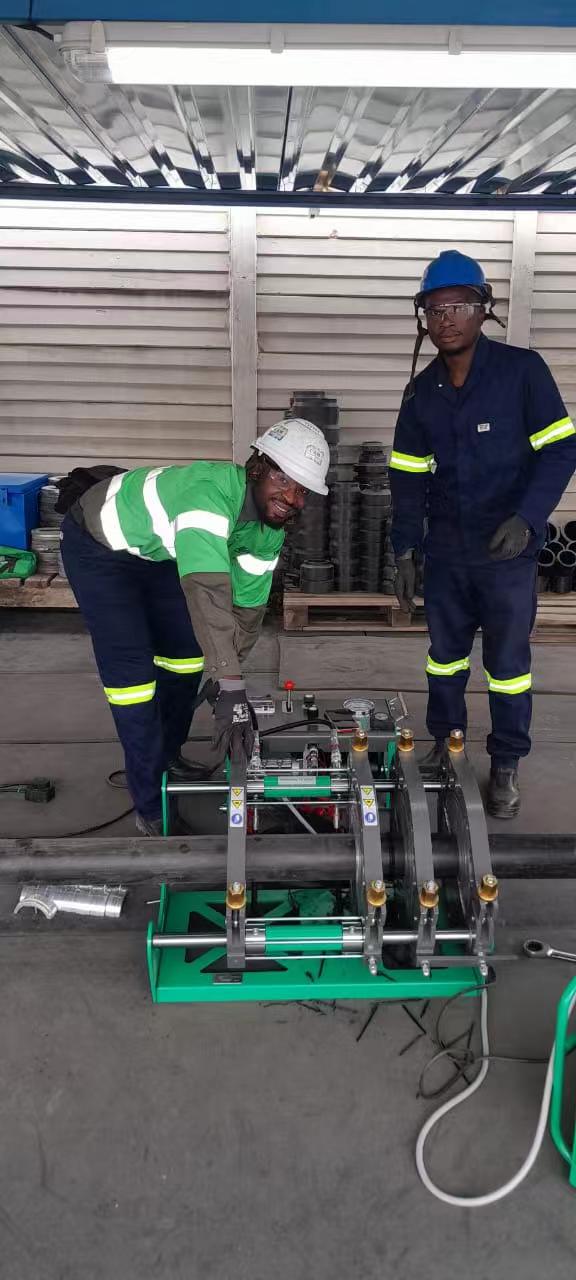
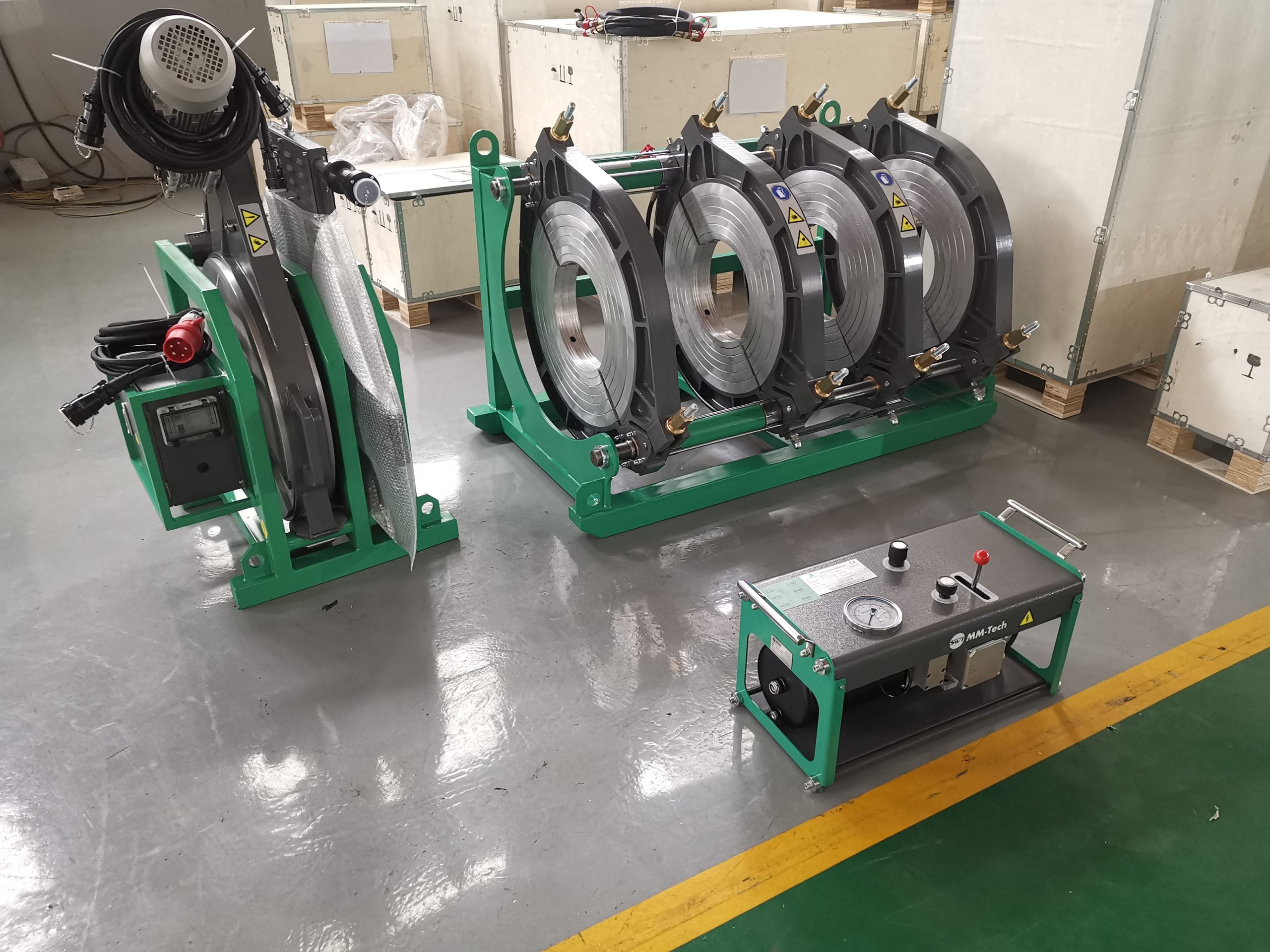
When work crews transition from small city pipe projects to huge industrial pipelines, job site conditions get much tougher. Standard joining tools struggle when workers handle high-density polyethylene hdpe pipelines that are 315–630 mm wide. Regular equipment cannot create or hold the hydraulic force needed for thick wall pipe operations. These basic systems cannot overcome stiff pipes, fail against heavy ground drag, and risk terrible joint failures.
To ensure top joint quality, modern building projects rely on heavy-duty hydraulic butt fusion machines. Advanced hydraulic butt fusion welding machines use strong alloy frames, built-in hydraulic pressure tanks, and precise heat controls. Using a heavy-duty hydraulic welding machine protects workers, keeps continuous melt pressure, and promises to meet strict global field welding rules like ISO 21307, ASTM F2620, and DVS 2207.
Key Takeaways
Heavy-duty hydraulic fusion machines create tough connections for big factory pipes.
Tough steel frames line up thick pipe ends smoothly on bumpy ground.
Hydraulic accumulators keep the pressure steady while the pipe cools for a long time.
Workers add measured ground drag force to the calculated joining force.
Optional welding data loggers can record critical fusion parameters and improve joint traceability.
Critical Infrastructure Applications for Large HDPE Pipelines
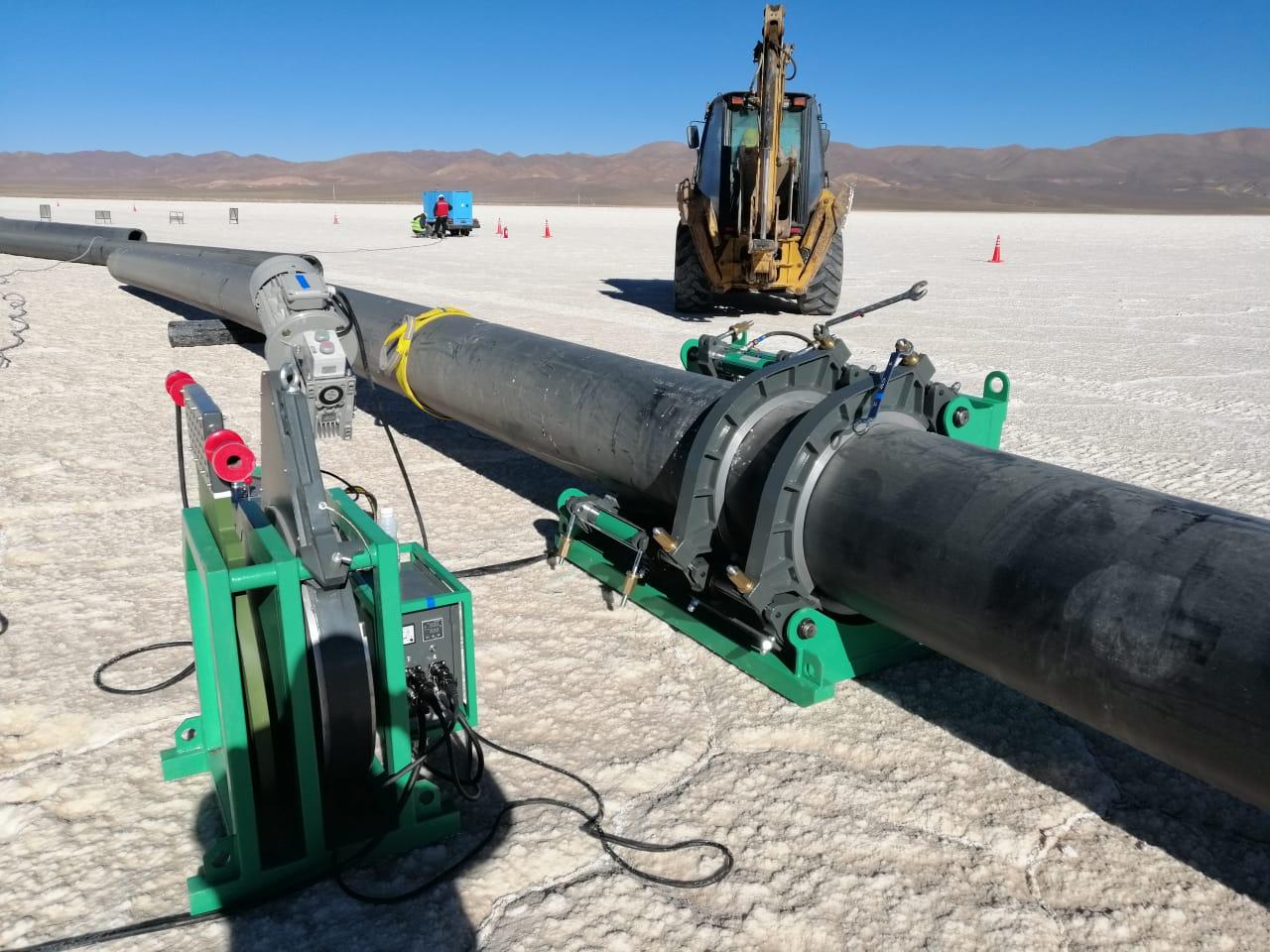
Mining Tailings and Coastal Desalination Mains
Mining operations move rough slurry across harsh, steep mountain grounds. Engineers choose heavy-duty hdpe pipes with 315–630 mm diameters for these tailings lines. High-density polyethylene stops severe chemical damage and mechanical wear from solid rock particles. Ocean water intake systems and coastal desalination plants also rely on this tough material. High salt environments fast ruin old metal options, but hdpe lines keep strong shape over many decades. Coastal building projects need extra strength against non-stop wave action, high pressure, and harsh chemical exposure.
Rough job sites need strong, endless joint connections that easily handle high design pressures. Regular mechanical fittings often leak under high fluid pressure in far mining zones. Workers use heat fusion to melt straight pipe sections into single solid lines. Proper machine heating plates give steady heat energy to prepare the pipe surfaces. This melting step creates a smooth joint structure as strong as the original pipe wall. This safe fusion method guarantees long-lasting strength for main industrial projects in tough outdoor areas.
Municipal Water and Industrial Outfall Systems
Growing cities need high-capacity city water systems to deliver clean drinking water. Engineers pick hdpe pipeline networks to move clean liquids and raw intake supplies easily. These large industrial pipelines keep high flow speeds because smooth inner walls stop mineral buildup. These tough lines endure sudden water pressure spikes without ever bursting. Industrial plants and power facilities also use these thick lines for ocean outfall pipes. Wastewater plants carry treated dirty water safely into ocean channels without environmental pollution risks.
Modern water and gas pipeline projects need reliable materials to stop costly fluid leaks. Cities expand public systems by melting thick pipe ends into long utility lines. Strong butt fusion joints remove weak mechanical points all along these pipelines. Workers use standard butt fusion methods to join thick-wall plastic pipes safely. High-quality building habits protect city money during large-diameter projects. Successful public projects protect community health, save natural water supplies, and support business growth across expanding urban areas.
Key Challenges in Large-Diameter Pipe Welding
Overcoming Heavy Drag Resistance and Pipe Memory
Thick industrial pipes create tough physical problems when workers try to join them outdoors. Basic tools cannot pull heavy HDPE pipes across rough ground easily. Take a 630 mm SDR11 pipe size, which has a huge 57.2 mm wall thickness. That specific size creates a massive static weight.
Pipe Outside Diameter (mm) | Wall Thickness (mm) | Weight (kg/m) |
|---|---|---|
630 | 57.2 | Approx. 100–105 |
Rough ground creates strong friction as the long line slides inside the trench. Steep slopes add gravity forces that fight against the joint setup. Crews need heavy-duty hydraulic butt fusion machines to overcome these powerful site forces. Heavy hydraulic butt fusion machines produce strong pushing forces to move long pipe lines together. Also, thick plastic holds its old rolled shape due to pipe memory. That stored shape causes uneven edges, which people call Hi-Lo offset. Strong hydraulic butt fusion machines clamp pipe ends firmly. These hydraulic butt fusion machines align thick walls neatly, preparing every pipe end for a strong weld.
Managing Long Thermal Cycles for Thick-Wall Pipes
Thick plastic parts need long heating and cooling times to make a strong joint. Regular field equipment breaks down during these lengthy heating steps. Operators rely on advanced hydraulic butt fusion machines to hold steady pressure throughout long joining processes. Thick plastic takes a long time to absorb heat clear through its walls.
Parameter | Formula (from ISO 21307) | Notes for 630 mm SDR11 Pipe |
|---|---|---|
Minimum Heat Soak Time (t2) | (13.5 ± 1.5) × en |
|
Minimum Cooling Time in Machine (t5) | 0.015 × en² − 0.47 × en + 20 (min) | Applies for |
Global rules like ISO 21307 set strict heat timing math formulas. Keeping steady heat contact melts the inside deeply without scorching outer surfaces. The cooling step requires equal care. A steady butt welding machine stops any shaking while the melted plastic cools solid. Holding constant pressure prevents internal shrinkage gaps in wide pipes. Modern fusion setups protect joint strength through these slow heating steps.
Why Heavy Hydraulic Butt Fusion Welding Machines Are Essential
Field workers must use industrial tools to join thick plastic pipes correctly. Regular equipment bends under heavy work. Heavy-duty hydraulic butt fusion machines offer the strong frame and fluid power needed for hard job sites.
A weak frame warps the moment it aligns heavy pipe, causing failed welds. For hydraulics, imported seals and flat quick connectors prevent fluid leaks while keeping steady pressure during the cooling phase, which is vital for high-quality welds.
Frame Rigidity and Axial Alignment Control
Thick pipes put massive physical pressure on clamping systems. Heavy-duty hydraulic butt fusion welding machines use strong frames made of reinforced alloy steel. High-strength steel stops frame bending when workers pull heavy pipes into line. Heavy frame designs keep straight alignment under full hydraulic power, which stops pipe ends from turning oval.
Component | Specification | Impact on Weld Quality |
|---|---|---|
Machine Frame | Manufactured from high-strength steel for rigidity | Ensures precise pipe alignment and stable operation, leading to consistent, high-quality welds |
Hydraulic System | Delivers stable and adjustable fusion pressure | Ensures smooth carriage movement and accurate pressure control, allowing reliable, repeatable, and leak-free pipe joints |
Strong side plates connected by wide flanges make the machine frame stiffer. Larger aluminum inserts spread out the clamping area. Gripping blocks hold pipe surfaces tightly, stopping the pipe from sliding during high-pressure heating. Machine stability guarantees correct edge joining for maximum joint strength.
Hydraulic Accumulators for Extended Pressure Maintenance
Thick plastic pipe walls need steady, continuous squeezing force during long cooling times. Heavy hydraulic butt fusion machines use large pressure accumulators inside their hydraulic systems. The accumulator sends fast hydraulic power as soon as workers pull out the heater. This setup holds steady joining pressure automatically without losing force during long cooling steps.
Exact force control stops inner air pockets from forming while melted plastic hardens. Built-in hydraulic setups move the sliding carriage with great accuracy. High-pressure pumps maintain fluid power control through every joining step. Tough seals stop inner fluid leaks, ensuring exact pressure control over long working hours.
Extra helper tools boost overall work speed on site. Heavy-duty hydraulic butt fusion machines feature built-in electric cranes to lift heavy facers and heating plates safely. Electric hoists speed up tool swaps, which reduces hot pipe exposure to cold outdoor air. Fast tool removal preserves heat on open melted ends, improving total welding speed.
Advanced hydraulic butt fusion welding machines provide great job site efficiency and overall performance. These heavy systems give exact control during tough industrial jobs. Workers trust strong hydraulic welding machine designs for major pipeline work. Stable clamps and steady hydraulic controls create reliable joint strength every time. Buying a heavy hydraulic welding machine ensures fast construction work and top joint quality. A modern butt welding machine guarantees great working durability in harsh field conditions. Strong hydraulic butt fusion machines boost daily productivity while protecting full pipeline safety. Modern butt welding machine systems offer complete accuracy and consistency for long-lasting utility networks.
Field Operating Conditions: 630 mm Mining Case Study
Navigating Complex Sloped Terrains and Slurry Lines
Mining slurry projects create tough working environments for heavy pipelines. High-mountain tailing lines cross steep slopes, rough rocks, and wild landscapes. Long-distance slurry pipes need non-stop field work under hard outdoor conditions. Ground drag always resists movement when workers pull heavy 630 mm SDR11 pipe sections. Friction forces from connected pipes directly change key welding setups. Steep slopes add strong gravity forces that pull against the carriage, raising risks during joining steps.
Heavy-duty hydraulic butt fusion machines give the strong clamping stability needed on steep hills. Tough models like the MM-Tech SWT-V630/315H show real reliability in these hard industrial locations. Strong alloy frames clamp thick hdpe pipe ends tightly, stopping dangerous twists or slips during facing steps. Steady hydraulic clamps remove wall offset caused by pipe weight and terrain drag. High frame strength ensures perfect edge alignment across many field joints, boosting daily work speed.
Drag Pressure Measurement and Force Compensation
Welding big pipes in rough outdoor fields requires exact measurements of ground drag resistance. Operators must find drag pressure before starting the heating step:
Bring both ends of the large HDPE pipe together inside the machine frame under initial heat pressure.
Start moving the heavy pipe ends slowly toward each other.
Read the pressure gauge needed to keep a slow, steady pipe movement.
This noted number is your true measured drag pressure.
Use a fusion pressure app to find total required welding pressure, adding the measured drag into your math.
Workers find total hydraulic output by adding measured drag pressure to calculated fusion pressure.
Gauge Pressure = {(OD – T) × T × π × IFP} / TEPA + DRAG
For example, a pipe with OD = 8.625 in, T = 0.784 in, IFP = 75 psi, TEPA = 4.710 in², and DRAG = 30 psi produces:
{(8.625 – 0.784) × 0.784 × 3.1416 × 75} / 4.710 + 30 = 338 psi
This math shows how total gauge pressure combines target fusion force (308 psi) and real drag pressure (30 psi). Modern hydraulic butt fusion machines supply extra power reserves to fight this combined resistance. Stronger hydraulic pumps and built-in accumulators hold exact melt pressure through long cooling steps. Using a heavy hydraulic welding machine guarantees solid joint strength. Modern hydraulic welding machine controls prevent pressure drops while hot plastic shrinks tight. Smart contractors select heavy hydraulic butt fusion machines to ensure reliable results. Using a good butt welding machine protects continuous pipeline work across big mining projects.
Quality Assurance and Standards Compliance for Heavy Pipelines
Precision Control of Critical Fusion Parameters
Operators control every heating step to achieve maximum weld strength on large pipelines. Heavy hydraulic butt fusion machines maintain target forces across thick hdpe pipe walls. Heating plates require exact temperature precision to prevent thermal damage. DVS and ISO standards require heater plate temperature precision between 200°C and 220°C. ASTM standards specify heater plate temperature precision between 204°C and 232°C.
Standard | Heating Plate Temperature | Interfacial Pressure |
|---|---|---|
DVS / ISO | 200–220°C | 0.15 N/mm² (1.5 bar) |
ASTM / North America | 204–232°C | 60–90 psi |
Technicians calculate interfacial fusion pressure according to standard tables. Operators measure local ground resistance and add drag pressure to the calculated fusion force. Hydraulic systems provide pressure precision during facing steps. Heavy hydraulic butt fusion machines keep steady fluid pressure precision during the cooling cycle. Proper pressure control ensures precision and consistency across every joint. Field crews complete hydrostatic pressure testing up to 1.5 times the system design rating to verify build quality.
Smart Data Logging and Joint Traceability
Major infrastructure projects demand complete digital records for every pipeline joint. Integrated smart data loggers capture parameters with absolute precision during the fusion process. Systems record exact heating times, operator ID, GPS coordinates, ambient temperature, heater temperature, and pressure profiles.
Smart sensors monitor machine movements with high precision.
Systems export encrypted reports in PDF or CSV formats to meet ISO 12176 standards.
Forensic teams retrieve digital records to verify joint quality years later.
Automated equipment executes controlled fusion cycles that follow ISO 12176, DVS 2207, and ASTM F2620 rules. Heavy hydraulic butt fusion machines maintain strict pressure control during heavy pipe joining. Automated welding tools perform reliable welding cycles across long hdpe pipelines. Certified welding operators track precision data to protect city infrastructure. Accurate welding logs confirm compliance for critical industrial welding jobs.
Choosing tools for big HDPE pipes needs checking more than simple pipe dimensions. Solid frames, extra hydraulic power, drag adjustments, and steady cooling force directly control long-term joint strength and pipeline life. Strong hydraulic butt fusion machines deliver essential frame stability and alignment control for high-pressure jobs. Buying top-tier gear like the SWT-V630/315H guarantees reliable weld quality, full worker safety, and great job performance on big build sites. Technical experts rely on custom hydraulic butt fusion machines to ensure lasting performance above basic size limits. Using heavy welding systems reduces pipe break risks throughout tough utility builds. Dependable precision joining tech keeps public networks safe against high joint pressure.
FAQ
Why do large-diameter HDPE pipes require measured drag pressure compensation?
Ground resistance and heavy materials slow down pipe movement. Workers check local drag pressure right away. After that, experts sum this reading with calculated fusion force. Adding these numbers helps the hydraulic setup apply exact pressure to shape a healthy joint bead.
What is the purpose of the hydraulic accumulator during the cooling phase?
The hydraulic accumulator keeps fluid pressure steady through long cooling steps. Heavy-wall plastic shrinks as heat leaves. The accumulator fills pressure drops on its own. This steady push stops parts from shifting and guards the cooling joint’s overall strength.
Which international standards govern parameters for heavy-duty HDPE butt fusion?
Crews follow rules from ISO 21307, DVS 2207, and ASTM F2620. These guides outline precise heater plate temperatures, target contact pressures, soak times, and cooling periods. Following these world rules ensures joint power and standard checks on big public works.
How does an integrated electric crane improve on-site fusion operations?
Huge heating plates and facers for 630 mm gear carry massive weight. The built-in electric hoist moves heavy tools securely. This extra helper lowers body stress for workers. It speeds up tool changes too, which cuts heat loss on melted pipe edges.