Comparing Manual and Automated Non-Contact Infrared Welding Systems
An analysis comparing the IR-110 and IR-110 CNC infrared welding machines for high-purity plastic piping.
Features | IR-110 | IR-110 CNC |
|---|---|---|
— | — | — |
Drive Mechanism | Manual facing and heater placement | Precision servo-driven automation |
Control Interface | Automatic program and customized parameters | Touch-screen with automatic program control |
Heater Retraction | Manual entry and exit system | Automatic heat plate retraction |
Safety Features | Standard protective structure | Stainless cover and milling limit switch |
Software Updates | Local standard software management | Remote software upgrade capability |
Pipe Diameter Range | 20mm to 110mm (1″ to 4″ IPS) | 20mm to 110mm (1/2″ to 4″ IPS) |
Suitable Production Output | Low to moderate volume production | High volume continuous work |
Operator Skill Dependency | High technician skill needed | Low operator skill dependency |
High-purity piping systems protect product quality in semiconductor making, ultra-clean water networks, medicine creation, and chemical plants. Modern cleanroom setups require strong, non-contact joining to prevent joint pollution and part breakage. Engineers pick an Infrared Welding Machine by looking at exact project speed, joint stability, and quality tracking needs.
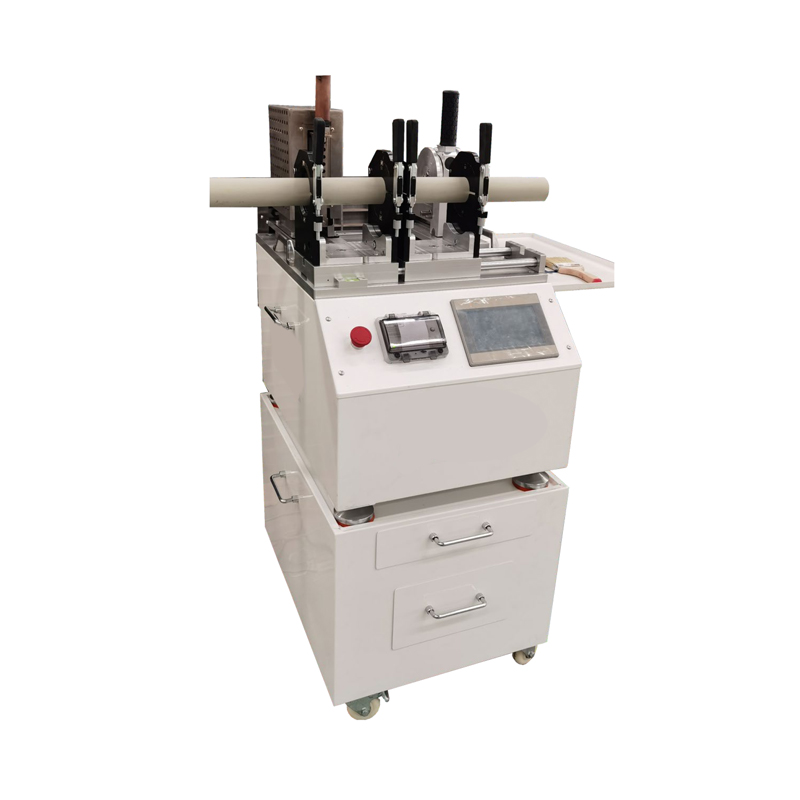
The basic IR-110 Infrared Welding Machine offers helpful semi-automatic work using manual facing and manual heating element placement. On the other hand, the advanced IR-110 CNC offers full automation through exact motor-controlled movements and automatic heat plate pulling. Project managers compare these working differences to match tool settings with worker skills and building amounts.
Key Takeaways
No-touch heat rays stop pipe dirt in super clean rooms.
Both IR-110 models connect plastic pipes ranging from 20mm to 110mm in size.
The standard IR-110 relies on trained workers to operate its tools by hand.
The automatic IR-110 CNC machine uses exact motors to create quicker, more consistent welds.
Pick the CNC version for big factory jobs that need high production.
Non-Contact Joining for High-Purity Piping
Cleanroom and Ultra-Pure Fluid System Requirements
Modern chip factories and medicine plants need top cleanliness for high-purity pipe setups. Making plants run key chip building tasks inside ISO 14644-1 Class 4 to Class 6 cleanrooms. Light printing, etching, and film zones need tight particle controls to stop chip defects. High-purity pipe setups must move super-clean water and liquid chemicals without dropping dirt into the fluid flow.
Older hot-plate tools push metal plates right onto plastic pipe ends. This direct touching creates physical friction, leaves plastic bits on tools, and drops particle dirt. By comparison, non-contact infrared welding stops all surface touching while heating. The heater shoots heat energy across a set air space onto the pipe end. This contact-free heat method stops dirt creation, removes physical stress, and keeps cleanroom air pure.
Principles of Non-Contact Infrared Heating
Infrared welding uses aimed radiant heat exchange instead of direct heat touching. Special heater parts turn electric power into invisible light waves. Short-wave infrared light between 1.0 µm and 1.4 µm goes deep inside thick plastic walls. This deep light heats both the inside plastic structure and the outside surface together. The process makes a smooth melted area through the whole wall thickness without burning the plastic surface.
Right color light matching between the heat source and plastic material drives quick energy absorption. Ceramic heaters working at 750 °C send peak light waves at 2.83 µm. This exact wave matches main plastic molecular light bands to raise heating speed. The welding tool pulls the heat unit away smoothly after finishing the melt cycle. Exact clamps then push the melted pipe ends together to form a clean, firm joint.
Shared Features of the IR-110 Infrared Welding Machine Series
Pipe Sizing, Materials, and Parameter Controls
Both machine versions handle tough plastic pipes with outside sizes from 20mm to 110mm (1/2″ to 4″ IPS). Tool operators weld crucial super-clean piping plastics like PVDF, PP, PFA, PB, and PE. The standard IR-110 unit and the automated IR-110 CNC machine share these main build features on high-purity piping jobs. Every Infrared Welding Machine provides smooth touch-free radiant heat flow across all supported pipe sizes.
A movable heater works safely across a wide heat span of 180°C to 600°C. Built-in automatic software keeps standard welding numbers to speed up daily tool setups. The added custom setting mode lets workers type and save special fusion settings for distinct pipe brand lines. Workers generate printed welding data logs after finishing every joint step to meet hard quality control record rules.
Joint Configurations and Core Hardware Specs
The IR-110 machine line supports three main joint styles: Pipe-to-Pipe, Pipe-to-Fitting, and Fitting-to-Fitting. Both machine types plug right into a regular 220V power supply while drawing a top total power of 2050W. An IP65 safety rating guards inner frame and electric parts against small dust dirt and water leaks in factory cleanroom spaces.
Specification Parameter | Shared Base Value / Feature |
|---|---|
Pipe Diameter Range | 20mm to 110mm (1/2″ to 4″ IPS) |
Heating Temperature Range | 180°C to 600°C |
Electrical System | 220V, 2050W Max Power |
Enclosure Protection | IP65 Rating |
Fast-lock clamping jaws grab plastic pipe parts tightly during facing, heating, and joining steps. Magnetic clamp parts allow quick hand-free tool swaps whenever workers reset the work table for new pipe sizes. These shared hardware parts keep straight line positioning, stop side alignment errors, and maintain even joining push during complete fluid network building.
Core Differences: IR-110 vs IR-110 CNC
Manual Tooling vs. Servo-Driven Automation
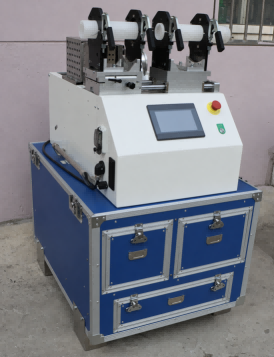
The standard IR-110 machine relies on direct operator handling for every mechanical positioning step. Technicians physically engage the 850W milling cutter by hand to face the plastic pipe ends smoothly. They also insert and remove the 1200W heating plate manually during each timed weld cycle. In contrast, the IR-110 CNC model replaces manual physical handling with precision servo-drive movement and an intuitive touch-screen control interface.
Servo-driven automation offers major operational advantages over manual tooling during high-purity piping projects:
Workers get great job accuracy for repeated steps that human welders cannot keep up forever.
Automated tools bring steady joining performance across large, long-running pipe assembly jobs.
Machines run at top speed with little direct watching, allowing non-stop work all day.
Higher output lets one worker build the total of two or three manual welders easily.
Retraction Control and Safety Mechanisms
The automated IR-110 CNC unit adds advanced safety systems and automated motion controls to protect cleanroom crews. The machine utilizes automatic heat plate retraction to pull the heater out of the joining zone immediately after the heating phase finishes. An integrated milling cutter limit switch stops motor movement automatically when the tool reaches its parked position. Furthermore, a durable stainless-steel protective cover guards vital internal components, while remote software upgrade support keeps operational programs current.
Industrial standards specify strict protective rules for automated tool movement to prevent workplace injuries.
1910.255(c)(4) Switch guards. All initiating switches, including retraction and dual schedule switches, located on the portable welding gun shall be equipped with suitable guards capable of preventing accidental initiation through contact with fixturing, operator’s clothing, etc. Initiating switch voltage shall not exceed 24 volts.
This advanced Infrared Welding Machine enforces these exact electrical and mechanical standards to secure smooth, safe execution during critical cleanroom pipe joins.
Operational Efficiency and QA/QC Consistency
Eliminating Operator Variability in Weld Cycles
Manual pipe joining adds human mistakes, physical tiredness, and position errors on building sites. Workers operating the basic IR-110 unit handle trim tools, cut depths, and heat plate moves by hand. By contrast, the advanced IR-110 CNC uses tight programmable drives to run all tool steps automatically. Machine control removes human differences to make matching strong joints across large pipe setups. Chip making cleanrooms need perfect pipe joints because tiny surface flaws cause big product losses.
Automated infrared welding boosts total tool output by speeding step timing, simplifying size changes, and cutting setup delays. Factory managers track key performance numbers to measure total machine productivity:
Making speed and total pipe length built within set time limits
Tool use ratios compared against daily work downtime
Worker pay savings gained through automated machine steps
Data Logging and Automated Quality Assurance
Live number checking keeps joint quality steady during key clean pipe jobs. The IR-110 CNC tracks main joining stats like heat temps, pressure, and position paths during each weld step. Control sensors spot process shifts early to stop bad welds before plastic parts cool down fully. Smart quality checks cut slow late inspections while saving extra material. Clean liquid setups in drug plants keep product trust high through these built-in control tools.
Both IR-110 models create printable weld data logs to meet tight legal check rules. Built-in system software records key job numbers like heat temps, drive speed, step times, and saved material profiles. Workers send live logs right to main report systems or local paper printers. These quality check files prove true match with cleanroom design rules, giving permanent proof for every completed pipe joint across the whole plant.
Choosing the Right IR-110 Infrared Welding Machine for Your Project
Application Scenarios Across Semiconductor and Pharma
Computer chip plants and drug factories must use super clean pipes to move liquids safely. Builders use tough plastic materials like PVDF and PFA so inner pipe joints stay smooth. Old hand tools leave tiny gaps that can trap bad chemicals and small germs. Heat fusion with an Infrared Welding Machine stops these risks by melting pipe ends without touch.
Drug making plants move living ingredients inside clean liquid loops. Chip factories send strong acids straight to wafer tools in clean spaces. Both industries require contact-free heating to keep liquids pure. Heat fusion follows high-purity piping rules by making continuous, smooth inner joint surfaces. Engineering teams pick semi-automatic or automated servo systems based on job site rules and pipe needs.
Production Volume and Skill Level Selection Matrix
Project managers pick specific pipe tools based on daily joint goals and worker skills. Smaller shops with fewer joint cuts do well with the basic IR-110 model. Skilled workers handle hand trimming and place heat plates with good tool control. This standard machine saves money upfront during smaller maintenance jobs and quick pipe upgrades.
Big computer chip building projects need high joint production and non-stop job site work. The IR-110 CNC model removes human mistakes by using exact motor-driven controls. Built-in touch screens help the user while automated drives make identical strong welds every shift. This simple guide helps engineering teams match tool features directly with their job needs:
Selection Criteria | Standard IR-110 | IR-110 CNC |
|---|---|---|
Daily Joint Output | Low to Moderate Production | High Volume Continuous Work |
Drive Mechanism | Manual Facing and Insertion | Servo-Driven Automation |
Operator Skill Reliance | High Skilled Technician Needed | Low Operator Skill Dependency |
Process Control | Manual Lever Movement | Touch-Screen Program Execution |
Both units provide accurate touchless heat joining for clean plastic piping networks. Contact-free warming prevents dirt inside pure liquid lines. The base IR-110 Infrared Welding Machine gives a lower-cost semi-automatic path for trained workers. Meanwhile, the IR-110 CNC version removes human effort using exact motor-driven controls.
Plant leaders pick the right Infrared Welding Machine by checking four main job needs: total cost, total joint numbers, project size, and quality tracking rules. The standard unit fits smaller repair work with low daily goals. In contrast, large chip factory builds need the CNC system to secure fast output, automatic data saves, and matching joint strength.
FAQ
What pipe sizes and materials do the IR-110 and IR-110 CNC machines support?
Each model fuses plastic tubing measuring between 20mm and 110mm across. They handle tough cleanroom plastics like PVDF, PP, PFA, PB, and PE for pure liquid networks.
How do the IR-110 and IR-110 CNC differ in operation?
Operators shift the 850W trimmer and 1200W heater by hand on the basic IR-110 setup. In contrast, the automated IR-110 CNC uses smart motor controls, a simple touch screen, and self-moving heat plates to drop user mistakes.
Do both welding machines share the same power and temperature specs?
Yes. Each model uses a standard 220V plug that draws up to 2050W. Furthermore, both tools use IP65 sealed frames and warm plastic anywhere between 180°C and 600°C.
Which machine fits high-volume cleanroom piping projects better?
The IR-110 CNC handles big factory builds much better. Automated motors speed up the weld steps, stop manual errors, and pull the heater back by itself to boost cleanroom output.