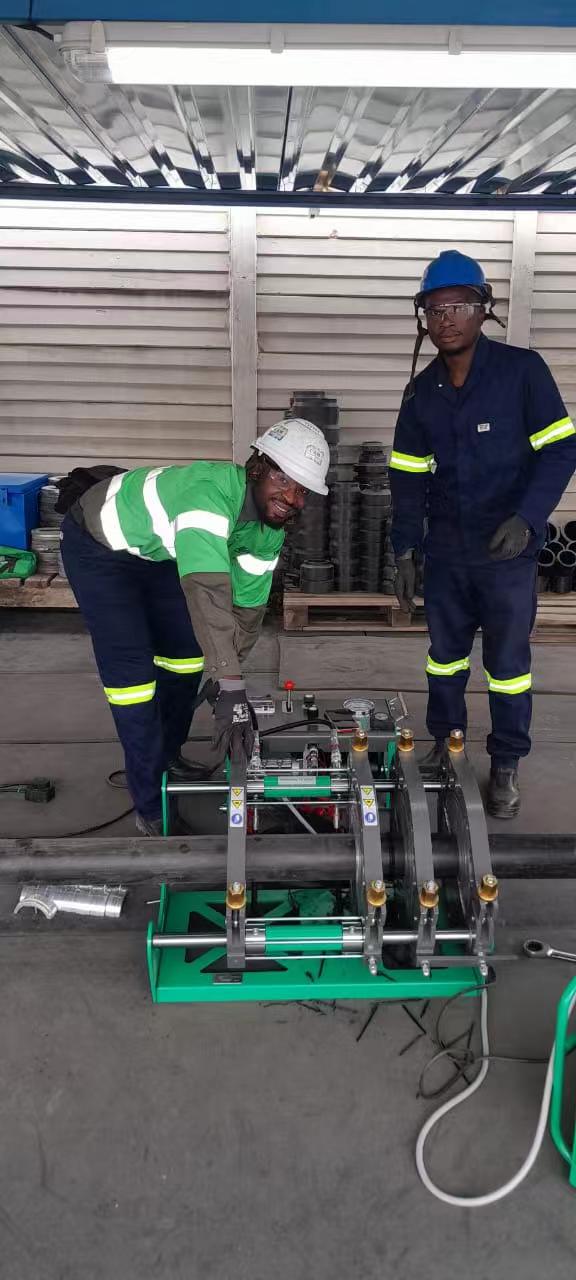
You have hard jobs when you manage water networks. Big HDPE pipes need joints that do not leak. The Trailer Butt Fusion Welding Machine lets you move easily at work. It gives you strong power on site. You can weld pipes fast, even when the weather is bad. This tool helps you make water systems that work well. It also helps you finish your work sooner. Think about how this machine can improve your work and raise quality.
Key Takeaways
HDPE pipes are safe for people and the environment. They are a good choice for city water systems. – The Trailer Butt Fusion Welding Machine helps workers finish jobs faster. It lets them weld pipes at the site without lifting heavy things. – Using HDPE pipes means there are fewer leaks. Cities spend less money fixing pipes. People get water they can count on. – The MAZINGER 630I machine is made for welding under high pressure. It makes strong joints that do not leak. These joints last for many years. – Teams need to take care of their machines and learn how to use them. This helps welding machines work their best.
Why HDPE Pipes Are Used in City Water Systems
Main Benefits of HDPE (PE100)
HDPE pipes are common in today’s water systems. Cities pick them for many projects. PE100 pipes give you lots of good things:
HDPE pipes use safe, food-grade materials. You do not have to worry about dirty water.
These pipes follow tough safety rules like NSF 61 and WRAS.
You can recycle HDPE pipes. They are better for the environment when made and put in.
Plastic pipes now make up 41% of drinking water pipes. PVC and HDPE together are almost 73% of all plastic pipes used.
By 2024, plastic pipes already accounted for nearly half of all water pipe demand worldwide, and this dominant trend continues to grow in 2026 as cities prioritize long-term infrastructure resilience.
HDPE pipes are flexible. You can bend them around things or rough ground. This makes putting them in easier and means you need fewer extra parts. You also save time and money because HDPE pipes are light and fast to put in.
Even though PE pipes cost a bit more at first, you will see that putting them in costs less because they are light and quick to install.
Here is a simple chart showing what makes PE100 special:
Property | Description |
|---|---|
Strength | Very strong and tough against hits |
Resistance to Crack Growth | Great at stopping cracks from spreading |
Chemical Durability | Stays strong against acids, bases, and solvents |
Flexibility and Ductility | Handles stress and bends without breaking |
Corrosion Resistance | Does not rust, perfect for water pipes |
UV Resistance | Blocks sunlight, so it lasts longer |
Leak-Proof and Rust-Free
You want water pipes that do not leak. HDPE pipes help you feel safe. They make tight joints that stop leaks. You do not get the same problems as with ductile iron or PVC pipes, which can leak after some time.
Feature | HDPE Pipes | Ductile Iron (DI) | PVC |
|---|---|---|---|
Leak Rate | Zero | Higher | Higher |
Durability | High | Moderate | Moderate |
Flexibility | Excellent | Poor | Moderate |
Environmental Impact | Low | Moderate | Moderate |
HDPE pipes can last 50 to 100 years. They do not rust or get clogged, so you fix them less. You do not have to worry about rust, lining, or special protection. This means you spend less money fixing pipes and your water keeps flowing.
Using HDPE pipes means fewer leaks. You waste less water and lower the chance of polluting the environment. You also help your city save money and keep people healthy.
Trailer Butt Fusion Welding Machine Technology
MAZINGER 630I Core Features
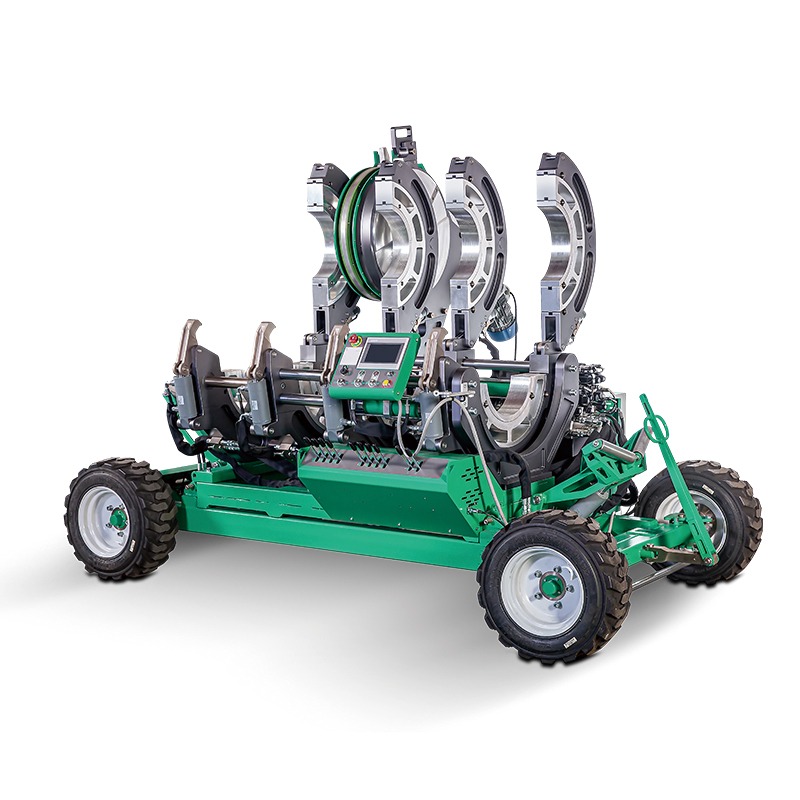
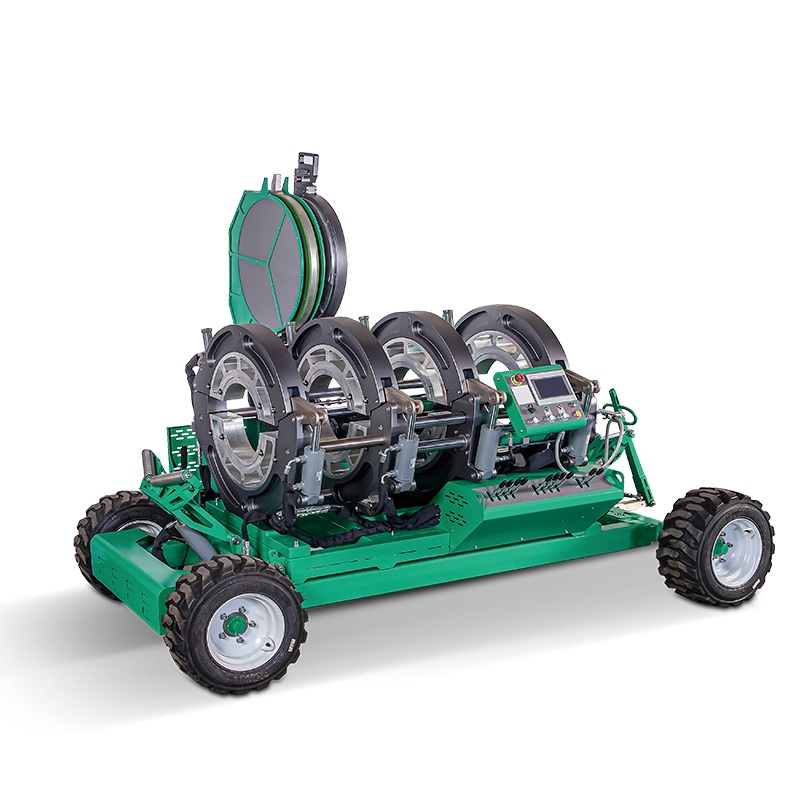
You need a welding tool that can handle big city water jobs. The MAZINGER 630I is a strong mobile welding station. This Trailer Butt Fusion Welding Machine gives you power, accuracy, and easy movement in one tough machine.
Welding Range: You can weld pipes from 315mm to 630mm (12″–24″ IPS). These are the main sizes for city water pipes.
Material Compatibility: The machine works with potable water and gas-grade HDPE (PE100, PE100-RC, PE80), plus PP and PVDF pipes. You can use it for many different jobs.
Mobility: The Trailer Butt Fusion Welding Machine sits on a trailer with big tires. You can pull it with a truck or SUV. You do not need cranes or other lifting tools. This saves time and makes work easier, even on rough ground.
Hydraulic System: Equipped with heavy-duty, high-output hydraulic cylinders that easily manage the heavy drag of large-diameter pipes. The CNC control system is dual-compatible, executing parameters flawlessly under both the standard-pressure ASTM F2620 (0.41 to 0.62MPa) and the international ISO 21307 Single High Pressure (SHP) spec (0.52±0.03N/mm^2 interfacial pressure).
Ergonomic Design: The built-in arm helps you move the facer and heating plate. One person can handle heavy parts safely and quickly.
Data Logging: The CNC system saves data for every weld. It keeps track of heat, pressure, and time. You can send these records for checks and digital storage. This helps you meet strict rules and pass inspections.
The Trailer Butt Fusion Welding Machine is a full, mobile answer for joining lots of pipes. You can move fast, stay safe, and keep records of every weld.
How the Welding Process Works
You get strong, leak-free joints by following the butt fusion steps. The Trailer Butt Fusion Welding Machine makes each step simple and the same every time. Here is how you weld HDPE pipes with the machine:
Clamp— Put both pipe ends in the clamps.
Face the pipe ends and align — Use the planer to trim both ends. Make sure they are straight and even. Clean off dirt or old material.
Bead-up — Put in the heater plate. Press lightly until you see a melted bead around both pipes.
Soak — Let the heat go into the pipe wall. This melts the pipes all the way through.
Heater removal and joining — Take out the heater plate fast. Push the hot pipe ends together with steady pressure.
Cooling under pressure — Hold the pipes together as they cool. This keeps the joint strong.
Visual inspection and bead check — Look at the outside bead. If it is smooth and even, the weld is good.
You must follow safety and quality rules for every weld. The Trailer Butt Fusion Welding Machine helps with smart controls and data logs. Certified workers use the machine to meet industry rules and make sure every joint is strong.
Safety and Quality Control Measures | Description |
|---|---|
Makes sure you follow the right fusion rules. | |
Welding Procedure Specifications (WPS) | Lists the steps you must follow for welding. |
Fusing Procedure Specifications (FPS) | Tells you how to make good joints. |
Procedure Qualification Records (PQR) | Checks the fusion process with test results. |
Performance qualifications for welders | Makes sure workers can do fusions the right way. |
Clean the pipe surface to remove dirt and old material.
Line up the pipes so they heat evenly.
Heat the pipes the right way for good fusion.
Press the pipes together with steady force.
Let the pipes cool before moving them.
Certified workers use the Trailer Butt Fusion Welding Machine to control every step. You get joints that meet city water rules. This tool helps you build water systems that last a long time.
Field Advantages in Municipal Water Projects
Trench-Side Assembly Line Welding and On-Site Mobility
You can make pipe work easier with trench-side welding. The Trailer Butt Fusion Welding Machine moves along the trench with you. You pull it behind a pickup truck. You do not need to lift heavy tools or wait for cranes. This makes it easy to weld pipes where you need them. Your team can work faster and finish jobs sooner.
Imagine your crew working next to the trench. When you finish one joint, you tow the machine to the next spot. You keep the job moving without stopping. This helps you work better on muddy or rocky ground. You save time and spend less on workers.
Here is a table that shows how moving the machine helps your project:
Evidence Point | Description |
|---|---|
Streamlined Process | You join pipes faster and save lots of time after learning the machine. |
Reduced Setup Complexity | The simple design lets you set up fast and start sooner. |
Increased Joint Completion | Automatic parts help you finish more joints each day. |
No Chemical Cure Time | Unlike GRP or solvent-cemented PVC, thermoplastic HDPE requires no chemical curing. Note: To ensure molecular relaxation and safety, standard hydrostatic testing should be performed after the recommended 12-to-24-hour post-stabilization period. |
Lower Training Costs | Easy controls mean you can train more workers for less money. |
Using a mobile welding machine gives you a big advantage. Your team works quicker and your project ends faster.
High-Pressure Welding for Thick-Walled Pipes
It is hard to join big HDPE pipes. High-pressure welding makes strong joints that last many years. The Trailer Butt Fusion Welding Machine uses strong hydraulic cylinders to join thick pipes. It follows strict rules.
If you get the pipe ends ready and use butt fusion, you get strong joints. Electrofusion also makes leak-free joints that hold high pressure. You must clean and check pipe ends for the best welds.
You test your welds with hydrostatic pressure at 1.5 times the normal design pressure after the mandatory stabilization period. Along with external bead inspections, advanced non-destructive testing (NDT) methods like Phased Array Ultrasonic Testing (PAUT) and Time-of-Flight Diffraction (TOFD) can be used to scan the internal fusion line, guaranteeing absolute structural integrity.
Butt fusion is best for big pipes and makes strong joints.
Electrofusion gives you joints that do not leak.
Careful work helps you get good welds.
High-pressure welding helps you build water pipes that stay strong and do not leak for a long time.
Case Study: Saudi Arabia Water Mainline Project
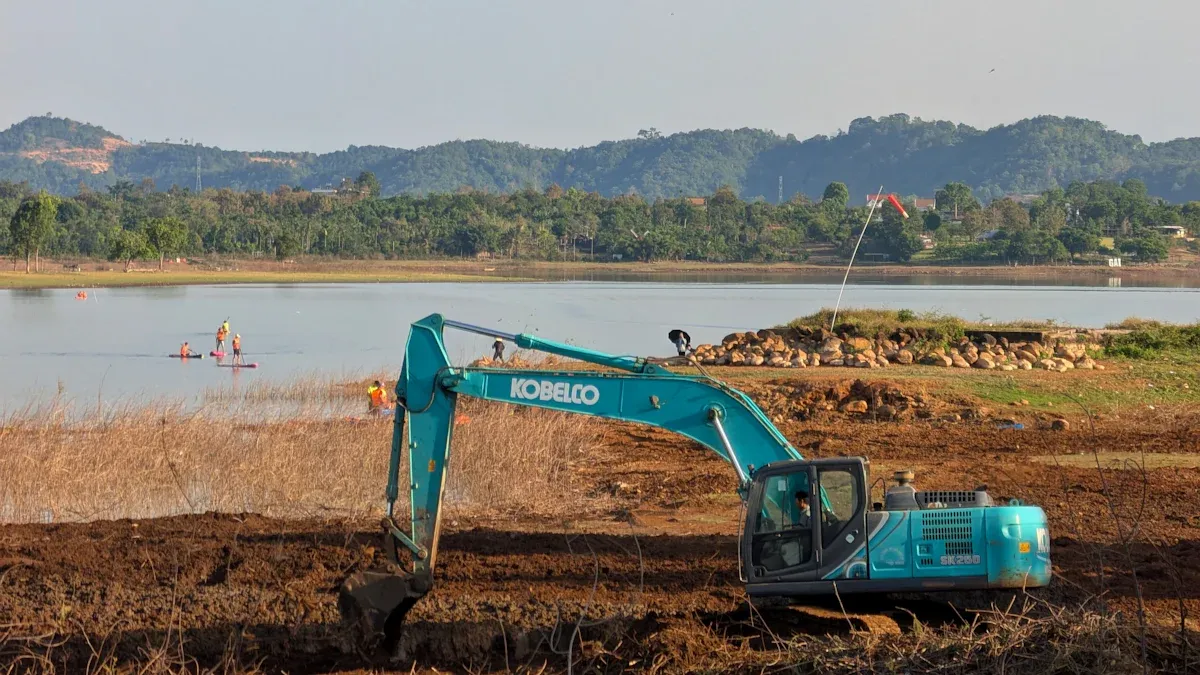
Project Overview and Challenges
Building water networks in Saudi Arabia is hard. The city edges have rough gravel and desert sand. The sun makes the ground hot during the day. Pipes must connect over long distances. The Saudi water mainline project needed a tough solution for a 45-kilometer pipeline. AGRU PE100 pipes were used, with sizes from 315mm to 630mm. The thick SDR11 walls were up to 57.2mm. You had to make sure there were no leaks because water is very important in the Middle East.
You see different pipe materials in water systems. Here is a table showing common pipe types and their uses:
Material Type | Application Description |
|---|---|
Ductile Iron | Used for long pipelines in water systems. |
GRP (Glass Reinforced Plastic) | Used for pipes that bring water from the coast to cities. |
HDPE (High-Density Polyethylene) | Used in water safety projects across the Middle East. |
HDPE pipes are special in water safety projects. They bend easily and do not rust. They work well in tough places and keep water clean.
Performance and Customer Feedback
Thick pipes need strong welding. The MAZINGER 630I trailer machine helped solve these problems. You moved the machine along the trench with a pickup truck. After each weld, you quickly went to the next pipe joint. The hydraulic system gave enough power to pull heavy pipe ends together. You used less effort to run the machine. The mechanical arm made it easy to move the facer and heating plate.
You tracked every weld with the smart CNC data logger. You exported safe records for inspectors. You passed tough hydrostatic tests at 1.5 times the normal pressure. The whole 45-kilometer pipeline had zero leaks.
“AGRU’s 630mm SDR11 is very hard to work with; the walls are super thick. MM-Tech’s MAZINGER 630I trailer machine is a huge help for long water projects! Its hydraulic power is very strong, and the all-in-one design lets our workers do their jobs easily. The machine is reliable and fast, and it saved our company at least two months of work. It is a great piece of engineering!”
You can trust the MAZINGER 630I to make strong, leak-free joints. You finish projects faster and meet the highest standards for water systems.
Choosing the Right Trailer Butt Fusion Welding Machine
Selection Criteria for Municipal Projects
You must pick the best welding machine for your city water job. First, check if it fits all the pipe sizes you need. The machine should work with every pipe diameter in your plan. It is important that the machine can move easily. Pick one with big tires and a towing bar. This helps it roll over rough ground and along trenches. You do not want to waste time or lift heavy things.
A smart data logging system is also important. Choose a machine that saves details about every weld. This makes it easier to pass inspections and keep your project neat. Good support and training matter too. Find a supplier who teaches your team how to use the machine. Rental services with their own repair teams keep your machine working well. Having the right tools helps your team stay safe and work faster.
Tip: Always make sure the machine follows ISO and ASTM rules for high-pressure fusion. This keeps your pipe joints strong and stops leaks.
Maintenance and Support
Taking care of your welding machine keeps it working well. You should follow a regular plan to stop problems and help the machine last longer. Here is a simple table with easy care steps:
Frequency | Maintenance Task |
|---|---|
Daily | Clean the heating plate using a clean, dry, lint-free non-synthetic cotton cloth while hot. If residues persist, clean only with 99% pure Isopropyl Alcohol (IPA) when the plate has completely cooled. Never use chemical detergents or abrasive tools on the PTFE coating. Check the planer blades for chips or dullness. |
Weekly | Look at the hydraulic fluid and check hoses for leaks. Make sure clamps slide smoothly on the rods. |
Annually | Change old hydraulic fluid. Send the data logger, pressure gauges, and temperature controls for checking. |
After-sales support helps you fix problems fast. Your team can get pipe fusion training. Rental services have repair teams to keep machines ready. You can rent the right machine for each job, which helps your team stay safe and work better.
Repair team with rental service
Right equipment for every project
Note: Regular care and good support help you finish jobs on time and keep your water pipes safe.
When you use a Trailer Butt Fusion Welding Machine, your work gets faster. You can trust the machine to give good results every time. It helps you finish big HDPE water jobs on time. This technology also helps you follow all the important rules. If you want to know more or see new machines, you can do these things:
Look at new welding tools from MM-Tech.
Talk with experts and learn from many other workers.
Try these ideas to make your next water project better.
FAQ
How do you move the trailer butt fusion welding machine on site?
You can pull the machine with a pickup truck or SUV. The big tires help it move over rough ground and trenches. You do not need a crane or other lifting tools.
What pipe sizes can you weld with the MAZINGER 630I?
The machine can weld pipes from 315mm to 630mm (12″–24″ IPS). It comes with reducer inserts for many city water pipe sizes.
How does the data logging system help your project?
The smart CNC system saves details about every weld. You can make PDF or Excel files for inspectors. This helps you follow rules and keep your project neat.
What maintenance steps should you follow for the welding machine?
Frequency | Task |
|---|---|
Daily | Wipe the heating plate and check the blades. |
Weekly | Look at the hydraulic fluid and hoses. |
Annually | Check and set the gauges and controls. |
Can one person operate the MAZINGER 630I?
Yes. The design and mechanical arm help you move heavy parts safely. One person can use the machine alone, which saves work and keeps you less tired.