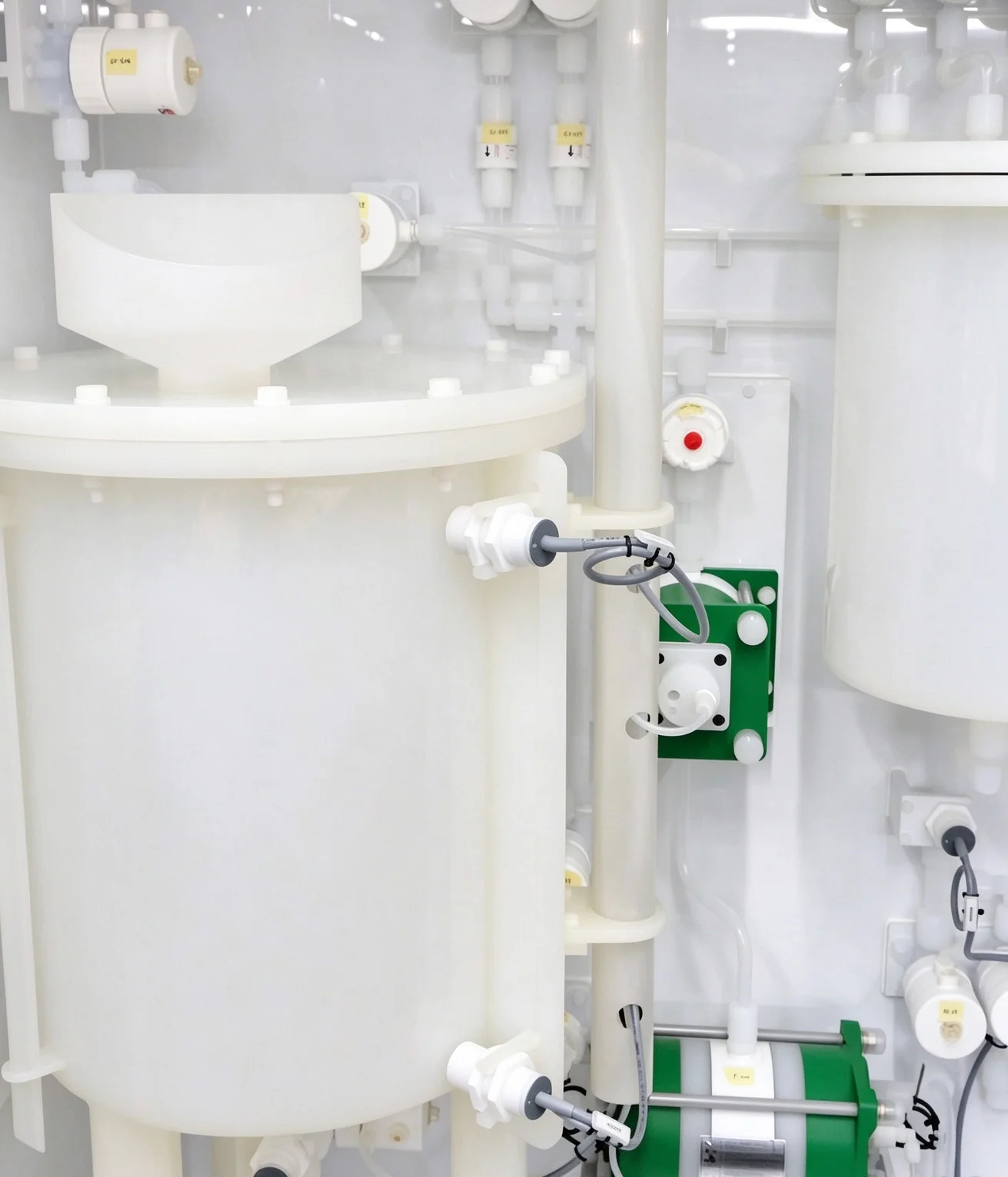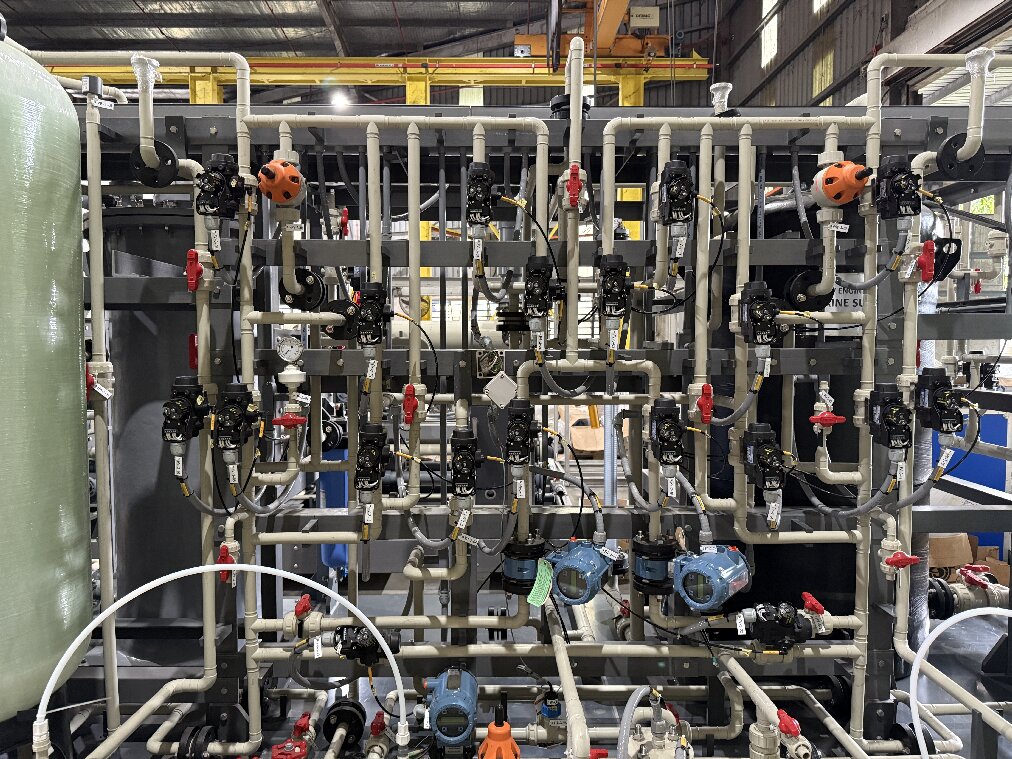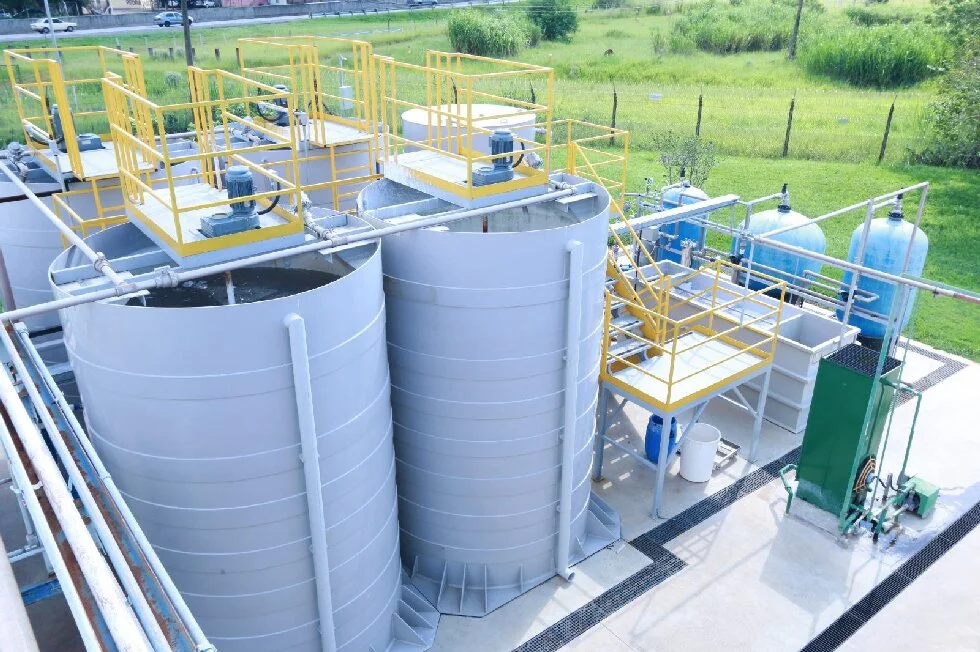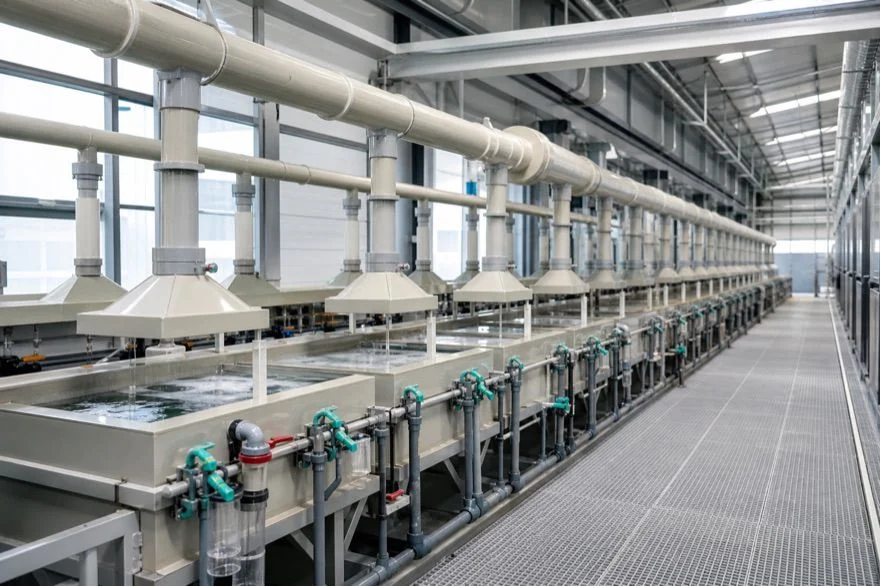
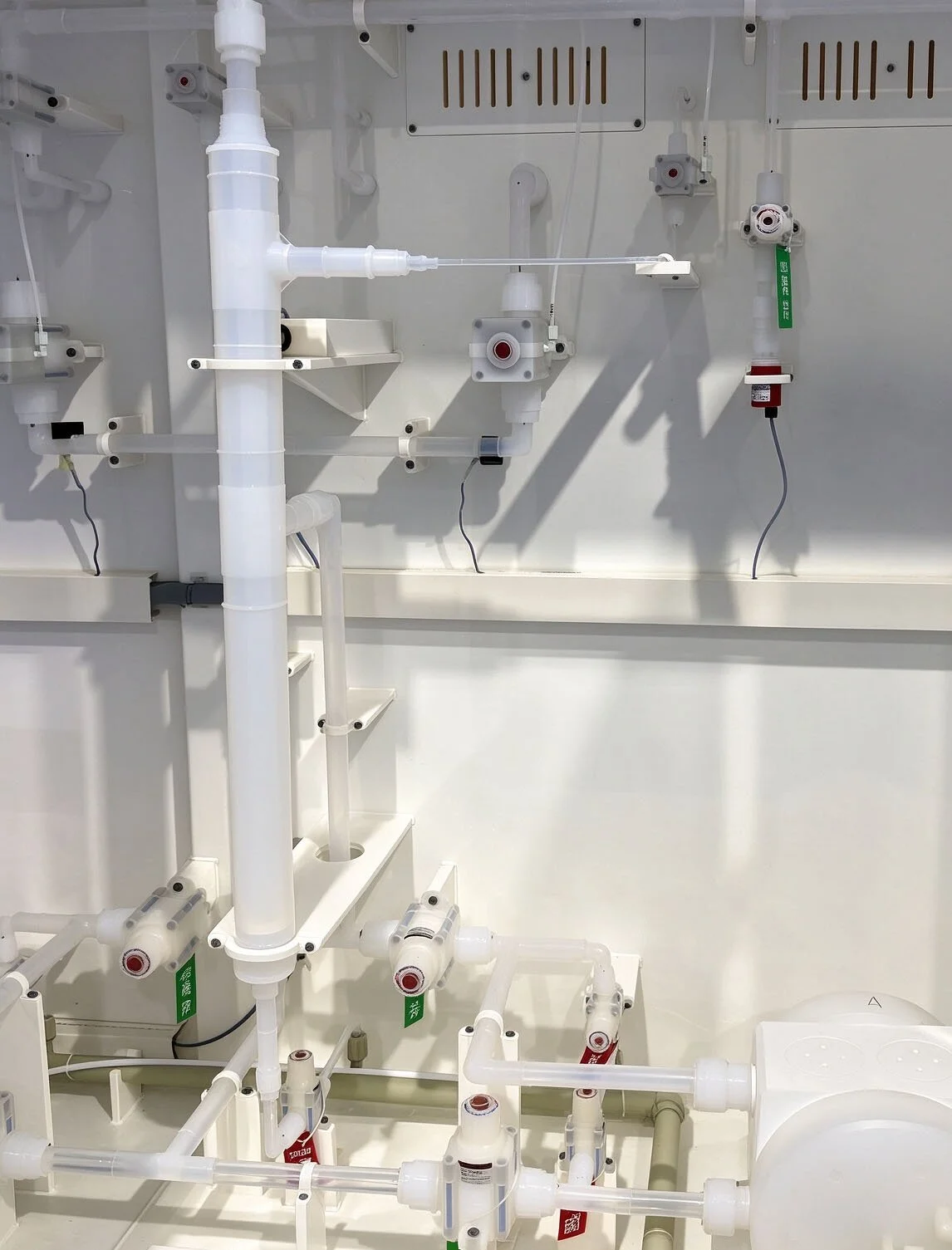
MM-Tech provides integrated thermoplastic fabrication solutions for the semiconductor industry. Our sheet and pipe welding technologies support the production of precision-fabricated, corrosion-resistant plastic components and systems for contamination-controlled environments. Semiconductor plastic fabrication now demands more than a durable part. Components must resist aggressive chemicals, control particles and outgassing, hold dimensional stability, maintain leak integrity, and meet fire performance requirements. Thermoplastics increasingly serve these roles because they combine chemical resistance with clean, weldable construction.
MM-Tech acts as a thermoplastic welding solutions provider, application engineering partner, and global production partner, not merely an equipment supplier. We connect process planning to real production needs. Fabrication quality directly affects device yield, operator safety, and equipment uptime. Every weld, cut, and bend contributes to that outcome.
Key Takeaways
-
Choose the right plastic for each semiconductor application to ensure chemical resistance and purity.
-
Use sheet welding to build leak-tight tanks, cabinets, and enclosures for cleanrooms.
-
Use pipe welding to create strong joints for chemical lines and ultrapure water systems.
-
MM-Tech provides equipment, training, and support to help you scale production.
Semiconductor Plastic Fabrication: Materials and Requirements
Performance Requirements for Semiconductor Plastics and Common Materials
Thermoplastics have become the default construction material for wet benches, chemical delivery lines, exhaust ducting, and ultrapure water systems. Five requirements govern material selection in semiconductor plastic fabrication: chemical resistance to aggressive acids and solvents, contamination control through low extractables and particle shedding, dimensional stability under thermal cycling, leak integrity at every joint, and fire performance for cleanroom safety.
No single plastic satisfies every requirement. Material choice must match the specific application. The table below summarizes common materials and their practical fit.
|
Material |
Typical Role in a Fab |
Purity Strengths |
Practical Limitations |
|---|---|---|---|
|
PVDF |
Wet benches, process tanks, UPW and chemical piping |
Very good chemical resistance, low extractables, weldable by butt fusion |
Narrow welding window, higher cost than PP |
|
PFA |
High-purity chemical lines, critical fluid paths |
Excellent purity and chemical inertness |
Expensive, lower mechanical stiffness |
|
PP |
Exhaust ducting, non-critical tanks, general chemical service |
Good chemical resistance, low cost, easy to weld |
Higher extractables, lower temperature capability |
|
PTFE |
Gaskets, diaphragms, linings, seals |
Extremely inert, wide temperature and chemical range |
Not melt-fusion welded like PVDF or PP; used as seals and linings |
|
PVC |
Exhaust, drainage, non-critical utility service |
Low cost, easy to fabricate |
Not specified for high-purity fluid contact |
SIMONA® SEMICON Materials and Application Fit
SIMONA® SEMICON materials meet high global standards including FM 4910. SIMONA® PVC-U FM 4910 is a certified material for semiconductor cleanroom applications, offering minimal flame spread and hardly any smoke development in the event of fire. Selected SIMONA® fluoropolymer grades, including PVDF 740, also meet FM 4910 requirements. The SIMONA® SEMICON portfolio includes FM 4910-compliant grades across polypropylene (FM-PP), PVC (FM-PVC), and fluoropolymers, providing material options for applications requiring chemical resistance and controlled fire performance. Depending on the specific material grade, the portfolio covers service temperatures from 140 to 425°F (60 to 218°C).
These materials serve safety-critical components: housings for wet chemical process systems in cleanrooms, chemical distribution systems, valve blocks, cleaning modules, wafer transfer interfaces, and control cabinets. For facilities serving semiconductors, photovoltaics, electroplating, and surface treatment, SIMONA® SEMICON materials provide a verified starting point. Note that cleanroom classification and material fire-performance standards are separate frameworks. FM 4910 addresses flame spread and smoke, not particle counts. Fabricators working with pp, pph, pvdf sheets, and pipes should confirm that each material grade carries the specific listing required for its end use.
Sheet Welding Solutions for Semiconductor Components
Sheet Fabrication Processes: Cutting, Routing, Welding, and Bending
Sheet fabrication begins with clean, repeatable cutting. CNC sheet cutting and preparation establish panel dimensions and square edges. CNC routing then produces contours, openings, slots, and equipment interfaces. Routing suits large sheets and complex profiles, and digital files repeat consistently across production runs. Heat and chip removal need control to prevent melting, and tight-tolerance holes may still call for milling. Plastic sheet butt fusion welding joins panels into tanks, cabinets, and enclosures. Sheet rolling and bending form edges, channels, corners, and shaped components. Each step feeds the next, so dimensional accuracy at cutting and routing carries through to the finished weld.
MM-Tech Sheet Equipment and Semiconductor Applications
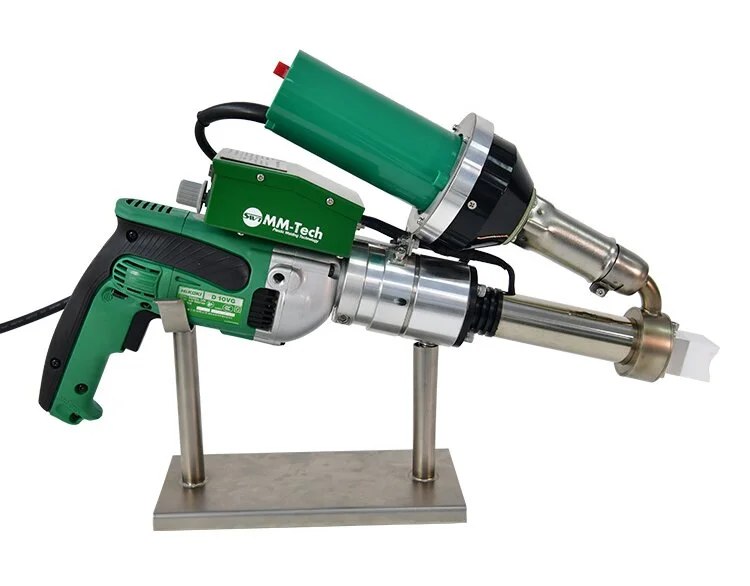
MM-Tech maps each machine to a process stage. The SWT-XL3000 Automatic Plastic Sheet Cutting Machine delivers repeatable cutting of panels and structural components. The SWT-YF1530 CNC Router Machine produces accurate contours, openings, slots, and equipment interfaces. The SWT-PH3000 Plastic Sheet Butt Fusion Welding Machine handles horizontal welding, circular welding, and 90° vertical jointing. This sheet butt fusion welding machine welds PE, PP, PVC, PVDF, PC, ABS and Acrylic from 3.0 to 50.0 mm thick, with a maximum working length of 3000 mm. It follows DVS 2208 design and supports DVS 2207 compliance. The SWT-PM3000 CNC Sheet Peeling Machine removes excess weld material after sheet butt fusion, leaving a flush surface. The SWT-ZW3000 Plastic Sheet Bending Machine forms edges, channels, corners, and shaped components. The SWT-NS600A Extrusion Welder joins reinforcement ribs, partitions, and non-critical joints on suitable thermoplastics. The SWT-NS1600S BL Hot Air Gun supports detail welding and localized assembly.
These machines and supporting tools serve wet processing tanks and chemical processing equipment. Tank fabrication demands continuous, leak-tight seams. Plastic chemical tanks for acids, bases, and solvents rely on uniform bead formation and controlled cooling. Tank fabrication also extends to fume hoods, ducting, and rinse stations. In semiconductor cleanrooms, sheet-welded cabinetry, view windows, and protective enclosures shield sensitive processes. Material grades listed to FM 4910 support flame spread and smoke control in these spaces. MM-Tech plastic welding equipment connects these steps into one production flow, and the underlying plastic welding technology keeps joints consistent from panel to finished tank.
Pipe Welding Solutions for Semiconductor Fluid Systems
Pipe Butt Fusion, Fitting Fabrication, and Infrared Welding
Fluid systems carry the highest consequence of any plastic joint in a fab. A failed seam in a chemical line threatens yield, personnel, and uptime at once. Pipe fabrication therefore follows a defined sequence: cut the pipe square, prepare the ends, align the components, heat both faces, join under controlled pressure, and cool without disturbance. Plastic pipe butt fusion produces a homogeneous joint with no filler material. Fitting fabrication extends the same principle to elbows, tees, crosses, and wye fittings, which are built in the workshop rather than ordered as separate stock items.
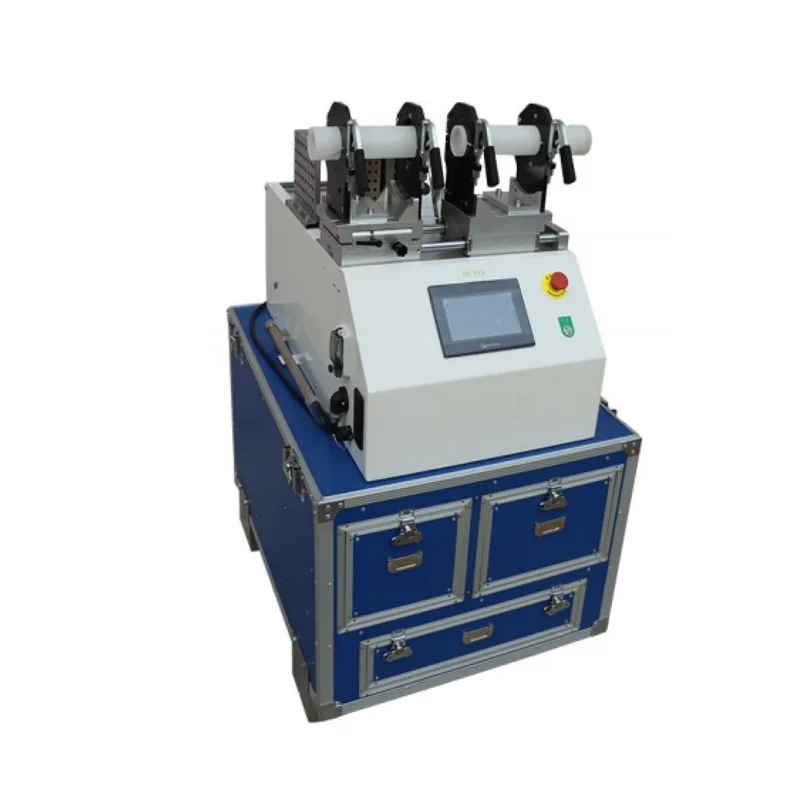
Infrared welding offers a different route for selected high-purity work. The process heats mating surfaces by non-contact radiation, so no heating plate touches the melt zone. This reduces particle generation at the joint and suits applications where extractables and contamination control dominate. Infrared welding is not a universal substitute for contact fusion. It fits suitable thermoplastics and components, and material grade selection still governs the outcome.
MM-Tech Pipe Equipment and Semiconductor Applications
MM-Tech supplies thermoplastic pipe welding machines across the full fabrication sequence. The SWT-V315/90H Pipe Butt Fusion Welding Machine performs hydraulic butt fusion for suitable melt-weldable pipe materials, including PE, PP, and PVDF. Its heating plate holds a stable ±3°C range on both sides for even heat distribution, and the hydraulic system delivers up to 80 bar of pressure for demanding operations.
The SWT-C400 Pipe Band Saw and SWT-MA400 Fitting Fabrication Welding Machine pair for pipe cutting and workshop production of elbows, tees, crosses, and wye fittings. These butt fusion welding machines keep fitting geometry consistent across batches.
The IR-110 CNC Infrared Welding Machine is our recommended choice for high-purity piping. It joins high-performance thermoplastic systems in semiconductor manufacturing, including ultrapure water and high-purity chemical distribution, and also serves medical, laboratory, and biopharmaceutical work. Non-contact infrared radiation heats the joint. The machine welds PVDF, PP, PFA, and other suitable thermoplastics, and handles straight pipe-to-pipe, pipe-to-fitting, and fitting-to-fitting connections. Automatic program control, standard and custom parameter modes, a 0–600°C temperature range, printable parameters for process documentation, self-locking magnetic clamps, and remote software upgrades support repeatable production.
These systems serve semiconductor chemical storage and distribution, water and wastewater treatment, exhaust equipment, and UPW loops. Liquid chemical storage tanks and wet processing tanks depend on the same joint quality. Standard PE100 PN10 or PN16 pipe is not automatically suitable for high-pressure RO feed service; confirm the pressure rating for that duty separately.
Sheet vs. Pipe Welding: Fit for Semiconductor Applications
Fit by Performance, Application, and Compliance
Sheet and pipe welding solve different geometry problems, so neither method wins on performance alone. Sheet fabrication builds flat panels into tanks, cabinets, hoods, and enclosures. The weld runs along a seam, and the fabricator controls bead shape, cooling, and post-weld peeling. Pipe fabrication builds round joints between lengths of pipe and molded fittings. The weld is circumferential, and joint quality depends on alignment, heating time, and pressure control.
Application fit follows the same split. Wet process tanks, rinse stations, fume hoods, and cleanroom enclosures belong to sheet work. Chemical distribution, UPW loops, and exhaust lines belong to pipe work. A fab typically needs both, which is why semiconductor plastic fabrication planning starts with the component list, not the machine list.
Compliance adds a second layer. FM 4910, developed in 1997 by FM Approvals, is commonly referenced for plastic materials in semiconductor fabrication facilities and cleanrooms. Approved materials must resist fire, resist chemicals, limit smoke, and produce minimal toxic gas and corrosive byproducts in a fire. This is a material listing. It does not certify a weld, a finished tank, or a piping system.
Verify each claim against its actual scope: FM 4910 covers material fire performance, SEMI F57 addresses high-purity polymer components rather than every plastic part, and cleanroom class is a separate framework from fire performance.
Cost, Throughput, and Standards Considerations
Cost profiles differ by labor content. Sheet work carries more cutting, routing, and finishing time per part, and a sheet butt fusion welding machine such as the SWT-PH3000 Plastic Sheet Butt Fusion Welding Machine sets the pace for large panel runs. Pipe work carries more joint preparation and fit-up time per connection, and butt fusion welding machines determine throughput on long distribution runs. High-mix shops gain most from flexible changeover; high-volume shops gain most from repeatable cycle times.
Standards references worth confirming include DVS 2207 for thermoplastic welding practice, FM 4910 for material fire performance, and SEMI F57 for high-purity polymer components. Each carries a defined scope, and buyers should confirm that scope before treating a listing as approval for a finished assembly. Butt fusion welding quality itself is proven by procedure qualification and joint testing, not by a material certificate alone.
MM-Tech connects fabrication processes to the outcomes that matter in the fab. Sheet welding builds tanks, hoods, and enclosures with controlled beads and flush finishes. Pipe welding delivers homogeneous joints for chemical lines and UPW loops. Together they support contamination control, chemical resistance, and leak-tight construction across semiconductor plastic fabrication.
MM-Tech works as an application engineering and global production partner. We supply integrated equipment solutions, fabrication-process planning, application engineering, production-line integration, technical training, commissioning, and after-sales support. An infrared welding machine is only one part of that chain. Purity requirements and production demand will keep rising across the semiconductor sector. MM-Tech helps fabricators scale capability to meet them.
FAQ
What materials can the SWT-PH3000 Plastic Sheet Butt Fusion Welding Machine join?
The SWT-PH3000 Plastic Sheet Butt Fusion Welding Machine welds PE, PP, PVC, PVDF, PC, ABS and Acrylic sheets from 3.0 to 50.0 mm thick. It handles horizontal welding, circular welding, and 90° vertical jointing, with a maximum working length of 3000 mm. The machine follows DVS 2208 design and supports DVS 2207 compliance.
Which MM-Tech machine suits high-purity chemical distribution lines?
The IR-110 CNC Infrared Welding Machine joins PVDF, PP, PFA, and other suitable thermoplastics for ultrapure water and high-purity chemical distribution. Non-contact infrared radiation heats the joint, which reduces particle generation. It handles pipe-to-pipe, pipe-to-fitting, and fitting-to-fitting connections with automatic program control.
Can the SWT-V315/90H Butt Fusion Welding Machine handle pipe butt fusion for semiconductor fluid systems?
Yes. The SWT-V315/90H Butt Fusion Welding Machine performs hydraulic butt fusion for PE, PP, and PVDF pipe with an outside diameter range of 90–315 mm. Its heating plate holds a stable ±3°C range, and the hydraulic system delivers up to 80 bar of pressure for demanding operations.
Does FM 4910 approval certify a finished plastic tank or piping system?
No. FM 4910 is a material listing for fire performance. It covers flame spread, smoke, and toxic byproducts. It does not certify a weld, a finished tank, or a piping system. Fabricators must verify each claim against its actual scope.
What support does MM-Tech provide beyond equipment delivery?
MM-Tech acts as an application engineering and global production partner. Services include fabrication-process planning, production-line integration, technical training, commissioning, and after-sales support. This integrated approach helps fabricators scale capability as purity requirements and production demand rise.