Introduction: The Role of Plastic Pipes in Water Purification Systems
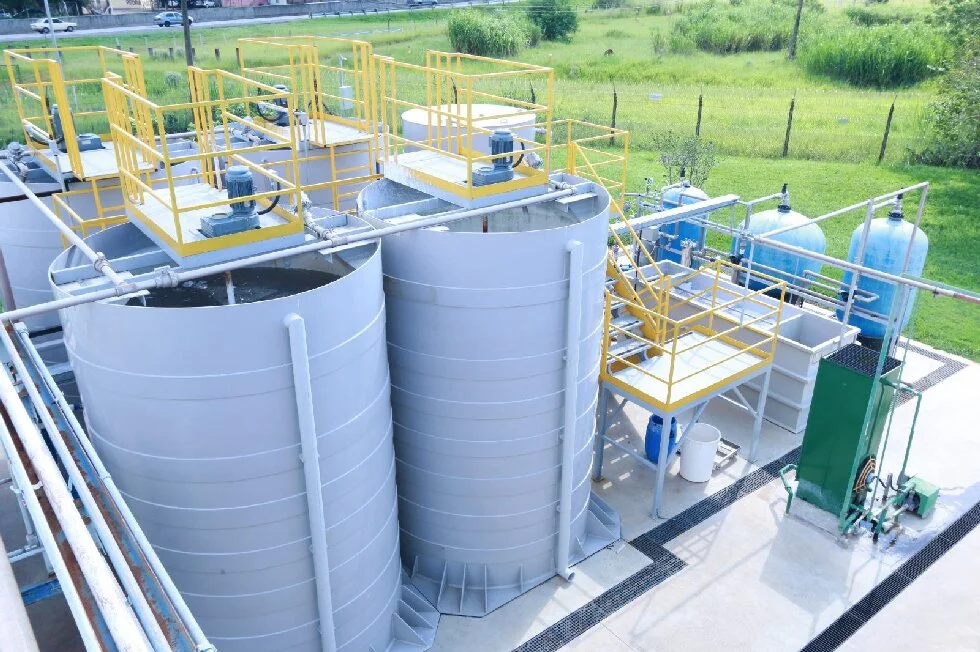
Industrial water purification systems convert raw water into water that meets specific quality requirements for manufacturing, processing, and other industrial applications. Depending on the source water and required output quality, a typical system may include raw water intake, pretreatment, filtration, ultrafiltration (UF), reverse osmosis (RO), post-treatment, and treated-water distribution.
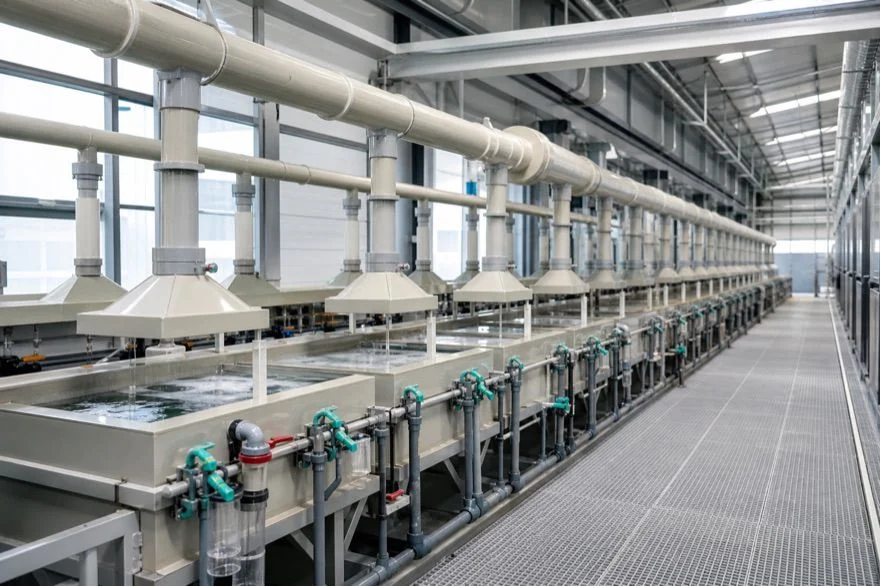
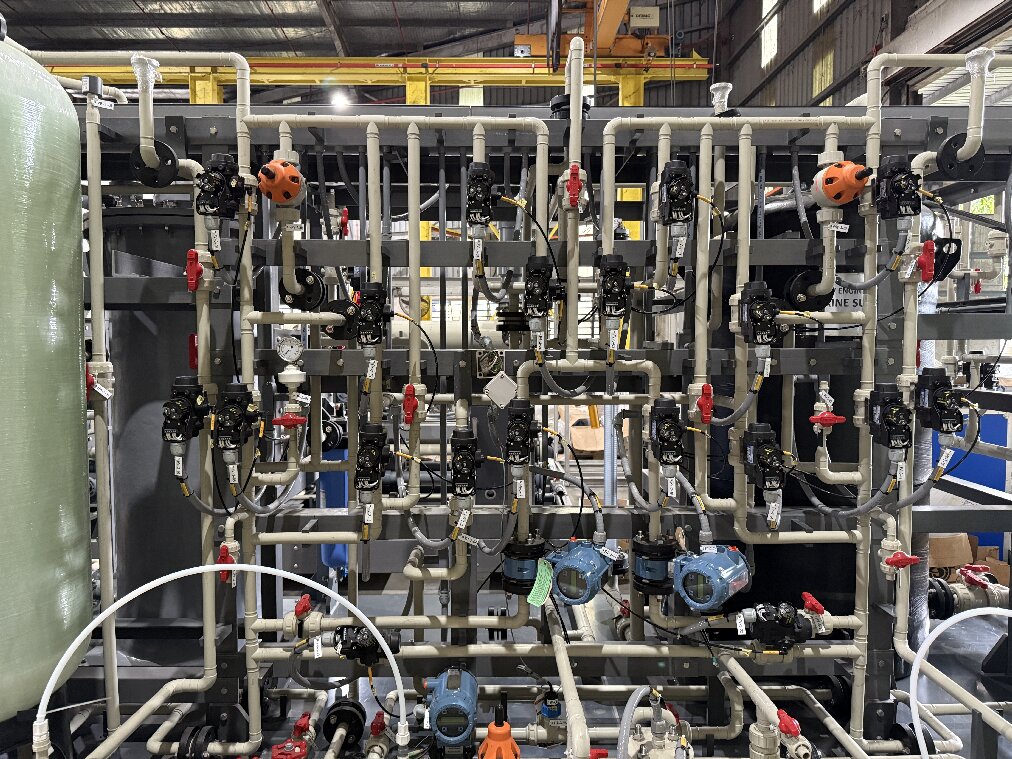
Behind every treatment stage is a carefully organized piping network. Pipes transport raw water between process units, connect filtration equipment, distribute water to parallel treatment trains, and carry treated water to storage tanks or production lines. Additional pipework supports backwashing, chemical dosing, and process circulation.
The reliability of this network directly affects plant operation, maintenance, and long-term performance. Poorly fabricated fittings, inconsistent welds, or inefficient manifold layouts can complicate installation and increase the risk of leakage and downtime.
Plastic pipes are widely used in water treatment applications because of their corrosion resistance, lightweight construction, and fabrication flexibility. With dedicated cutting, fitting fabrication, and fusion welding equipment, manufacturers can produce customized pipe assemblies for complex water treatment layouts.
MM-Tech provides integrated thermoplastic pipe fabrication and welding solutions, supporting manufacturers from individual pipe connections and workshop fittings to large-diameter pipelines and multi-outlet manifolds.
Plastic Pipe Materials Used in Water Purification Systems
Material selection is an important part of water purification system design. Different sections of a plant handle different water qualities, operating pressures, temperatures, and chemical conditions.
HDPE / PE100 is widely used in industrial water supply and distribution networks. Its corrosion resistance, impact strength, and flexibility make it a practical choice for raw water transportation, pretreatment lines, filtration connections, backwash systems, and selected low-pressure process pipelines. PE100 is a common pipe material grade for pressure applications.
PP and PPH are frequently used in industrial process piping and chemical handling systems. Their chemical resistance and thermal performance make them valuable for filtration equipment connections, chemical dosing lines, and other process applications.
PVC-U is another common material in water treatment installations, particularly for ambient-temperature water distribution, filtration piping, and drainage. However, PVC-U is not processed using the PE/PP hot-plate butt fusion equipment featured in this article. PVC-U piping generally uses solvent-cement joints or mechanical connections, requiring a different joining process.
For manufacturers producing PE and PP water treatment pipelines, MM-Tech’s pipe fabrication equipment provides a coordinated solution for cutting, fitting production, saddle branch fabrication, manifold welding, and pipe joining.
Plastic Pipe Fabrication and Welding Processes
A water purification plant requires more than straight pipe connections. Its network includes elbows, tees, crosses, wye fittings, saddle branches, and customized manifolds. Producing these components in a dedicated workshop helps streamline installation and supports consistent manufacturing.
Pipe Cutting and Preparation
Pipe fabrication begins with accurate cutting. Straight pipe sections must be prepared for pipeline connections, while angled pipe segments are needed to manufacture elbows, tees, crosses, and other customized fittings.
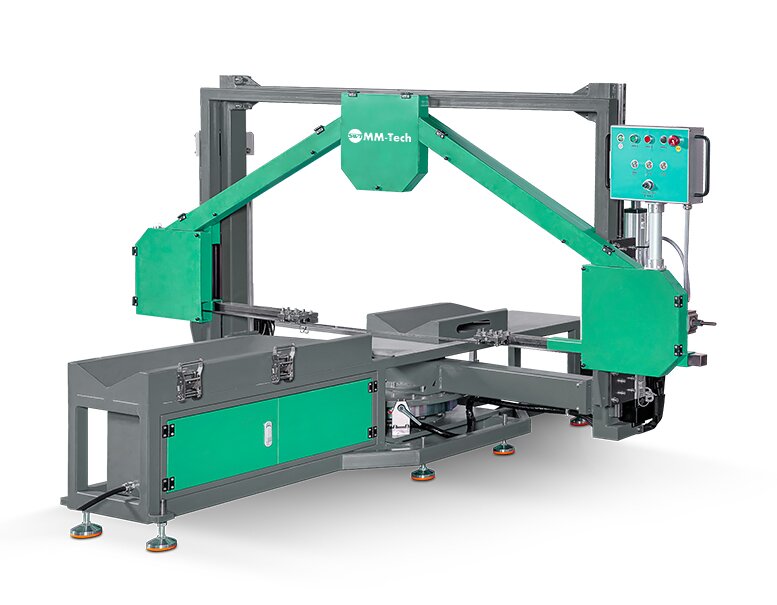
The SWT-C400 Pipe Band Saw provides workshop pipe cutting and angled cutting for fitting fabrication. Its cutting range covers pipe diameters from 90 to 400 mm, making it suitable for preparing pipe segments for a variety of medium- and large-diameter fittings. And the cutting angle is adjustable with precision from -45° to 67.5°.
Accurate cutting helps create properly matched pipe sections for subsequent fusion welding. By preparing components in the workshop rather than carrying out every operation at the installation site, manufacturers can organize production more efficiently and simplify on-site assembly.
Workshop Fitting Fabrication
A water purification system contains numerous changes in pipe direction and branch connections. Elbows guide water through different sections of the plant, tees divide flow into separate lines, and cross and wye fittings connect multiple branches.
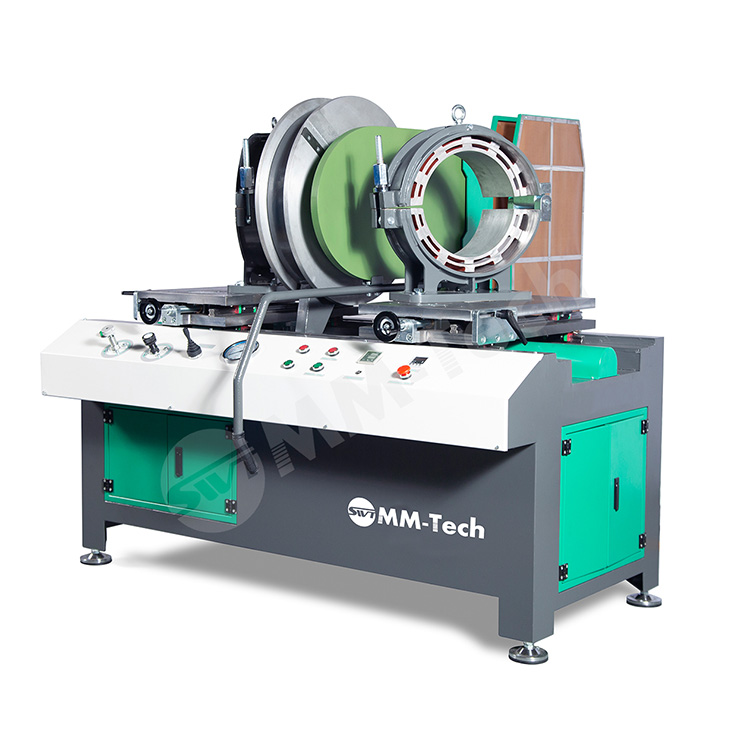
The SWT-MA400 Fitting Fabrication Welding Machine, paired with the SWT-C400 Pipe Band Saw, provides a dedicated workshop solution for manufacturing these components.
The SWT-C400 Pipe Band Saw prepares pipe segments at the required angles, while the SWT-MA400 Fitting Fabrication Welding Machine performs thermoplastic butt fusion to assemble the fitting sections. The combination supports the fabrication of elbows, tees, crosses, and wye fittings, helping manufacturers produce customized pipe components for different system layouts.
With a working range of 90–400 mm, the SWT-MA400 Fitting Fabrication Welding Machine supports the production of a broad range of workshop pipe fittings. This pairing gives manufacturers greater flexibility when producing non-standard components and reduces dependence on ready-made fittings.
For water purification projects, prefabricated fittings can simplify the connection of filtration units, pump lines, backwash branches, and distribution networks.
Saddle Branch Fabrication
Branch connections are essential in water purification piping. They allow a main pipeline to supply individual filtration units, connect parallel process lines, and distribute water to different equipment sections.
The SWT-S315 Saddle Fusion Welding Machine and SWT-R315 Saddle Radius Saw provide a dedicated solution for saddle branch fabrication.
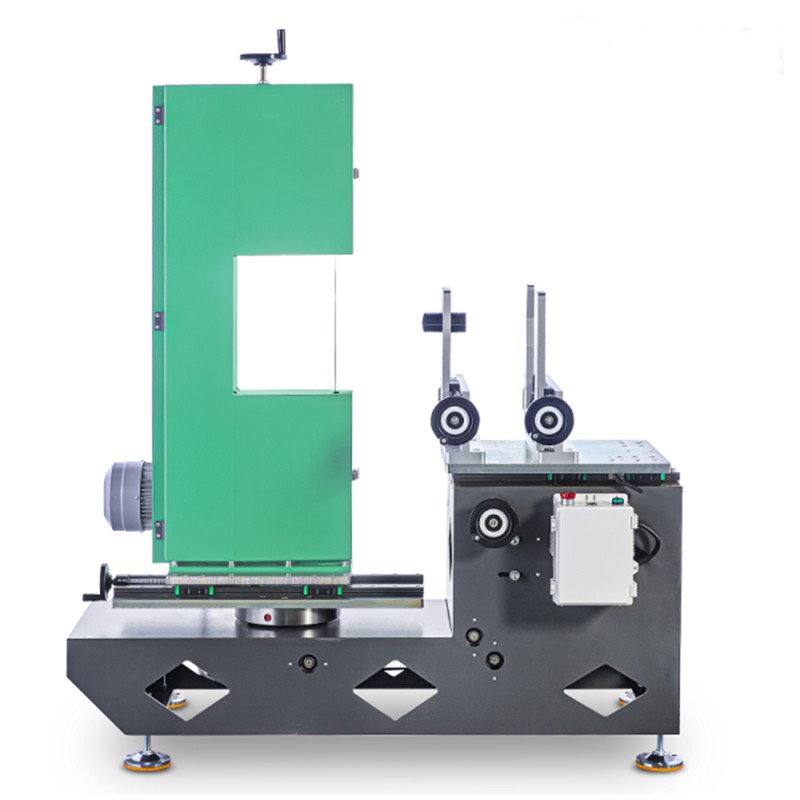
The SWT-R315 Saddle Radius Saw prepares the saddle-shaped profile on the branch pipe, creating the required contact surface between the branch and the main pipe. The SWT-S315 Saddle Fusion Welding Machine then holds and positions the components for saddle fusion welding, producing a branch connection for HDPE reducing tee fabrication.
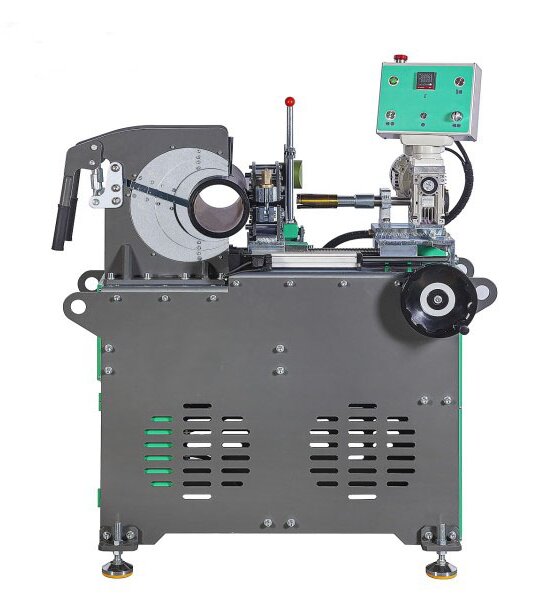
The SWT-S315 Saddle Fusion Welding Machine is designed for main pipe diameters from 90 to 315 mm and branch pipe diameters from 32 to 140 mm. It supports workshop production of reducing tees, helping manufacturers prepare customized branch connections for different pipeline layouts.
This combination is particularly useful for fabricating branch components in HDPE water distribution and filtration networks. Instead of relying entirely on standard fittings, manufacturers can produce customized connections that match their system design, improving workshop flexibility and simplifying pipeline assembly.
Automatic Manifold Fabrication
Manifolds are important components in industrial water purification systems. They collect or distribute water across multiple branches, connecting a main pipeline with several filtration vessels, membrane modules, or parallel treatment units.
A well-designed manifold organizes the pipe network and provides structured connections between process equipment. Its outlet positions, pipe dimensions, and internal flow arrangement are determined by the overall system design.
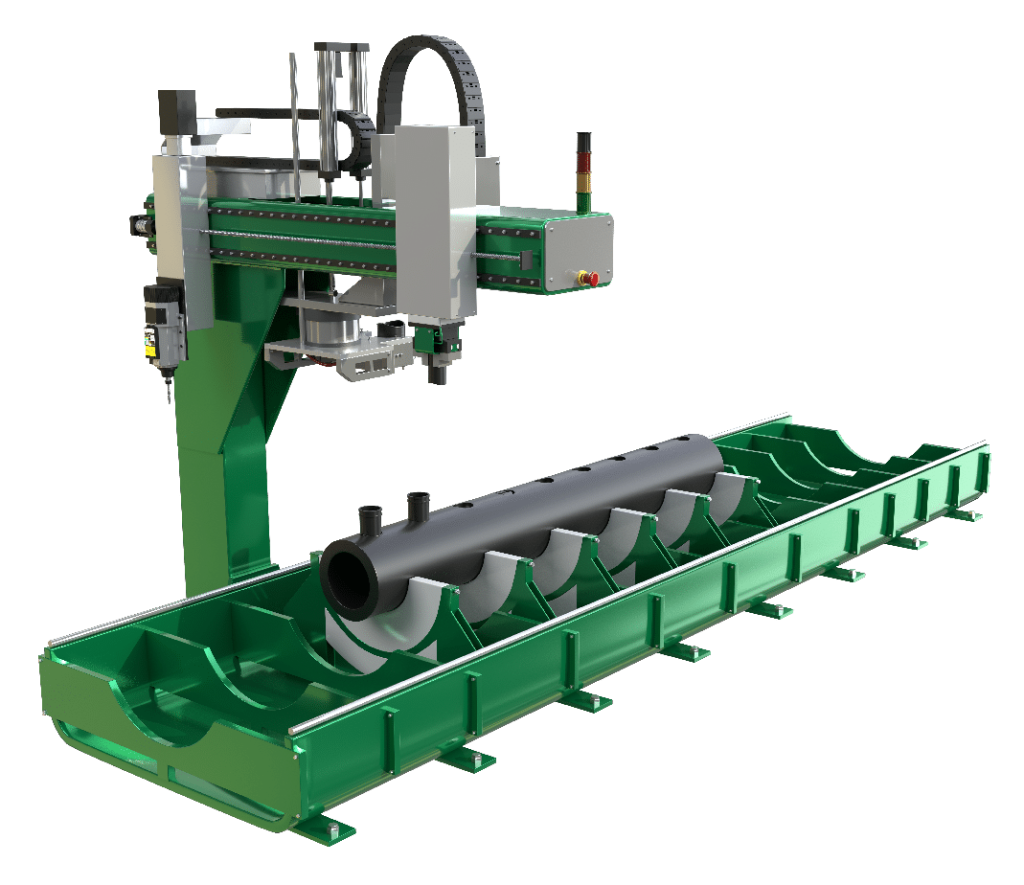
The SST-SSC 630 Automatic Manifold Pipe Welding Machine is designed for integrated machining and welding of PE and PP manifold pipes. It supports main pipe diameters from 32 to 630 mm and outlet pipe diameters from 20 to 315 mm.
The machine integrates core-hole milling, surface preparation, and outlet welding into a coordinated production workflow. It supports both saddle butt fusion and socket fusion processes, allowing manufacturers to produce different manifold configurations. Its welding data management interface also supports production records and component label printing, helping improve workshop organization and traceability.
For water purification equipment manufacturers, the SST-SSC 630 Automatic Manifold Pipe Welding Machine offers an efficient solution for producing multi-outlet manifolds used in filtration systems, backwash networks, and parallel treatment lines. By integrating machining and welding operations on one production platform, it helps simplify manifold manufacturing and improve workshop productivity.
Application Note: In RO systems, manifolds connect parallel membrane units and organize process piping. High-pressure feed lines require piping rated for the specified operating pressure; standard PE100 PN10 or PN16 pipes are not a general solution for this service. For high-purity permeate distribution loops, material purity, weld profiles, dead-leg prevention, and sanitization must also be considered. Standard PE/PP saddle-welded manifolds should not be assumed suitable without confirming these requirements.
Main Pipeline Welding
After pipe sections and fittings are prepared, they must be joined to form the main pipeline network.
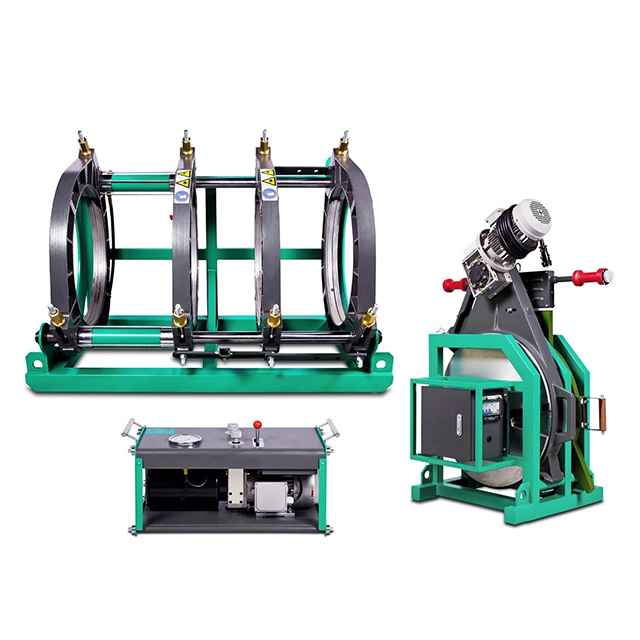
The SWT-V450/280H Pipe Butt Fusion Welding Machine is designed for hydraulic butt fusion of thermoplastic pipes with outside diameters from 280 to 450 mm. Its hydraulic system applies welding force during the fusion process, while the accumulator helps maintain stable pressure. The Teflon-coated heating plate provides a consistent heating surface, and the robust frame supports demanding workshop and pipeline fabrication operations.
In water purification projects, the SWT-V450/280H Pipe Butt Fusion Welding Machine can be used to join large-diameter PE pipe sections for raw water supply, pretreatment connections, and selected low-pressure distribution lines. It helps manufacturers build continuous pipeline sections with fusion joints, reducing reliance on mechanical connections.
By combining pipe butt fusion with dedicated fitting and manifold fabrication equipment, manufacturers can establish a complete workshop workflow—from individual pipe components to larger prefabricated assemblies.
Welding Quality Control and Standards Compliance
Reliable pipe fabrication depends not only on equipment performance but also on consistent welding procedures and quality inspection. For industrial water purification systems, sound welding practices help reduce leakage risks and support long-term pipeline operation.
Welding process control is the first step. Pipe ends should be clean, properly aligned, and accurately faced before welding. Key parameters—including heating temperature, heating time, welding pressure, changeover time, and cooling time—should be controlled according to the material, pipe dimensions, and applicable welding procedure. Operators should also check machine condition and heating plate temperature before production.
Weld inspection and testing provide further quality assurance. Visual inspection can identify irregular bead formation, contamination, misalignment, and other visible defects. Dimensional checks help verify fitting geometry and connection alignment. Where required by the project specification, destructive tests can be performed on representative welded samples. Completed pipeline systems should also undergo the specified pressure or leakage tests before commissioning.
Several standards and technical guidelines may be relevant to thermoplastic pipe welding and inspection:
- DVS 2207-1: Welding of thermoplastics — Heated element welding of pipes, piping parts and panels made out of polyethylene.
- DVS 2207-11: Welding thermoplastic materials — Heated element welding of pipes, piping parts and panels made of PP.
- ISO 21307: Plastics pipes and fittings — Butt fusion jointing procedures for polyethylene (PE) piping systems.
- ASTM F2620: Standard Practice for Heat Fusion Joining of Polyethylene Pipe and Fittings.
- DVS 2202: Evaluation of joints between thermoplastics on piping parts and panels — Characteristics, description, evaluation.
- DVS 2203-1: Testing of welded joints of thermoplastic sheets and pipes — Test methods — Requirements.
The applicable standard should be selected according to the pipe material, joining method, project specification, and local requirements. Following an appropriate welding procedure, recording key parameters, and documenting inspection results help manufacturers establish a more traceable and repeatable production process.
Integrated Pipe Fabrication Solutions from MM-Tech
Building a water purification system requires coordinated manufacturing across multiple pipe components and equipment connections. Straight pipes, elbows, tees, saddle branches, and manifolds must work together within the overall system layout.
MM-Tech brings these production stages together through a range of thermoplastic fabrication equipment:
- SWT-V450/280H Pipe Butt Fusion Welding Machine: Hydraulic butt fusion for large-diameter pipe sections from 280 to 450 mm.
- SWT-MA400 Fitting Fabrication Welding Machine + SWT-C400 Pipe Band Saw: Workshop production of elbows, tees, crosses, and wye fittings.
- SWT-S315 Saddle Fusion Welding Machine + SWT-R315 Saddle Radius Saw: Saddle profile preparation and branch fusion welding for reducing tee fabrication.
- SST-SSC 630 Automatic Manifold Pipe Welding Machine: Integrated machining and welding for multi-outlet PE and PP manifolds.
Rather than treating each machine as an isolated piece of equipment, MM-Tech focuses on connecting fabrication processes into a coordinated production solution. From pipe cutting and fitting preparation to branch welding, manifold manufacturing, and main pipeline joining, manufacturers can organize an efficient workflow around their actual production requirements.
As a thermoplastic fabrication solutions provider, MM-Tech also supports equipment selection, application engineering, technical training, commissioning, and after-sales service. This helps manufacturers develop practical workshop capabilities, improve production efficiency, and establish repeatable fabrication processes for industrial water purification projects.
Build more efficient water purification piping systems with MM-Tech. Contact MM-Tech to explore an integrated pipe fabrication and welding solution for your next project.
FAQ
What machines are needed to manufacture PE and PP pipe fittings?
A workshop fitting production line commonly uses a pipe band saw and a fitting fabrication welding machine. The SWT-C400 Pipe Band Saw prepares angled pipe segments, while the SWT-MA400 Fitting Fabrication Welding Machine joins them to produce elbows, tees, crosses, and wye fittings.
How are saddle branch connections manufactured in HDPE water purification pipelines?
Saddle branch fittings can be produced using a saddle radius saw and a saddle fusion welding machine. The SWT-R315 Saddle Radius Saw prepares the saddle profile, while the SWT-S315 Saddle Fusion Welding Machine positions and fuses the branch connection to fabricate HDPE reducing tees.
What is the function of a manifold in a water purification system?
A manifold connects a main pipeline to multiple branch lines. It is commonly used to distribute or collect water across filtration vessels, membrane modules, and parallel treatment units. Its configuration helps organize the plant’s piping network and connect multiple process components.
What are the advantages of an automatic manifold pipe welding machine?
An automatic manifold machine integrates machining and outlet welding operations into a coordinated workflow. The SST-SSC 630 Automatic Manifold Pipe Welding Machine supports PE and PP manifold fabrication, including saddle butt fusion and socket fusion. Its integrated process and welding data management features help improve workshop organization and production traceability.
Can MM-Tech provide a complete solution for PE and PP water purification pipe fabrication?
Yes. MM-Tech offers equipment for PE and PP pipe butt fusion, fitting fabrication, saddle branch welding, and automatic manifold manufacturing. These machines can be organized into an integrated workshop solution to support different stages of thermoplastic pipe fabrication for industrial water purification systems.